
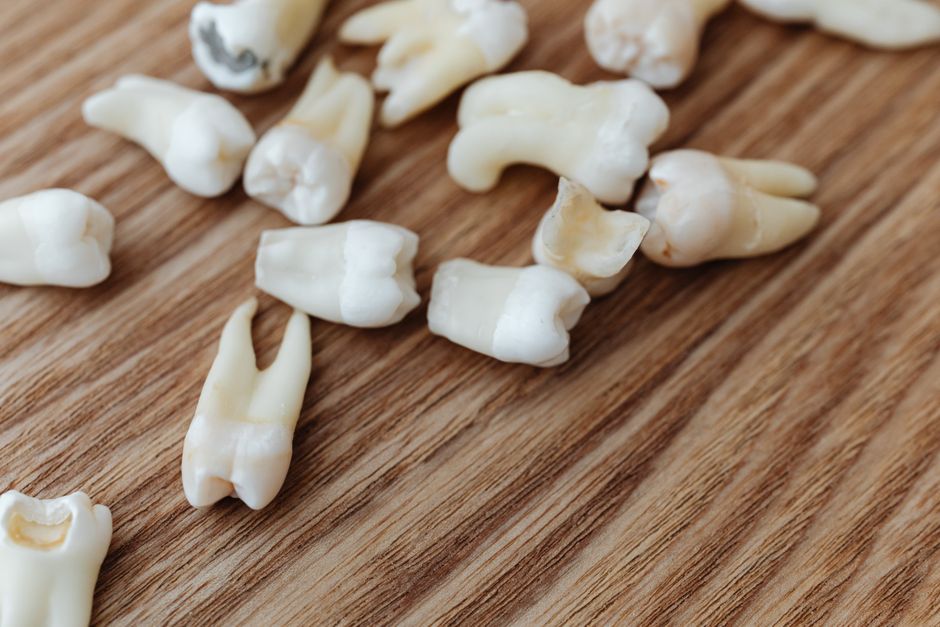
Your molars are the flat-topped teeth at the back of your mouth, and they are the primary tools your body uses to grind food into a paste small enough to swallow safely. While your front teeth (incisors and canines) cut and tear food into smaller pieces, the molars take over the heavy lifting. They crush and grind that food, dramatically increasing the surface area so your digestive enzymes can break it down efficiently. Without properly functioning molars, you would struggle to chew most solid foods, which can lead to digestive discomfort and a severely limited diet.
What Do Molar Teeth Do And How Do They Work?
Molar teeth work as a mechanical processing unit. Their broad, flat surfaces come together with significant force, acting like a mortar and pestle. When you chew, the lower molars move across the upper molars in a specific pattern, shearing and grinding the food between them. This process breaks down tough plant fibers and muscle tissue, making nutrients accessible. The physical breakdown of food is the first step of digestion, and it is a job your molars are uniquely designed to perform.
How Many Molars Do Adults Have?
Most adults have a total of 12 permanent molars. This includes the four third molars, which are commonly known as wisdom teeth. These 12 teeth are split into three distinct types: first molars, second molars, and third molars. They are located in each quadrant of the mouth—the upper right, upper left, lower right, and lower left. Each quadrant typically contains one first molar, one second molar, and one third molar.
The first molars usually erupt around age 6 and are often called the “six-year molars.” The second molars arrive around age 12. The third molars, or wisdom teeth, typically emerge between ages 17 and 21. Because the jaw is often too small to accommodate them, wisdom teeth frequently become impacted—meaning they are trapped beneath the gum line—and require surgical removal.
The Anatomy of a Molar
Understanding how molars work requires looking at their structure. Unlike the single-rooted front teeth, molars are larger and more complex. Upper molars typically have three roots, while lower molars usually have two. These multiple roots anchor the tooth firmly into the jawbone, providing the stability needed to withstand the immense pressure of chewing.
The visible part of the tooth, called the crown, has a distinctive shape. It features raised points called cusps. Premolars have two cusps, but molars have four or five. These cusps are the working surfaces that do the grinding. The crown is covered in enamel, the hardest substance in the human body. Beneath the enamel lies the dentin, a yellowish tissue that makes up the bulk of the tooth. At the center is the pulp, which contains the blood vessels and nerves.





Why Are Molars More Prone to Cavities?
Molars are the most cavity-prone teeth in the mouth, and the reason is structural. Their chewing surfaces are not flat. They are covered in deep grooves and fissures—natural pits and valleys where the cusps meet. These grooves are often narrower than a single toothbrush bristle, making it nearly impossible to clean them thoroughly at home.
Food particles and bacteria easily become trapped in these crevices. When you consume sugar or refined carbohydrates, the bacteria in your mouth feed on these particles and produce acid. This acid attacks the enamel, and because the grooves are so deep, the decay can quickly penetrate the tooth before you ever notice a problem. This is why dentists often recommend dental sealants for children and teenagers. Sealants are thin plastic coatings painted onto the chewing surfaces of the molars, physically sealing off those vulnerable grooves from bacteria.
What Happens When You Lose a Molar?
Losing a permanent molar is a significant event that affects your entire bite. The immediate effect is a reduced ability to chew on that side of your mouth. Many people adapt by chewing predominantly on the other side, but this can lead to muscle strain and uneven wear on the remaining teeth.
The long-term consequences are more severe. Teeth have a natural tendency to drift. When a molar is missing, the tooth directly behind it may tip forward, and the tooth above it may erupt downward into the empty space. This shifting creates gaps where food gets trapped and makes cleaning more difficult. It can also alter your bite alignment, potentially leading to jaw pain and temporomandibular joint (TMJ) disorders. For these reasons, dentists generally recommend replacing a lost molar with an implant or a bridge rather than leaving the space empty.
Common Problems Affecting Molars
Beyond cavities, molars face several other specific health risks. One of the most common is cracked tooth syndrome. Because molars absorb so much force, they are prone to developing hairline fractures, especially in people who grind their teeth at night. These cracks may not be visible on X-rays and can cause sharp pain when you bite down.
Another issue is impacted wisdom teeth. When a wisdom tooth fails to erupt properly, it can push against the second molar, damaging its root. This pressure can also create a pocket where bacteria accumulate, leading to infection and gum disease. Dentists often recommend removing wisdom teeth proactively to prevent this damage, even if the wisdom teeth themselves are not causing pain.
Gum disease, or periodontitis, is also a major threat. Because molars are located so far back in the mouth, they are harder to reach with a toothbrush and floss. Plaque buildup along the gum line can lead to inflammation and, eventually, bone loss around the molar roots. This bone loss is the leading cause of tooth loss in adults.
How to Keep Your Molars Healthy
Maintaining your molars requires a targeted approach. Brushing twice a day is essential, but the technique matters more than the pressure. Angle the toothbrush bristles toward the gum line and use small, circular motions to clean the grooves on the top of the molars. Pay special attention to the very back tooth, which is the easiest to miss.
Flossing is non-negotiable for molars. The tight contact points between molars are prime locations for cavities to form. If standard floss is difficult to manage, consider using a water flosser or interdental brushes. These tools are effective at removing food debris from the hard-to-reach areas between the back teeth.
Regular dental check-ups are critical. X-rays are often the only way to detect decay between molars or bone loss around the roots. Your dentist can also apply fluoride varnish to strengthen the enamel and monitor any existing fillings or crowns for wear.
Frequently Asked Questions
At what age do molars come in?
First molars typically erupt around age 6, and second molars around age 12. Wisdom teeth, the third molars, usually appear between ages 17 and 21.
Can you chew without molars?
You can chew soft foods without molars, but you will struggle with fibrous vegetables, meats, and other tough foods. The lack of grinding surfaces forces you to swallow larger pieces, which can cause indigestion.
Are wisdom teeth considered molars?
Yes, wisdom teeth are the third molars. They are the last teeth to erupt and are often removed because the jaw lacks space for them.
Why does my molar hurt when I bite down?
Pain when biting often indicates a cracked tooth, a deep cavity, or an abscess. This symptom requires a dental examination because the underlying cause will not resolve on its own.
