
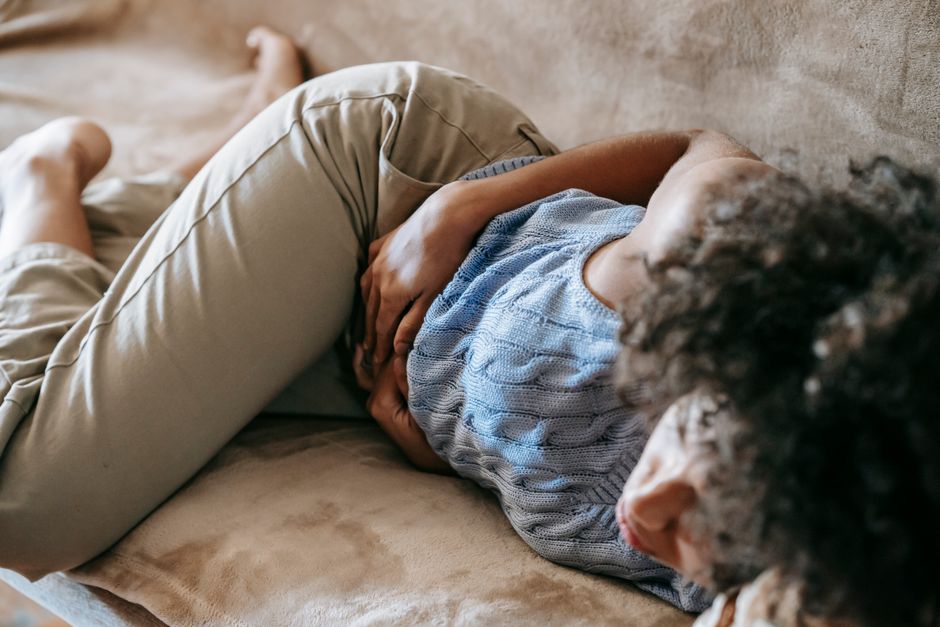
Menstrual cramps feel like a dull, aching pressure low in the belly that can tighten and release in waves. Many people describe it as a heavy, dragging sensation, like something squeezing the lower abdomen from the inside. For some, the pain is mild and annoying; for others it is sharp enough to make standing, walking, or concentrating hard.
Cramps usually start just before or with the first day of bleeding and ease over the next day or two. The sensation is not imaginary and it is not a sign of weakness. It comes from real muscle contractions in the uterus, and understanding what is happening helps you make sense of what you feel.
What Do Menstrual Cramps Actually Feel Like?
The most common description is a cramping or tightening pain in the lower abdomen, just above the pubic bone. It often comes in waves rather than staying steady. Between waves the area may ache or feel tender to the touch.
The pain can spread. Many people feel it radiate into the lower back, the hips, or the inner thighs. Some describe a heavy, bloated feeling across the whole pelvis, as if the area is swollen or full. Others feel pressure that makes them want to curl up or press a hand against their belly.
There is a wide range. At the mild end, cramps are a background ache you notice but push through. At the severe end, the pain can be intense enough to cause nausea, sweating, dizziness, or loose stools. That range is real, and where you land on it is not a measure of how tough you are.
One detail people often miss: the pain is not only about the uterus. The cramping contractions are driven by chemicals called prostaglandins, which the body releases around the start of a period. Those same chemicals can affect the bowel and cause nausea or diarrhea alongside the cramps. That is why period pain sometimes shows up as much in your gut and back as in your belly.
Why Do Cramps Happen at All?
During a period, the muscular wall of the uterus contracts to help shed its lining. These contractions are the physical source of the cramping sensation. When the muscle tightens, blood flow to the area is briefly reduced, and that reduced flow is thought to contribute to the ache.
Prostaglandins are the key driver. Levels rise right before bleeding begins, which is why cramps often arrive just before or with the first day. Higher prostaglandin levels generally mean stronger contractions and more pain. This is also why medications that block prostaglandin production can ease cramps, which we will get to shortly.
The pain is a normal physiological process for most people. That said, “normal” does not mean you have to accept severe pain without looking into it. There is a difference between ordinary period cramps and pain that signals something else going on.
How Do You Tell Normal Cramps From Something More?
Ordinary cramps follow a predictable pattern. They start around the beginning of bleeding, peak in the first day or two, and fade. They respond at least somewhat to heat, rest, or over-the-counter pain relievers.
Some patterns are worth raising with a clinician. These include pain that is getting worse over time rather than staying stable, pain that does not ease with typical measures, pain during sex, heavy bleeding, or bleeding between periods. Pain that keeps you home from work or school every cycle is also a reason to seek advice rather than push through.
Conditions such as endometriosis and uterine fibroids can cause severe period pain, but they cannot be diagnosed from the way cramps feel alone. Many different problems produce similar symptoms, and only a clinician can sort out which, if any, applies to you. If your cramps have changed character or intensity, that is the signal to get it checked, not to self-diagnose from a description online.
What Actually Helps With Cramps?
Heat is one of the best-supported simple measures. A heating pad or warm bath on the lower abdomen can ease cramping for many people. It is low-risk and widely used.
Nonsteroidal anti-inflammatory drugs, known as NSAIDs, are commonly used for period pain because they reduce prostaglandin production. Ibuprofen is the familiar example. These are available over the counter, but they are not right for everyone. They can irritate the stomach and are not appropriate for people with certain kidney problems, stomach ulcers, or other conditions, and they can interact with other medications. Check with a pharmacist or clinician about whether one is suitable for you and how to take it. Starting an NSAID at the first sign of cramps, rather than waiting for pain to build, is a common clinical approach, but follow the label and professional advice.
Physical activity helps some people. Gentle movement, stretching, or a walk can ease the ache for many, though it is not a guaranteed fix and the evidence for exactly how much it helps is not strong. Rest and sleep matter too.
Some clinicians recommend hormonal contraception to reduce period pain by thinning the uterine lining and lowering prostaglandin levels. This is a prescription decision made with a clinician, not something to start on your own. The evidence supports it for many people, but it is a medical choice with trade-offs to discuss.
Does Exercise or Diet Change Period Pain?
The evidence here is mixed. Some studies suggest regular physical activity is associated with less period pain, but the research is not consistent enough to promise that exercise will prevent cramps. It is reasonable to stay active if it makes you feel better, without expecting it to be a reliable treatment.
Diet claims are common online and often overstated. No specific food or supplement has strong evidence behind it for reliably reducing cramps. Some research has looked at omega-3 fatty acids and at certain vitamins and minerals, but results vary and no dietary change is established as a dependable fix. If you are considering a supplement, especially at higher doses, talk to a clinician first, because supplements are not risk-free and can interact with medications.
Be skeptical of products marketed as period-pain solutions with dramatic claims. No single food, tea, or patch has been shown in strong trials to eliminate cramps. That does not mean nothing works; it means the reliable options are the plainer ones covered above.
When Should You See a Doctor About Cramps?
See a clinician if period pain regularly interferes with daily life, if it is getting worse cycle after cycle, or if it comes with heavy bleeding, pain during sex, or bleeding between periods. These can be signs that something beyond ordinary cramps deserves a look.
Also seek care if you have severe pain that comes on suddenly, fever, unusual discharge, or pain that is not linked to your period at all. Those can point to other causes that need timely attention.
You do not need to wait for pain to become unbearable before asking. Severe period pain is common but it is not something you simply have to endure. A clinician can help rule out treatable causes and discuss options. Getting a clear answer is better than guessing.
Frequently Asked Questions
Do menstrual cramps feel sharp or dull?
Most people describe menstrual cramps as a dull, aching pressure that comes in waves, though some feel sharper pain. The sensation can vary widely from person to person and from one cycle to the next.
Where do you feel menstrual cramps?
Cramps are usually felt low in the abdomen, just above the pubic bone. The pain can spread to the lower back, hips, and inner thighs for many people.
How long do menstrual cramps usually last?
Cramps most often begin just before or with the start of bleeding and ease over the first day or two. The timing and duration vary, and pain that lasts longer or worsens over time is worth discussing with a clinician.
Can menstrual cramps make you feel sick?
Yes, cramps can come with nausea, sweating, dizziness, or loose stools. These symptoms are linked to the same prostaglandin chemicals that drive the uterine contractions.
