
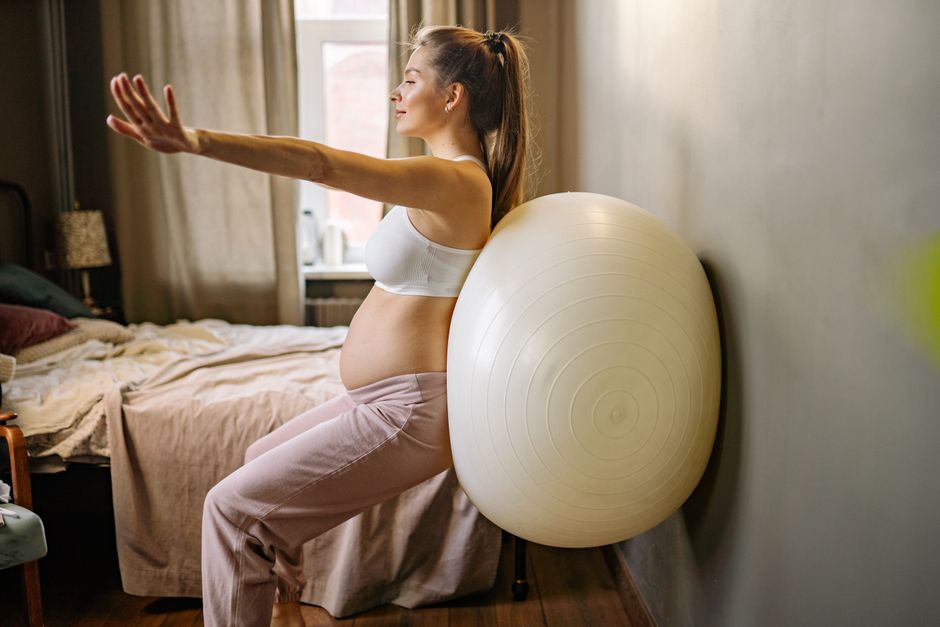
Labour contractions feel like intense, wave-like cramping that builds in strength, peaks, and then releases. Most women describe them as powerful menstrual cramps combined with a deep, pressing ache in the lower belly and back. The sensation is rhythmic and increases in intensity as labour progresses, moving from dull discomfort to sharp, gripping pressure that demands your full attention.
What Do Labour Contractions Actually Feel Like Compared to Menstrual Cramps?
Menstrual cramps are a good starting point for understanding contractions, but they are not the same. Period pain comes from the uterus contracting to shed its lining. Labour contractions come from the uterus contracting to push a baby out. The difference is one of scale and purpose.
Early labour contractions often feel like strong menstrual cramps. You might feel a dull ache low in your abdomen or a persistent backache. As labour progresses, the sensation changes. The cramping becomes sharper and more focused. Many women describe a gripping or tightening feeling that starts in the back and wraps around to the front of the belly.
Research published in the Journal of Obstetric, Gynecologic & Neonatal Nursing found that women consistently describe the peak of a contraction as an intense pressure rather than a sharp pain. The uterus is a large muscle, and when it contracts, it feels like a slow, powerful squeeze rather than a stab.
Where Do You Feel Contraction Pain Most?
Contraction pain is not the same for everyone. Where you feel it depends on your baby’s position, your own anatomy, and how your labour progresses.
Most women feel the strongest sensation in the lower abdomen and lower back. The pain often starts in the back and radiates forward. Some women feel it primarily in the upper thighs or hips. A smaller number feel it mainly in the back with little abdominal sensation at all.
The American College of Obstetricians and Gynecologists notes that back labour is a specific pattern where the pain stays concentrated in the lower back even between contractions. This happens when the baby is facing the mother’s spine rather than her back. The pressure of the baby’s head against the sacrum causes persistent back pain that does not fully go away between contractions.
Here is a simple comparison of where women commonly report feeling contraction pain:
| Location | How Common | Typical Sensation |
|---|---|---|
| Lower abdomen | Very common | Deep cramping, tightening |
| Lower back | Common | Dull ache or sharp pressure |
| Hips and thighs | Moderately common | Radiating ache |
| Upper abdomen | Less common | Tightness, rarely sharp pain |
How Do Contractions Feel as Labour Progresses?
Contractions change noticeably as labour moves through its stages. Early labour contractions feel manageable. You can talk through them. They come every 5 to 20 minutes and last about 30 to 45 seconds. The sensation is similar to a strong menstrual cramp that comes and goes.
Active labour is a different experience. Contractions come every 3 to 5 minutes and last 45 to 70 seconds. The intensity ramps up. Many women stop talking during a contraction and focus entirely on breathing. The sensation becomes a powerful wave that builds to a peak, holds for several seconds, then slowly releases.
Transition is the most intense phase. This is when the cervix dilates from 7 to 10 centimeters. Contractions come every 2 to 3 minutes and can last 60 to 90 seconds. Women often describe this phase as overwhelming. The pressure feels constant, and there is little break between contractions. Some women report shaking, nausea, or feeling like they cannot cope at this stage. This is normal and usually means the baby is almost here.
Pushing contractions feel different again. The urge to push can feel like an intense need to have a bowel movement. The pain often shifts to a deep, stretching sensation as the baby moves through the birth canal. Many women say pushing actually feels better than the transition phase because they can do something active with the pressure.





What Do False Contractions Feel Like Compared to Real Labour Contractions?
False contractions, called Braxton Hicks contractions, are common in the third trimester. They feel like a tightening of the uterus that comes and goes irregularly. The sensation is usually mild and does not get stronger over time.
Real labour contractions have distinct patterns. They become longer, stronger, and closer together. They do not stop when you change position or drink water. Braxton Hicks contractions often fade with movement or rest.
Here are the key differences:
- Real contractions follow a regular pattern. False contractions are irregular and unpredictable.
- Real contractions increase in intensity. False contractions stay at the same level or fade.
- Real contractions last longer over time. False contractions stay short.
- Real contractions do not stop with rest or hydration. False contractions often do.
- Real contractions cause a sensation that radiates from the back to the front. False contractions usually stay in one spot.
Some women report that real contractions feel like a strong pressure wave that starts high in the uterus and moves downward. This sensation of downward pressure is rarely present with false contractions.
Do Contractions Feel Different for First-Time Moms Compared to Women Who Have Given Birth Before?
There is no strong evidence that the sensation of contractions is fundamentally different between first-time mothers and women who have given birth before. The uterus contracts the same way regardless of how many babies you have had.
What does change is the experience of labour. First-time mothers typically have longer labours, especially in the early phase. This means they experience more contractions overall before reaching active labour. Women who have given birth before often have faster labours, so the contractions may feel more intense because things progress more quickly.
Some women who have had a previous vaginal birth report that contractions feel more familiar the second time. They know what to expect and can recognize the patterns sooner. The actual physical sensation is not different, but the emotional experience can be.
Research from the Cochrane Database of Systematic Reviews shows that women’s perception of pain during labour is influenced by many factors beyond the physical sensation. Support during labour, previous pain experiences, and anxiety levels all affect how contractions feel. Two women can have the same contraction pattern and describe it very differently.
How Do Contractions Feel When Something Is Wrong?
Most contractions are a normal part of labour. But some patterns can signal a problem. Knowing the difference matters.
Contractions that come too frequently, such as every 2 minutes or less for more than an hour, can mean the uterus is overworking. This can be dangerous for both mother and baby. The sensation is often described as constant pain with no break between contractions.
Contractions that cause sharp, stabbing pain rather than a wave-like pressure may indicate a problem with the baby’s position or with the uterus itself. This is not common, but it is worth mentioning to your care provider.
Contractions that are accompanied by heavy bleeding, a sudden gush of fluid that is not clear, or a fever require immediate medical attention. The sensation of the contraction is less important than these accompanying signs.
The American College of Obstetricians and Gynecologists advises that any contraction pattern that feels wrong to you should be checked. Trust your instincts. If something feels different from what you expected or from what you have been told, call your doctor or midwife.
Frequently Asked Questions
Can contractions feel like you need to have a bowel movement?
Yes, this is very common. The baby’s head pressing on the rectum creates a strong urge to push that feels like intense rectal pressure.
Do contractions hurt more in the back or the front?
Most women feel contractions more in the lower back, especially during back labour. Front cramping is also common and often wraps around from the back.
How long do the most painful contractions last?
The most intense contractions during transition typically last 60 to 90 seconds each, coming every 2 to 3 minutes with very short breaks in between.
Can you sleep through early contractions?
Some women can sleep through early labour contractions because they feel like mild menstrual cramps. Once contractions become regular and strong enough to wake you, labour is likely active.
