
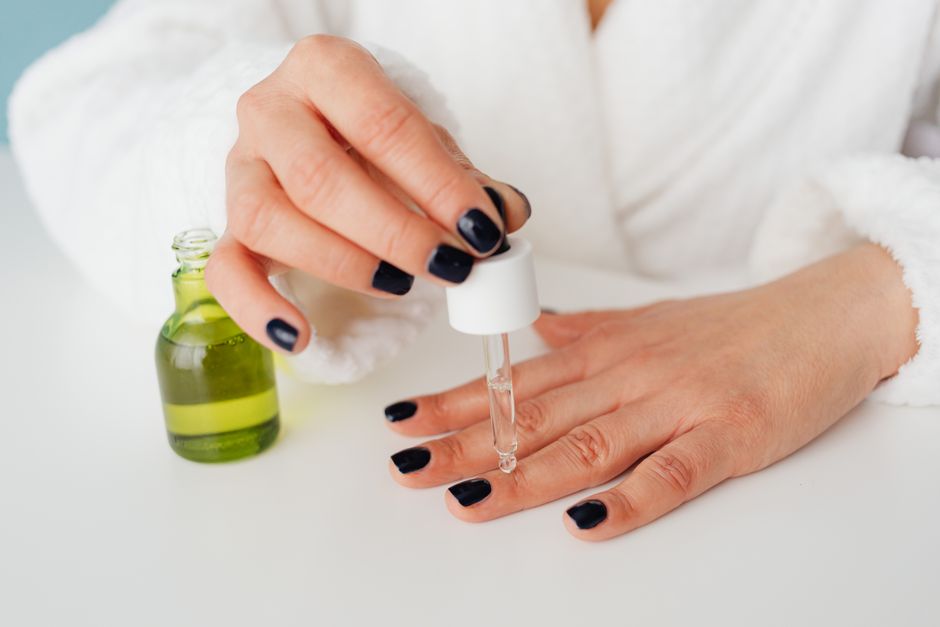
Healthy nails are smooth, uniform in color, and free of ridges, spots, or discoloration. They have a consistent pinkish tone to the nail bed, a white lunula (the half-moon shape at the base), and a firm but flexible texture. Healthy nails also have a smooth surface without peeling, cracking, or splitting, and the surrounding skin and cuticles should be intact and free of redness or swelling.
What Do Healthy Nails Look Like in Detail?
Look at your fingernails in natural light. A healthy nail has a flat or slightly curved shape with no visible dents or pits. The surface should reflect light evenly, which means it is smooth. The nail plate itself is translucent, and the pink color you see comes from the blood-rich tissue underneath called the nail bed.
The white tip of the nail, called the free edge, should be clean and even. The lunula at the base is normal to see, though it can be less visible on some fingers or completely hidden on the thumb. Its absence is not a sign of disease on its own.
Healthy nails grow at a rate of about 3 millimeters per month for fingernails. Toenails grow slower, roughly 1 millimeter per month. This means a full fingernail replacement takes about 6 months, while toenails can take 12 to 18 months. Changes in the nail you notice today may reflect an event from months ago.
What Are the Normal Variations in Nail Appearance?
Not every deviation from “perfect” means something is wrong. Many people have harmless variations that are simply genetic. Vertical ridges, for example, become more common with age. They are usually benign and require no treatment.
Some people naturally have thicker nails. Others have thinner, more flexible nails. These traits run in families and are not necessarily a health concern.
White spots on the nails are one of the most misunderstood findings. Many people believe they come from a calcium deficiency. That is a myth. These small white spots, called leukonychia, are almost always the result of minor trauma to the nail matrix — the area where the nail is formed. A bump to the fingertip or aggressive manicuring can cause them. They grow out on their own over several months.
Dark skin tones can show a normal dark streak or band in the nail called a longitudinal melanonychia. This is common and usually harmless, especially when it appears on multiple nails or has been present for years unchanged.
What Do Unhealthy Nails Look Like?
Certain nail changes deserve attention because they can signal underlying health conditions. The key is knowing which changes are concerning and which are cosmetic.
Yellow or thickened nails can indicate a fungal infection, particularly if the nail is also crumbling or has a foul odor. Fungal infections are common and treatable but require prescription medication. Over-the-counter treatments have limited effectiveness, especially for toenails.
Pitting — small depressions or dents in the nail surface — is associated with psoriasis. Many people with nail pitting also have skin psoriasis, but some develop nail changes first.
Spoon-shaped nails, called koilonychia, curve upward like a spoon and can hold a drop of water. This pattern is associated with iron deficiency anemia. If your nails look like this, it is worth discussing with your doctor.
Clubbing is a condition where the fingertips enlarge and the nails curve downward around the fingertips. The angle between the nail and the cuticle increases. Clubbing can be hereditary and harmless, but when it develops in adulthood it can indicate lung or heart disease. This change develops slowly over years and warrants medical evaluation.
Dark streaks or bands that are new, changing, or present on only one nail should be evaluated by a dermatologist. While most are benign, a single new dark band can rarely be a sign of subungual melanoma, a form of skin cancer under the nail.
Separation of the nail from the nail bed, called onycholysis, appears as a white area at the tip of the nail that extends backward. It can result from trauma, fungal infection, psoriasis, or thyroid disease. Harsh nail products and prolonged water exposure can also cause it.
What Do Healthy Toenails Look Like Compared to Fingernails?
Toenails are naturally thicker and grow more slowly than fingernails. They can also be slightly yellowed in appearance without indicating infection, especially in older adults. This is a normal age-related change.
The pink nail bed color is still visible in healthy toenails, though it may be less vivid than in fingernails. The surface should be smooth without thickening, crumbling, or debris under the nail.
Thickened, discolored toenails are common and often attributed to aging, but they are frequently due to fungal infection or repeated pressure from ill-fitting shoes. If a toenail becomes painful, emits an odor, or has debris underneath, it should be examined rather than dismissed as an age change.
How Do Diet and Nutrition Affect Nail Health?
Nails are made of a protein called keratin. The same protein forms hair and the outer layer of skin. Adequate protein intake is necessary for normal nail growth, but extra protein does not make nails stronger.
Several nutrients are genuinely linked to nail health. Biotin, a B vitamin, has shown some benefit in clinical studies for people with brittle nails. Research published in dermatology journals has found that biotin supplementation can increase nail thickness and reduce splitting in some people. However, the evidence base is modest, and results vary between individuals.
Iron is important because iron deficiency can cause spoon-shaped nails and brittle texture. Zinc deficiency can cause white spots or slow nail growth, though this is uncommon in people eating a varied diet.
The supplement market is full of products claiming to strengthen nails. Most have little evidence behind them. Collagen supplements, for example, are popular but have limited clinical data specifically for nail health. Gelatin, another popular recommendation, has no strong evidence supporting its use for nail strength.
A balanced diet with adequate protein, iron, zinc, and B vitamins is the most reliable nutritional foundation for healthy nails. Supplements are only necessary when a true deficiency exists, which requires a blood test to confirm.
What Habits Damage Nails?
Daily habits affect nail appearance more than most people realize. Understanding what damages nails can help you maintain their health.
Frequent wet-dry cycles weaken nails. Each time nails absorb water and then dry out, the structure becomes more brittle. Wearing gloves for dishwashing and prolonged water exposure protects nails significantly.
Harsh chemical exposure from cleaning products, nail polish remover, and some nail treatments strips natural oils from the nail plate. Acetone-based removers are particularly drying.
Aggressive cuticle cutting removes the protective barrier at the nail base. The cuticle seals out bacteria and moisture. Pushing cuticles back gently is safer than cutting them. Cutting them increases the risk of infection, including paronychia, a painful inflammation of the nail fold.
Using nails as tools — opening cans, scraping stickers, prying objects — causes microtrauma that leads to peeling, splitting, and breakage.
Gel and acrylic manicures involve filing the nail surface and applying products that require UV light to cure. The filing thins the nail plate, making it weaker. Some studies have raised questions about the long-term skin cancer risk from UV nail lamps, though the evidence is not conclusive. If you use these services, taking breaks between applications allows nails to recover.
When Should You See a Doctor About Your Nails?
Most nail changes are cosmetic and harmless. But certain signs warrant professional evaluation. See a doctor or dermatologist if you notice any of the following:
- Sudden changes in nail color, shape, or texture
- A dark band or streak that is new, changing, or on only one nail
- Nail pain, swelling, or redness around the nail
- Nails that separate from the nail bed
- Yellow, thickened, or crumbling nails that do not improve
- Nail changes accompanied by other symptoms like fatigue, weight changes, or skin rashes
A dermatologist can examine the nail and surrounding tissue, take samples if a fungal infection is suspected, and order blood tests when nutritional deficiencies or systemic conditions are possible. Nail changes alone rarely point to one specific diagnosis. A doctor considers the whole clinical picture before concluding a cause.
Frequently Asked Questions
What color should healthy nails be?
Healthy nails have a pinkish nail bed with a white free edge at the tip. A pale, white, or blue-tinged nail bed can indicate circulation or blood issues and deserves medical attention.
Are ridges in nails normal?
Vertical ridges are very common and usually normal, especially with age. Horizontal ridges or dents, sometimes called Beau’s lines, can indicate a past illness or stress that temporarily slowed nail growth.
Do white spots on nails mean a calcium deficiency?
No. White spots are almost always from minor trauma to the nail matrix and grow out on their own. They are not a sign of calcium deficiency.
How fast do healthy nails grow?
Fingernails grow about 3 millimeters per month, while toenails grow about 1 millimeter per month. Full replacement takes about 6 months for fingernails and 12 to 18 months for toenails.
