
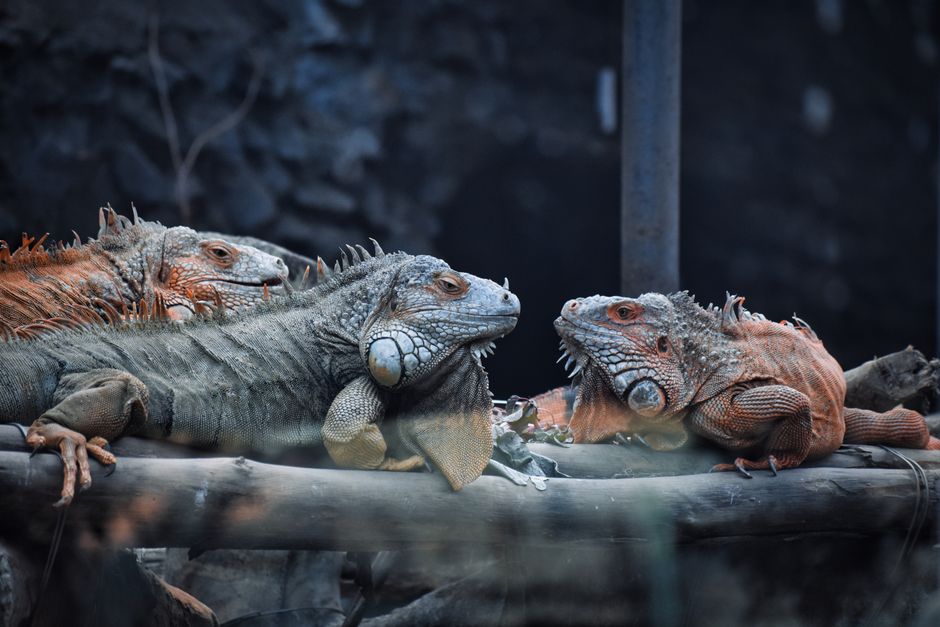
Green iguanas are strict herbivores. In the wild they eat leaves, flowers, and fruit, and they eat almost nothing else. A pet green iguana needs a diet built mostly from dark leafy greens and other vegetables, with fruit kept to a small part of the total. Protein from animal sources does not belong in their food at all.
That short answer hides a lot of detail. The right mix matters, the wrong greens can cause serious harm, and the way the food is prepared and offered affects how much your iguana actually eats. This guide covers what belongs on the plate, what does not, and why.
Are Green Iguanas Herbivores?
Yes. Green iguanas are herbivores for their entire lives, from hatchling to adult.
This is unusual among lizards. Many reptile species shift from insects to plants as they grow, but green iguanas do not. Their digestive system is built around plant material from the start. They have a large, specialized large intestine where gut microbes break down fiber through fermentation, similar in principle to how a horse or rabbit digests plant matter.
That gut system has limits. It handles leafy greens and fibrous vegetables well. It does not handle meat, insects, or high-protein foods. Feeding animal protein to a green iguana is linked to kidney damage and other health problems, and it is one of the most common diet mistakes made by new owners.
Some people feed iguanas dog food, cat food, or monkey biscuits because the animals eat them readily. Eating something does not make it appropriate. The long-term harm from a high-protein diet in this species is well documented in reptile veterinary practice.
What Do Green Iguanas Eat A Complete Food List
The base of the diet should be dark, leafy greens. These make up the largest share of what a green iguana eats, and everything else is built around them.
Staple greens — the everyday backbone of the diet:
- Collard greens
- Mustard greens
- Turnip greens
- Dandelion greens and flowers
- Escarole
- Endive
- Watercress
- Bok choy
- Kale (in moderation — see below)
Other vegetables — good additions that add variety and fiber:
- Winter squash, including butternut and acorn
- Green beans
- Snap peas and snow peas
- Zucchini
- Bell pepper
- Carrots, grated
- Sweet potato, cooked
- Okra
- Alfalfa pellets or hay, offered in small amounts
Fruit — a small treat, not a staple:
- Papaya
- Mango
- Melon
- Berries
- Fig
- Kiwi
Fruit is high in sugar. Keep it to a small portion of the total diet, not a daily main course. Many keepers offer it a few times a week at most.
Flowers — safe edible options include hibiscus, nasturtium, rose petals, and dandelion. Only use flowers grown without pesticides.
Which Greens Should You Limit or Avoid?
Some vegetables that are healthy for people are a poor fit for iguanas, usually because of how they bind or deliver certain minerals.
Kale, spinach, chard, and beet greens contain oxalates. Oxalates can bind calcium and reduce how much the body absorbs. That matters a great deal for iguanas, because calcium balance is central to their health. These greens are not toxic, but they should not be the main green in the bowl. Use them occasionally and lean on collards, mustard greens, and turnip greens instead.
Lettuce is a different problem. Iceberg and head lettuce are mostly water with little nutritional value. They fill the stomach without delivering much. Romaine is a slightly better choice but still not a staple.
Goitrogenic vegetables — cabbage, broccoli, cauliflower, Brussels sprouts — can interfere with thyroid function when eaten in large amounts over time. Small occasional servings are generally considered acceptable, but they should not form a big part of the diet.
Never feed avocado, rhubarb, or anything from a bulb plant such as onion or garlic. These are considered unsafe for iguanas.
Why Calcium and Phosphorus Matter So Much
The calcium-to-phosphorus ratio of the food is one of the most important things about an iguana diet. Getting it wrong is linked to metabolic bone disease, a serious and often irreversible condition.
In simple terms, iguanas need more calcium than phosphorus in their food. Many plant foods are the opposite — high in phosphorus, low in calcium. A diet built on the wrong plants can slowly pull calcium out of the bones.
Dark leafy greens like collards, mustard greens, and turnip greens are good calcium sources with a favorable ratio. That is a big part of why they form the base of the diet. Fruit is generally low in calcium and high in phosphorus, which is another reason to keep it small.
Many iguana keepers dust food with a calcium supplement, often one that does not contain phosphorus. This is common practice in reptile care. Whether and how much to supplement depends on the individual animal and the rest of its diet, so it is a question for a veterinarian who works with reptiles rather than a fixed rule you can apply blindly.
Vitamin D matters here too. Iguanas need it to absorb calcium, and they make it with help from ultraviolet light. A proper UVB light and, where climate allows, safe access to natural sunlight support that process. Diet and lighting work together, and one cannot fully make up for the other.
How Should You Prepare and Offer the Food?
Preparation affects how much nutrition your iguana actually gets.
Wash everything well. Chop greens and vegetables into pieces small enough to swallow easily. A coarse chop works for adults; finer pieces suit younger animals. Mix different greens together rather than serving one type alone, so the animal cannot pick out only its favorite.
Serve food at room temperature or slightly warm, never hot. Offer it in a shallow dish that is easy to reach. Remove uneaten food after a few hours so it does not spoil.
Fresh clean water should be available at all times. Some iguanas prefer to drink from a large water bowl they can soak in, and hydration is closely tied to how well the digestive system works.
How often to feed depends on the animal’s age. Young, growing iguanas generally eat daily. Adults are often fed less frequently. Exact schedules vary, and a reptile veterinarian can help set one for your animal.
Common Feeding Mistakes to Avoid
Most diet problems in pet iguanas come from a handful of recurring errors.
- Feeding animal protein — insects, meat, eggs, dog or cat food. This is the most serious mistake and the one most likely to cause lasting harm.
- Building the diet on lettuce or fruit instead of dark leafy greens.
- Relying on one green only, which limits variety and can tip the mineral balance.
- Skipping calcium and UVB, which sets the stage for bone disease.
- Offering pesticide-treated plants or flowers from gardens and roadsides.
One point that surprises many owners: an iguana that seems to love a food is not a reliable guide to whether that food is good for it. Iguanas will happily eat things that harm them over time. The diet has to be judged on what the species needs, not on what the animal reaches for first.
If you are unsure whether your iguana’s diet is meeting its needs, a veterinarian experienced with reptiles can assess body condition, review the diet, and check for early signs of problems like metabolic bone disease before they become severe.
Frequently Asked Questions
Can green iguanas eat fruit every day?
Fruit should be a small treat, not a daily staple, because it is high in sugar and low in calcium. Offer it a few times a week at most and keep portions small.
Can green iguanas eat insects or meat?
No. Green iguanas are strict herbivores, and feeding animal protein is linked to kidney damage and other health problems.
What is the best everyday food for a green iguana?
Dark leafy greens such as collard, mustard, and turnip greens should form the base of the diet. Mix in other vegetables for variety and keep fruit to a minimum.
Do green iguanas need calcium supplements?
Many keepers use a calcium supplement without phosphorus, and it is common practice in reptile care. The right approach depends on the individual animal and its full diet, so ask a reptile veterinarian.
