
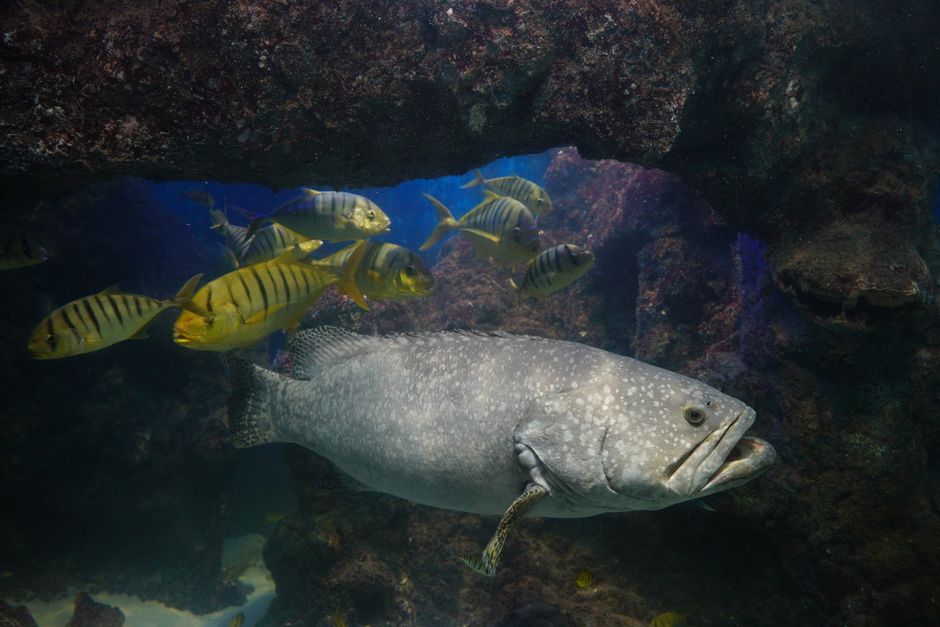
Goliath grouper eat a wide range of prey, but crustaceans and fish make up the bulk of their diet. They are opportunistic ambush predators that swallow prey whole rather than chewing it. Their menu shifts as they grow, from small shrimp and crabs in their juvenile years to large fish, stingrays, and even small sea turtles as adults.
This article explains what goliath grouper eat, how their diet changes with age, how they hunt, and why their feeding habits matter for the health of reef ecosystems. It also clears up a few persistent myths about these large fish.
What Do Goliath Grouper Eat A Look At Their Diet?
Goliath grouper are generalist predators, meaning they eat whatever suitable prey they can catch and swallow. They do not specialize on a single food source the way some fish do.
Their diet is built mostly from two groups:
- Crustaceans — including crabs, lobsters, and shrimp, especially for younger fish
- Fish — including reef fish, snappers, grunts, and other species that share their habitat
Larger adults also eat animals that most reef predators avoid, such as stingrays and small sea turtles. They have even been documented eating other groupers and small sharks, though these are not everyday meals.
One detail that surprises many people: goliath grouper have small teeth relative to their body size. They are not built for tearing or chewing. Instead, they use a powerful suction mechanism. When they open their mouths quickly, the sudden expansion of the mouth and throat pulls water and prey inward. The prey is swallowed whole. This is why almost anything that fits in their mouth is a potential meal.
How Does Their Diet Change As They Grow?
A goliath grouper’s diet is not fixed for life. It changes as the fish gets bigger because the fish can handle bigger prey.
Juvenile goliath grouper live in mangrove roots and shallow coastal waters. These are nursery habitats, and they offer both shelter and food. Young fish feed heavily on small crustaceans — shrimp, small crabs, and similar invertebrates. Their small mouths limit what they can swallow.
As they grow, they move toward reefs and deeper structure. Their diet shifts toward larger crustaceans and then toward fish. Adult goliath grouper are large enough to take prey that would be impossible for a juvenile to handle.
This pattern — eating small invertebrates when young and larger fish as adults — is common among large predatory fish. It reduces competition between young and adult fish of the same species, since they are not chasing the same food.
How Do Goliath Grouper Hunt And Capture Prey?
Goliath grouper are ambush predators. They do not chase prey over long distances. Instead, they use structure — reefs, wrecks, ledges, and mangrove roots — to stay hidden and wait.
When a suitable animal comes close, the grouper opens its mouth and expands its mouth cavity rapidly. This creates a strong suction that pulls the prey in. The whole process happens in a fraction of a second.
This hunting style has a few consequences:
- They rely on being close to prey, not on speed
- They can eat animals that are larger than you might expect for their mouth size, because suction helps draw prey in
- They tend to feed in areas with good cover, which is why reefs and mangrove systems matter to them
Some reports describe goliath grouper making a loud booming sound, which is produced by muscles vibrating against the swim bladder. This sound is used in communication, not hunting, but it is often noticed by divers near these fish.
What Animals Eat Goliath Grouper?
Adult goliath grouper have few natural predators because of their size. Large sharks are the main threat to adults.
Juveniles are far more vulnerable. In their mangrove nursery habitats, young goliath grouper can be eaten by:
- Larger fish, including other groupers
- Sharks that move into coastal waters
- Barracuda and similar predatory fish
This is one reason mangrove habitat is so important to the species. The tangled roots give young fish cover from predators while they grow. Loss of mangrove habitat removes that protection.
Why Does The Goliath Grouper’s Diet Matter?
Goliath grouper sit near the top of the food web in the habitats they occupy. That position gives them outsized influence on the ecosystem around them.
By eating a wide range of prey, they help shape which species are abundant and which are kept in check. They also move nutrients between habitats. A fish that feeds on a reef and then moves into another area carries energy and nutrients with it.
Their feeding habits also affect other animals indirectly. When a large grouper is present, smaller predators may behave differently or avoid certain areas. These effects are not always obvious, but they are part of how reef communities function.
There is also a practical side. Because goliath grouper eat fish that people also catch — such as snappers and grunts — their diet is sometimes a point of tension between conservation and fishing interests. This is a real debate, and the evidence on how much goliath grouper actually reduce populations of commercially important fish is not fully settled.
Common Myths About What Goliath Grouper Eat
A few claims about goliath grouper diet circulate widely. Some are overstated.
Myth: They mainly eat people’s catch. Goliath grouper do eat fish that people target, and they are known to take hooked fish. But their diet overall is broad and includes many species that are not commercially important. Saying they survive mainly on valuable catch fish is not accurate.
Myth: They only eat dead or dying animals. Goliath grouper are active predators. They hunt live prey. They may also scavenge when the opportunity arises, as many large predators do, but scavenging is not their main feeding mode.
Myth: They cannot eat hard-shelled prey. They can. Their suction feeding and the crushing plates in their throat allow them to handle crustaceans and other armored animals. This is one reason crabs and lobsters appear so often in their diet.
What is well supported: goliath grouper are opportunistic predators with a broad diet that shifts with age. What is less certain: the exact long-term effects of their feeding on specific fish populations, which remain an area of active research.
Frequently Asked Questions
What do goliath grouper eat the most?
Crustaceans and fish make up most of their diet, with the balance shifting toward larger fish as they grow. Juveniles eat more small crustaceans, while adults take larger prey including stingrays and small sea turtles.
Do goliath grouper eat sharks?
They have been documented eating small sharks, but this is not a common part of their diet. Large sharks are actually one of the few natural threats to adult goliath grouper.
Do goliath grouper eat people?
There is no reliable evidence that goliath grouper prey on humans. Attacks on divers are extremely rare, and the fish generally avoid or ignore people unless provoked or habituated to being fed.
How do goliath grouper catch their food?
They are ambush predators that use a powerful suction motion to pull prey into their mouths. They swallow prey whole rather than chewing it.
