
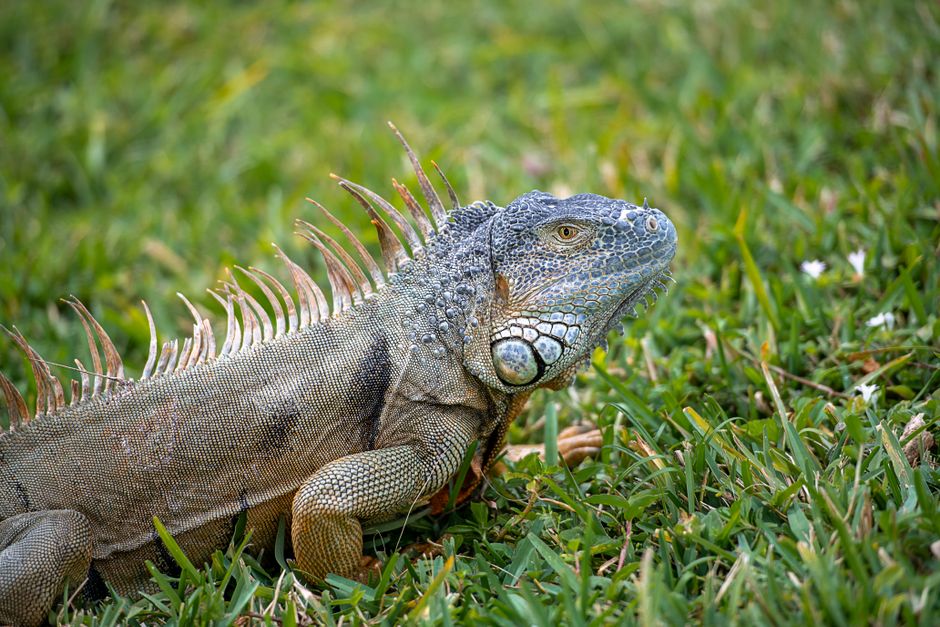
Florida is home to dozens of lizard species, and almost all of them eat insects and other small invertebrates. The most common backyard lizards — brown anoles, green anoles, and geckos — feed on ants, spiders, beetles, flies, and other bugs they can catch and swallow whole. A few larger species, like the invasive green iguana, eat plants instead. What a Florida lizard eats depends entirely on which species you are looking at.
Which Lizards Are You Most Likely to See in Florida?
Florida has more established non-native lizard species than any other state, alongside its native ones. The mix means a lizard on your fence could be a native anole or an introduced species from the Caribbean or Latin America.
The lizards most people notice fall into a few groups:
- Anoles — brown anoles and native green anoles are the small, quick lizards on fences, walls, and shrubs.
- Geckos — including Mediterranean house geckos and tropical house geckos, often seen near porch lights at night.
- Skinks — such as the five-lined skink, usually found in leaf litter and under logs.
- Curly-tailed lizards — an introduced species now common in many parts of the state.
- Iguanas — large green iguanas, established in South Florida and growing well over three feet long.
- Glass lizards — legless lizards often mistaken for snakes.
Knowing the group matters because diet splits sharply along one line: most of these lizards are insect eaters, but iguanas are largely plant eaters. That single difference changes everything about what they eat and why they show up in your yard.
What Do Florida Lizards Eat?
Most Florida lizards are insectivores or generalist predators of small invertebrates. They eat whatever small, moving prey they can overpower and swallow. There is no single answer because “Florida lizard” covers many species with different body sizes and different hunting styles.
Common prey for the small, abundant species includes:
- Ants and termites
- Spiders
- Beetles and their larvae
- Flies and mosquitoes
- Crickets, grasshoppers, and other orthopterans
- Moths and butterflies
- Roaches
- Small worms and grubs
Anoles are classic sit-and-wait hunters. They perch, watch for movement, then dash out to grab prey. This is why they are so effective around homes — a porch light, a garden bed, or a compost pile concentrates insects, and the lizards follow.
Larger insect-eating lizards take larger prey. A big curly-tailed lizard or a mature skink can handle bigger beetles and grasshoppers than a small anole can. A few of the larger species will occasionally eat small vertebrates, including other lizards, but this is not their main diet.
One clarification worth making: lizards do not eat fruit, seeds, or kitchen scraps the way some people assume. Insect-eating species have no use for them. If you put out produce hoping to feed anoles, you are more likely to attract rodents and raccoons than lizards.
Do Iguanas Eat Plants Instead of Insects?
Green iguanas are primarily herbivorous as adults. They eat leaves, flowers, and fruits, and they are a genuine landscaping problem in South Florida for that reason. A large iguana can strip ornamental plants, and they are known to feed on garden vegetables and flowering plants.
This is a real distinction, not a technicality. An adult green iguana and a brown anole share a state but almost nothing else in diet. If you are trying to understand why iguanas are destroying your garden while anoles seem to help by eating bugs, the answer is that they are eating completely different things.
Young iguanas are somewhat more omnivorous than adults and may take some animal matter, but the adult diet is plant-based. Some other introduced lizards in Florida, including certain species of spiny-tailed iguanas, also lean heavily on plant material.





Why Do Lizards Show Up Around Houses and Gardens?
Lizards go where the food and shelter are. A Florida yard with insects, ground cover, and warmth is close to ideal habitat for most small species.
Several things draw them in:
- Insects — garden beds, mulch, and outdoor lights concentrate prey.
- Shelter — rock piles, dense shrubs, cracks in walls, and stacked wood give them places to hide from predators and heat.
- Warmth — lizards are ectothermic, meaning they rely on their environment for body heat. Sunny walls and pavement help them regulate temperature.
- Fewer predators — some yards lack the birds, snakes, and larger lizards that would otherwise keep numbers down.
Because most Florida yard lizards eat insects, their presence usually reflects a healthy supply of bugs nearby. That is not the same as saying they eliminate a pest problem. A few lizards will not control a mosquito population or clear out a roach infestation. They eat insects because insects are abundant, not because they are a pest control service.
Do Florida Lizards Eat Mosquitoes and Other Pests?
Yes, lizards eat mosquitoes and other insects people consider pests, but the effect on pest numbers is limited. A lizard eats what it can catch, and mosquitoes are small and often active when many lizards are not.
Lizards do eat a wide range of insects that overlap with pest species, including ants, roaches, and beetles. Some research on anole diets has found that they take whatever small arthropods are locally abundant, which can include pest species when those are common.
The honest position is that lizards are part of the local food web and eat insects, but they are not a substitute for actual mosquito control. Standing water removal and other mosquito management practices remain the effective tools. Relying on lizards to reduce mosquitoes is not supported by evidence.
Should You Feed Wild Lizards in Florida?
No. Feeding wild lizards is not recommended, and in the case of some species it can create real problems.
There are a few reasons:
- Wrong food. Insect-eating lizards cannot digest the human foods people often offer, and the wrong diet can harm them.
- Unwanted animals. Food left outside attracts rodents, raccoons, and other wildlife.
- Disease and crowding. Concentrating lizards in one spot can spread disease and parasites among them.
- Legal issues. Some Florida species are regulated, and feeding certain wildlife can run into state rules.
If you want to support the lizards already in your yard, the practical approach is to leave their habitat alone. Keep some dense planting, leave a few leaf piles or rock features, and avoid broad pesticide use that wipes out the insects they depend on. That is more useful than any feeder.
Are Florida Lizards Dangerous to People or Pets?
Florida lizards are not dangerous to people. None of the common backyard species in the state are venomous, and they generally avoid humans. The main risk is a bite if someone grabs or handles one, which can break the skin but is not medically serious in most cases.
For pets, the picture is different. Cats and dogs sometimes catch and eat lizards. Some lizards and their feces can carry parasites, including certain Salmonella bacteria, which is why reptiles of any kind are a known source of human Salmonella infections. The CDC has long advised handwashing after any contact with reptiles or their environments, and that applies to wild lizards too.
If a pet eats a lizard, most of the time nothing serious happens, but monitoring is reasonable. Contact a veterinarian if the animal shows vomiting, lethargy, or other signs of illness. If a person is bitten and the skin is broken, clean the wound and watch for signs of infection.
One caution about identification: many Florida lizards look similar at a glance, and a brown anole, a young curly-tailed lizard, and a skink can be confused by a casual observer. If you are unsure what you are looking at, treat it as a wild animal and leave it alone rather than handling it.
Do Florida Lizards Change What They Eat by Season?
Yes, diet shifts with what is available. Insect populations rise and fall with temperature and rainfall, and lizards eat accordingly. During warm, wet months, insects are abundant and lizards feed heavily. In cooler periods, many lizards are less active and eat less overall.
This is one reason a lizard’s diet is best described as opportunistic rather than fixed. An anole in a lush, bug-rich yard in summer is eating a different mix than the same species in a dry, sparse yard in winter. The species sets the general category — insects for most, plants for iguanas — but the specifics follow the local supply.
Frequently Asked Questions
What do Florida lizards eat?
Most Florida lizards eat insects and other small invertebrates like ants, spiders, beetles, and flies. Green iguanas are the main exception and eat plants instead.
Do Florida lizards eat fruit or human food?
Insect-eating lizards like anoles and geckos do not eat fruit or human food, and offering it can harm them. Only plant-eating species like iguanas consume plant material, and feeding wild lizards is not recommended.
Are Florida lizards poisonous?
No common Florida backyard lizard is venomous, so they are not dangerous to people. A bite can break the skin, and reptiles can carry Salmonella, so wash your hands after any contact.
Do lizards in Florida eat mosquitoes?
They do eat mosquitoes when they catch them, but lizards do not meaningfully reduce mosquito numbers. Removing standing water remains the effective way to limit mosquitoes.
