
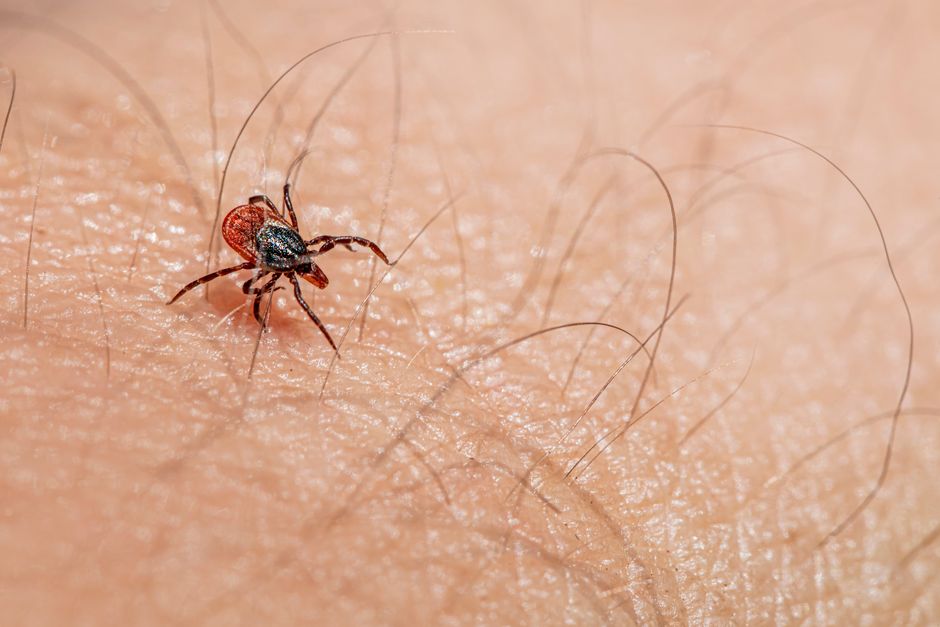
Flea bites on humans look like small, red, raised bumps that often appear in clusters or straight lines. They are usually about the size of a pencil eraser and have a red halo around a lighter center. The most telling sign is their location — flea bites almost always appear on the lower legs, ankles, and feet, especially around the socks and shoe line.
How Can You Tell Flea Bites Apart from Mosquito or Bed Bug Bites?
Flea bites, mosquito bites, and bed bug bites can look similar at first glance. But there are clear differences once you know what to look for.
Flea bites are small, hard, and itch intensely. They usually appear in groups of three or four — often described as a “breakfast, lunch, and dinner” pattern. The bites are most common on the lower legs and ankles. The skin around each bite may feel tender or sore to the touch.
Mosquito bites are larger, softer, and appear randomly on exposed skin. They are more likely to be solitary bumps rather than clusters. Mosquito bites also tend to swell more and may feel warm.
Bed bug bites are often found on the upper body — arms, neck, face, and hands. They form zigzag or straight lines of bites. Bed bug bites can take days to appear, while flea bites usually show up within hours.
| Feature | Flea Bites | Mosquito Bites | Bed Bug Bites |
|---|---|---|---|
| Location | Lower legs, ankles, feet | Any exposed skin | Upper body, arms, face |
| Pattern | Clusters of 3-4 in a row | Random, solitary | Zigzag or straight lines |
| Appearance time | Hours after bite | Minutes to hours | 1-3 days after bite |
| Itch intensity | Very intense | Moderate | Moderate to intense |
| Bite feeling | Hard, raised, sore | Soft, swollen, warm | Flat or slightly raised |
One non-obvious clue: flea bites often have a tiny red dot in the center where the flea fed. This is called a punctum. Mosquito and bed bug bites usually lack this central dot.
What Are the Common Symptoms of Flea Bites on Humans?
The most obvious symptom is intense itching. For most people, the itching starts within an hour of being bitten and can last for several days. The urge to scratch can be strong enough to disrupt sleep.
The bites themselves are small, red bumps with a red halo. They feel firm when you touch them. Some people develop a small blister at the bite site. The area around the bites may feel slightly swollen.
Some people report a burning or stinging sensation right when the flea bites. This is brief — it lasts only a few seconds. After that, the itching takes over.
In children, the reaction can be more dramatic. Their skin may develop larger welts or hives around the bites. This is not an allergic reaction in most cases — it is just a stronger immune response in younger skin.
What Do Flea Bites Look Like On Humans With Allergic Reactions?
Most people have a mild reaction to flea bites. But some people are genuinely allergic to flea saliva. This condition is called flea allergy dermatitis.
Research shows that people with this allergy develop much larger, more inflamed bites. The bumps can grow to the size of a dime or even a quarter. The skin around the bites becomes red, hot, and intensely itchy. Blisters may form. The affected area can feel hard and swollen.
Current research suggests that about 15-20% of people have some level of flea saliva allergy. The reaction tends to get worse with repeated bites. Someone who gets bitten frequently may develop stronger symptoms over time.
The key difference between a normal reaction and an allergic one is the extent of the rash. Allergic reactions spread beyond the bite sites. You may see red streaks or patches of hives several inches away from the actual bites. If this happens, it is worth seeing a doctor.
Secondary infections are a real risk with allergic reactions. When the skin is broken from scratching, bacteria can enter. Signs of infection include increasing redness, warmth, pus, or red streaks leading away from the bite. Fever is another warning sign.



What Should You Do If You Find Flea Bites on Yourself or Your Family?
The first step is to confirm the source. Check your pets if you have any. Look for fleas on their belly, tail base, and inner thighs. Fleas look like tiny, dark, moving specks. You may also see “flea dirt” — small black specks that are actually dried blood.
If you do not have pets, check your home for fleas. Adult fleas can live in carpets, bedding, and furniture. They are most active in warm, humid environments. Vacuuming thoroughly and washing bedding in hot water can help reduce the population.
For the bites themselves, the goal is to stop the itching without breaking the skin. Here is what works:
- Wash the bites with mild soap and cool water to remove bacteria and flea saliva
- Apply an ice pack or cold compress for 10-15 minutes to reduce swelling and numb the itch
- Use an over-the-counter hydrocortisone cream (1%) to calm inflammation
- Take an oral antihistamine like cetirizine (Zyrtec) or loratadine (Claritin) for persistent itching
- Keep fingernails short to minimize damage if you scratch in your sleep
Do not scratch. Scratching breaks the skin and increases infection risk. If the itching is unbearable, cover the bites with a bandage or wear long socks to create a physical barrier.
What Are the Common Misconceptions About Flea Bites?
One widespread myth is that fleas only bite people with pets. This is false. Fleas can enter homes on clothing, shoes, or through open windows. They can survive for weeks without a host. A home without pets can still have a flea problem.
Another misconception is that flea bites always appear in a straight line. While clusters are common, bites can appear randomly. The pattern depends on how the flea moves across the skin. Some people get scattered bites, not neat rows.
Some people believe that flea bites are dangerous or carry diseases in the United States. This is largely overblown. Fleas can transmit diseases like typhus and plague in parts of the world, but these are extremely rare in the US. As of 2026, the biggest risk from flea bites in the US is infection from scratching, not the bite itself.
Another common belief is that flea bites look the same on everyone. They do not. Skin tone affects how bites appear. On lighter skin, bites look bright red. On darker skin, they may appear purple, dark brown, or simply as darker spots. The red halo may not be visible on darker skin tones.
Finally, many people think that once the bites heal, the problem is over. This is not true if fleas remain in your home. Bites will keep coming until you eliminate the fleas. Treating the bites without treating the source is a temporary fix.
What to Avoid When Treating Flea Bites at Home
Do not use heat on flea bites. Heat makes itching worse. Some people try hot water or hair dryers thinking it will “kill” the itch. It does not. It inflames the skin further.
Do not apply undiluted essential oils directly to bites. Tea tree oil, lavender oil, and others can cause chemical burns or allergic contact dermatitis. If you use essential oils, dilute them in a carrier oil first. Even then, there is limited evidence that they work better than simple cold compresses.
Do not use rubbing alcohol on bites. Alcohol dries out the skin and can delay healing. It also stings. There is no benefit over soap and water.
Do not use antibiotic ointments like Neosporin on uninfected bites. They add nothing and can cause contact allergies in some people. Only use antibiotics if a doctor confirms an infection.
Do not scratch. This is the hardest one to follow but the most important. Scratching releases histamine, which makes the itching worse. It is a vicious cycle. If you cannot stop, talk to a pharmacist about stronger anti-itch options.
Frequently Asked Questions
Can flea bites spread from person to person?
No. Flea bites are not contagious. The bites themselves cannot spread to another person. Only the fleas can spread, and only by jumping from one host to another.
How long do flea bites last on humans?
Most flea bites heal within 1-2 weeks. The itching usually subsides within a few days. Darker spots from healed bites may last several weeks on some skin tones.
Do flea bites leave scars?
Flea bites rarely leave permanent scars on their own. Scarring only happens if the bites are scratched open repeatedly or become infected. Keeping the bites clean and avoiding scratching prevents most scarring.
Can fleas live in human hair?
No. Human hair does not provide enough warmth or shelter for fleas to live. Fleas prefer furry animals like cats and dogs. They may bite the scalp but will not stay there.
