
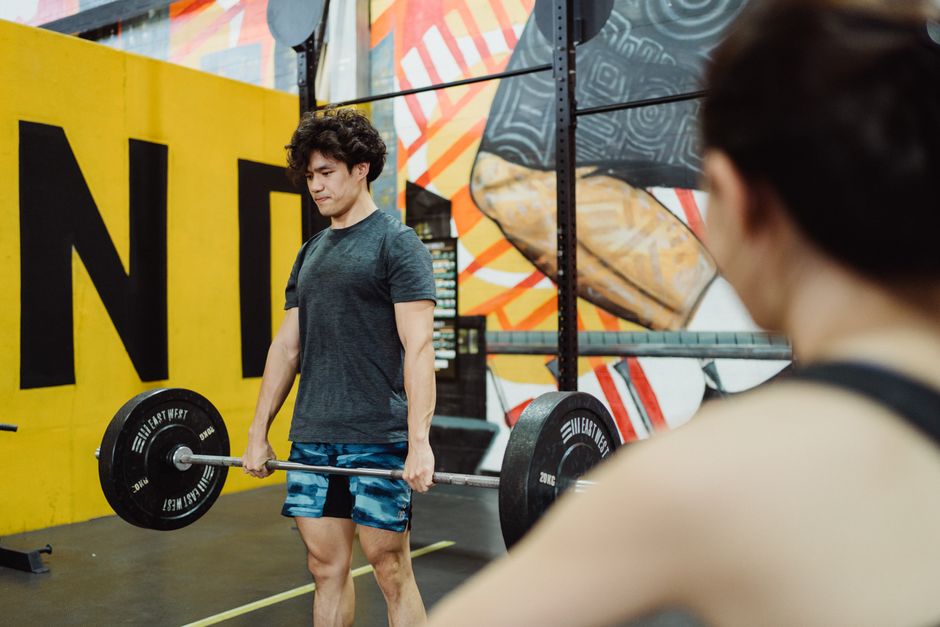
Deadlifts are a compound exercise that primarily works the muscles of your posterior chain — the back side of your body. The main muscles involved are the hamstrings, glutes, and lower back, with significant support from your core, forearms, and upper back. In short, a deadlift is a hip-hinge movement that trains your body to pick things up off the floor safely and with strength. It is one of the most effective exercises for building total-body strength because it recruits more muscle mass than most other lifts.
What Muscles Does a Deadlift Work?
The deadlift is not an isolation exercise. It is a full-body movement that requires coordinated effort from multiple muscle groups at the same time. The primary movers are the muscles that extend your hip and knee joints as you stand up with the weight.
The glutes and hamstrings do the heavy lifting. These muscles extend your hips and drive your body upright. The quadriceps also activate, especially at the start of the lift when your knees are bent. As you pull the bar past your knees, the quads become less active and the hamstrings and glutes take over.
Your erector spinae — the muscles along your spine — work isometrically to keep your back flat and stable. They do not move the weight, but they hold your torso in a safe position. Your core muscles, including the abdominals and obliques, also contract to create intra-abdominal pressure. This pressure supports your spine under heavy loads.
The upper back muscles, including the traps and rhomboids, work to keep your shoulder blades stable. Your forearms and grip muscles are also heavily involved, since you are holding the bar for the entire lift. Even your latissimus dorsi — the large muscles of your mid-back — engage to keep the bar close to your body.
What Are the Main Benefits of Deadlifting?
Deadlifting builds strength where most people need it most. The movement mimics a basic human pattern: bending down and picking something up. Training this pattern with resistance makes everyday tasks easier and reduces the risk of injury when lifting objects in daily life.
Research consistently shows that compound lifts like the deadlift are effective for increasing overall muscle mass and strength. Because the movement recruits so many large muscle groups at once, it creates a significant demand on your body. This makes it an efficient exercise for people with limited training time.
The deadlift also strengthens the posterior chain, which is often weak in people who sit for long periods. Sitting shortens the hip flexors and weakens the glutes. Deadlifting directly targets those weakened muscles, which can improve posture and reduce lower back pain in some people.
Bone density is another benefit. Weight-bearing exercises like the deadlift place mechanical stress on your skeleton, which stimulates bone remodeling. Some studies suggest that resistance training is effective for maintaining bone density as you age, though results vary by individual and program design.
What Is the Correct Deadlift Form?
Form matters more than weight. A deadlift with poor form is not just less effective — it is genuinely dangerous. The most common mistake is rounding the lower back, which places excessive stress on the spinal discs.
Start with the bar on the floor. Stand with your feet about hip-width apart, with the bar over the middle of your feet. Hinge at your hips and bend your knees until your hands can reach the bar. Your grip should be just outside your legs.
Before you pull, set your back. Squeeze your shoulder blades together slightly and brace your core as if you are about to be punched in the stomach. Your chest should be up, and your spine should be neutral — not rounded, not overextended.
Push the floor away with your legs. The bar should travel straight up, staying close to your body the entire time. As the bar passes your knees, drive your hips forward to stand completely upright. Lower the bar the same way you lifted it, keeping it close to your body.
Common form faults include starting with your hips too low, which turns the deadlift into a squat. Another fault is jerking the bar off the floor, which can strain the lower back. Pull the slack out of the bar first — this means applying tension before the bar actually moves.





How Does the Deadlift Compare to Other Exercises?
Deadlifts are often compared to squats, and for good reason. Both are compound lifts that build lower body strength. But they are not interchangeable. Squats train the knee-dominant pattern. Deadlifts train the hip-dominant pattern. Most people benefit from doing both.
The deadlift generally allows you to lift more weight than the squat. This is because the movement uses more muscle mass and a shorter range of motion. Heavier loads mean greater mechanical tension, which is a key driver of muscle growth.
Compared to isolation exercises like leg curls or back extensions, the deadlift is far more efficient. A single set of deadlifts trains your hamstrings, glutes, lower back, upper back, core, and grip. Isolation exercises target one muscle at a time. Both have a place in a training program, but the deadlift delivers more return per minute invested.
| Exercise | Primary Muscles | Movement Pattern |
|---|---|---|
| Deadlift | Hamstrings, glutes, lower back | Hip hinge |
| Squat | Quads, glutes, core | Knee bend |
| Romanian Deadlift | Hamstrings, glutes | Hip hinge (no floor start) |
| Back Extension | Lower back, glutes | Hip hinge (light load) |
The Romanian deadlift is a variation that starts from a standing position and emphasizes the hamstrings more than the conventional deadlift. It is a good option for people who want to focus on posterior chain development without the technical demands of pulling from the floor.
Are Deadlifts Safe for Your Back?
This is the most common question about deadlifts, and the answer is more nuanced than most fitness content suggests. A properly performed deadlift does not harm a healthy back. In fact, research indicates that controlled spinal loading can strengthen spinal structures over time.
However, deadlifting with poor form — especially with a rounded lower back under heavy load — can cause injury. The risk is highest when fatigue sets in and form breaks down. This is why most lifting coaches emphasize stopping a set when your form starts to change, not when your muscles fail.
People with existing back conditions should be cautious. Some studies suggest that specific spinal loading exercises can help certain types of back pain, but the evidence is not uniform. If you have a herniated disc, spinal stenosis, or other diagnosed spinal condition, consult a clinician before adding deadlifts to your routine.
No clinical guideline universally recommends or prohibits deadlifting for people with back pain. The decision depends on the specific diagnosis, your current symptoms, and your experience level. A physical therapist or qualified coach can assess your movement patterns and help you decide if deadlifting is appropriate.
How Often Should You Deadlift?
Deadlifting frequency depends on your experience level and training goals. Because the deadlift is demanding on the central nervous system, most people do not need to perform it more than once or twice per week. Beginners often benefit from once per week to allow for adequate recovery.
More advanced lifters sometimes deadlift twice per week, using a heavier session and a lighter, technique-focused session. The key variable is recovery. The deadlift taxes your lower back and nervous system heavily. If your next session feels weaker or your lower back remains sore for days, you are likely deadlifting too often.
Sets and repetitions also matter. For pure strength, lower repetitions — around three to five per set — with heavier weight are common. For muscle growth, higher repetitions in the six to ten range are often used. Both approaches work, but they produce different adaptations.
There is no universal prescription that works for everyone. A reasonable starting point is three to five sets of five repetitions once per week. Adjust based on how your body responds. If you are unsure, work with a qualified coach to build a program that fits your goals and recovery capacity.
What Are Common Deadlift Mistakes to Avoid?
Several mistakes show up repeatedly in gyms, and they all reduce the effectiveness of the lift or increase injury risk. The most serious is rounding the lower back. This places the spine in a vulnerable position under load. If you cannot keep your back flat, the weight is too heavy.
Another common error is starting with the hips too low. This turns the deadlift into a squat and places excessive stress on the knees. The deadlift is a hip hinge, not a squat. Your hips should be higher than they would be in a squat position.
Pulling the bar away from your body is another frequent fault. The bar should stay in contact with your legs for the entire lift. The further the bar travels from your center of gravity, the harder your lower back must work to compensate.
Finally, many people let the weight pull them forward at the top of the lift. Stand tall at the end of the movement without leaning backward. Overextending the spine at the top places unnecessary compression on the lower back and provides no additional benefit.
Frequently Asked Questions
Do deadlifts build your abs?
Yes, deadlifts activate your core muscles, including the abdominals, because they must brace to protect your spine under load. However, they are not the most effective exercise for visible abdominal definition, which depends mainly on body fat levels.
Can you deadlift every day?
No, deadlifting every day is not recommended for most people. The movement heavily taxes the lower back and nervous system, and most lifters need at least 48 hours of recovery between sessions.
Are deadlifts bad for your knees?
Deadlifts are generally not harmful to healthy knees, and they may actually strengthen the muscles that support the knee joint. People with existing knee conditions should check with a clinician before adding heavy deadlifts to their routine.
What is the difference between a deadlift and a Romanian deadlift?
A conventional deadlift starts with the bar on the floor and involves both knee and hip movement. A Romanian deadlift starts from a standing position and involves mostly hip movement, placing greater emphasis on the hamstrings.
