
Every living thing on Earth is built from cells. Some organisms are a single cell. You are made of trillions. Despite that enormous range, all cells share a small set of basic features. Every cell has a cell membrane, cytoplasm, genetic material in the form of DNA, and ribosomes. Those four things are universal. Everything else varies depending on the type of cell.
That short list is the answer most people are looking for. The rest of this article explains what each part does, why it matters, and where the common “facts” about cells get fuzzy or wrong.
What Do All Cells Have in Common?
Four structures appear in every known cell, from a bacterium in soil to a neuron in your brain. Remove any one of them and the cell cannot survive as a living unit.
The cell membrane is a thin double layer of fat molecules with proteins embedded in it. It separates the inside of the cell from the outside world. More than a wall, it controls what gets in and out. Oxygen, water, and nutrients cross it. Waste leaves through it. Without a membrane, a cell’s contents would simply disperse.
The cytoplasm is the jelly-like fluid that fills the inside of the cell. It is mostly water, plus salts, sugars, and proteins. Chemical reactions of life happen here. In cells that have a nucleus, the cytoplasm is everything inside the membrane except the nucleus.
DNA is the genetic material. Every cell carries instructions written in DNA, and those instructions are needed to build proteins and to copy the cell. The DNA may sit loose in the cell or be enclosed in a nucleus, but it is always present.
Ribosomes are tiny molecular machines that build proteins. They read the instructions copied from DNA and assemble amino acids into the proteins a cell needs to function. Ribosomes are found in every cell studied to date.
One clarification worth making: a cell wall is not on this list. Many people assume all cells have one because plant cells do. They do not. Animal cells lack a cell wall entirely, and so do the cells of many other organisms.
What Is the Difference Between Prokaryotic and Eukaryotic Cells?
Cells come in two broad types, and the main difference is whether the DNA is enclosed in a nucleus. Prokaryotic cells have no nucleus. Eukaryotic cells do.
Bacteria and a group called archaea are prokaryotes. Their DNA sits in a region of the cytoplasm rather than inside a membrane-bound compartment. They are generally small and simple in structure, though “simple” undersells them. They carry out every function of life.
Plants, animals, fungi, and single-celled organisms like amoebas are eukaryotes. Their DNA is packed inside a nucleus, separated from the rest of the cytoplasm by a nuclear membrane. Eukaryotic cells also contain other membrane-bound compartments called organelles. Each organelle does a specific job.
Here is where the four universal features hold. Both cell types have a membrane, cytoplasm, DNA, and ribosomes. The nucleus is the big divider, but it is not universal.
- Prokaryotic cells: no nucleus, DNA loose in the cytoplasm, usually no membrane-bound organelles
- Eukaryotic cells: DNA inside a nucleus, multiple organelles, generally larger
The distinction matters for medicine. Antibiotics often target structures found in bacteria but not in human cells. That is part of why they can kill an infection while leaving your own cells largely intact.
What Do Plant Cells Have That Animal Cells Do Not?
Plant cells have three structures that animal cells lack: a cell wall, chloroplasts, and a large central vacuole. These are additions, not replacements. Plant cells still have everything on the universal list.
The cell wall is a rigid outer layer made mainly of cellulose. It sits outside the cell membrane and gives plant cells their shape and rigidity. It is also why plants can stand upright without a skeleton.
Chloroplasts are the organelles where photosynthesis happens. They contain the green pigment chlorophyll, which captures light energy. The cell uses that energy to make sugars from carbon dioxide and water. Animal cells cannot do this.
The central vacuole is a large fluid-filled sac that stores water and helps keep the cell firm. When a plant wilts, it is often because those vacuoles have lost water and the cells have gone limp.
Animal cells have their own specializations. Many contain structures like lysosomes and centrioles that are not typical of plant cells. The point is not that one cell type is better. Each is built for a different way of life.





Do All Cells Have a Nucleus?
No. Only eukaryotic cells have a nucleus. Prokaryotic cells, including all bacteria, do not.
This trips people up because the nucleus gets so much attention. It is often called the “control center” of the cell, which is a reasonable shorthand. The nucleus holds most of a eukaryotic cell’s DNA and coordinates activities like growth and division.
But a nucleus is not required for life. Bacteria carry out all the same essential functions, including copying their DNA and building proteins, without one. Their DNA is organized differently, but the information is still there and still used.
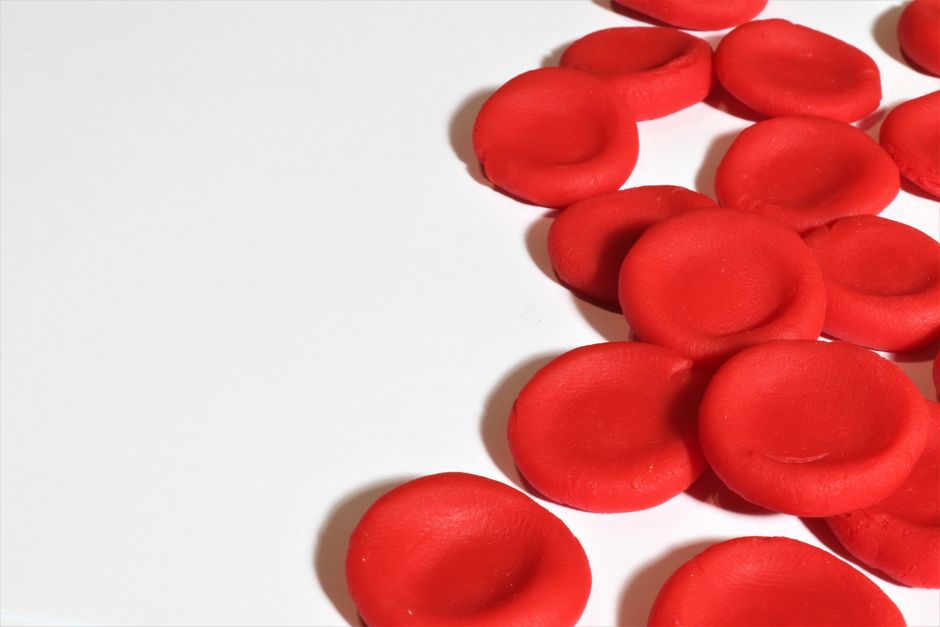
Human cells are eukaryotic, so your cells do have nuclei. There is one well-known exception worth noting. Mature red blood cells lose their nucleus as they develop, which makes room for more oxygen-carrying hemoglobin. They are a special case, not the rule.
Why Do Cells Need Ribosomes and DNA?
Ribosomes and DNA work as a pair, and together they explain how a cell maintains and copies itself. DNA stores the instructions. Ribosomes use those instructions to build the proteins that do the work.
The flow of information runs in one direction. DNA is copied into a related molecule called RNA. The RNA is read by the ribosome. The ribosome links amino acids together to form a protein. This sequence, often summarized as DNA to RNA to protein, is fundamental to biology.
Proteins made this way serve as enzymes, structural supports, signaling molecules, and much more. Without ribosomes, a cell would have instructions but no way to act on them. Without DNA, it would have machinery but nothing to build.
The universality of ribosomes has real clinical relevance. Some antibiotics work by binding to bacterial ribosomes and shutting down their protein production. Because bacterial and human ribosomes differ in structure, these drugs can target the bacteria more selectively. This is established pharmacology, not a new idea.
What Do All Cells Not Have?
Plenty of structures people assume are universal are not. Knowing what is optional helps clear up a lot of confusion.
Not all cells have a cell wall, a nucleus, chloroplasts, mitochondria, or a large central vacuole. Even mitochondria, famous as the “powerhouse of the cell,” are not universal. They are found in eukaryotic cells but not in prokaryotes. Bacteria generate energy using different machinery in their membranes.
This is where a common myth deserves a direct correction. You may have heard that all cells have mitochondria. They do not. The claim is a simplification that gets repeated in classrooms and then sticks.
The same caution applies to any statement that begins with “all cells have.” The safe list is short: membrane, cytoplasm, DNA, and ribosomes. Beyond that, check the specific cell type before assuming.
How Big Are Cells, and Does Size Vary?
Cells vary enormously in size, from bacteria far too small to see with the naked eye to some unusually large cells. Most human cells are microscopic and measured in micrometers, or millionths of a meter.
Size affects how a cell functions. A cell relies on its surface to exchange materials with its surroundings. As a cell grows, its volume increases faster than its surface area. That limits how large most cells can get before they must divide or change shape. This relationship is a well-established principle in cell biology.
There are exceptions. Some nerve cells extend long distances, and a few cell types reach sizes that seem to defy the rule. They manage this through shape and internal transport rather than by being round and large. The general principle still holds for most cells.
Frequently Asked Questions
What are the four things all cells have?
Every cell has a cell membrane, cytoplasm, DNA, and ribosomes. These four features are found in all known cells, from bacteria to human neurons.
Do all cells have a cell wall?
No, not all cells have a cell wall. Plant cells and many bacteria do, but animal cells do not, and neither do the cells of many other organisms.
Do all cells have mitochondria?
No. Mitochondria are found in eukaryotic cells but not in prokaryotic cells such as bacteria, which generate energy using different structures.
Do all cells have DNA?
Yes, all known cells carry DNA as their genetic material, though its organization differs between prokaryotic and eukaryotic cells.
