
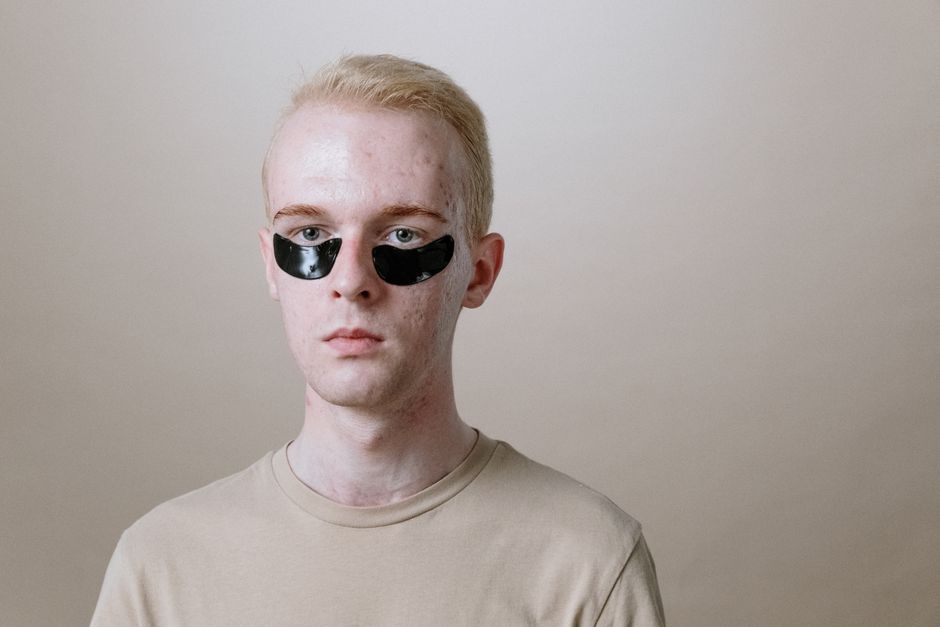
Acne scars come in two main forms: depressed scars that sit below the surrounding skin, and raised scars that sit above it. Depressed scars look like pits, dents, or shallow craters in the skin, while raised scars look like firm, smooth bumps or thickened patches. Knowing which type you have matters because the treatments for each are completely different.
What Do Depressed Acne Scars Look Like?
Depressed scars are the most common type of acne scar. They form when the skin loses tissue during the healing process. Instead of rebuilding the damaged area evenly, the body leaves behind a hollow or indentation.
These scars sit below the level of the surrounding skin. In certain lighting, they cast a small shadow, which makes them more noticeable. Depressed scars often look more obvious in the morning or after washing the face when the skin is less swollen.
There are three main subtypes of depressed scars, and they look distinctly different from one another:
- Ice pick scars: Narrow, deep holes that look like the skin was punctured with a sharp instrument. They are usually less than 2 millimeters wide but can extend deep into the dermis.
- Boxcar scars: Round or oval depressions with sharp, defined edges. They look like shallow craters and are wider than ice pick scars.
- Rolling scars: Wide, wave-like depressions with sloping edges. The skin looks uneven and wavy rather than pitted.
Depressed scars are most common on the cheeks and temples, where acne tends to be more severe. They can appear alone or in clusters, and the skin texture often feels uneven to the touch even when the color has returned to normal.
What Do Raised Acne Scars Look Like?
Raised scars form when the body produces too much collagen while healing. Instead of a flat or hollow mark, the scar tissue builds upward above the skin line. These scars feel firm and may look shiny or smooth compared to the surrounding skin.
There are two types of raised acne scars:
Hypertrophic scars stay within the original boundary of the acne lesion. They look like firm, pink or red bumps that sit above the skin. Over time, they may flatten slightly but rarely go away on their own.
Keloid scars grow beyond the original wound boundary. They spread outward into healthy skin and can continue growing for months or even years. Keloids look like thick, raised, rope-like growths and are often darker than the surrounding skin. They are more common on the chest, back, shoulders, and jawline.
Raised scars are less common than depressed scars but are more noticeable because they protrude from the skin. They can also be itchy or tender, especially in the first few months after forming.
How Can You Tell the Difference Between Scar Types?
You can often identify the difference at home with good lighting and a mirror. Depressed scars create shadows when light hits the face from an angle. Raised scars catch light on their surface and look lighter or shinier than the skin around them.
Run a clean fingertip across the affected area. Depressed scars feel like small dips or pits. Raised scars feel like bumps or ridges. The texture difference is usually obvious even when the visual difference is subtle.
Redness or dark discoloration after an acne breakout is not the same as a scar. Post-inflammatory hyperpigmentation leaves a flat, dark or red mark that fades over weeks or months. A true scar changes the texture of the skin, not just the color. Many people mistake flat discoloration for scarring, which leads to unnecessary worry.
If you are unsure what type of scarring you have, a dermatologist can confirm the diagnosis. They use a magnifying lens or dermatoscope to examine the depth and shape of each scar. This matters because treatment plans are built around the specific scar type.





Why Do Some Acne Scars Look Different From Others?
The type of scar that forms depends on several factors. The depth of the original inflammation plays the largest role. Deep inflammation that reaches the dermis — the thick middle layer of skin — is more likely to cause permanent scarring than a superficial breakout.
Genetics also influence how your skin heals. Some people naturally produce more collagen, making them prone to raised scars. Others lose tissue during healing, leading to depressed scars. You can see this tendency in how other wounds on your body heal.
Where the acne occurs matters too. The face has thinner skin and more oil glands than the chest or back. Scars on the face tend to be depressed because the skin loses volume. Scars on the chest, back, and shoulders are more likely to be raised because those areas have thicker skin and heal with more collagen production.
Picking or squeezing acne increases the risk of scarring. When you compress an inflamed pimple, you push bacteria and oil deeper into the skin. This extends the inflammation into the dermis, where scarring begins. The longer inflammation lasts, the more tissue damage occurs.
Do Depressed and Raised Scars Require Different Treatments?
Yes. Depressed and raised scars respond to different treatments, and using the wrong approach can make scarring worse.
Depressed scars are treated by rebuilding collagen or removing tissue to smooth the surface. Common treatments include laser resurfacing, microneedling, chemical peels, and dermal fillers. Subcision — a procedure that breaks up the fibrous bands pulling the skin down — is often used for rolling scars. Punch excision removes individual ice pick or boxcar scars surgically.
Raised scars are treated by reducing collagen. Silicone sheets or gels are often the first approach for hypertrophic scars. Corticosteroid injections can flatten raised scars by reducing collagen production. Cryotherapy freezes scar tissue, and laser treatments can soften and flatten the surface. Keloids may require surgical removal combined with other treatments to prevent regrowth.
Some treatments for depressed scars can make raised scars worse. Laser resurfacing, for example, stimulates collagen production. On a raised scar, that extra collagen can make the bump larger. This is why an accurate diagnosis matters before starting any treatment.
No topical cream, serum, or home remedy has been proven to remove established acne scars. Over-the-counter products can improve skin texture and fade discoloration, but they cannot rebuild lost tissue or break down excess collagen. Procedures performed by a dermatologist or licensed professional are the only approaches with reliable evidence behind them.
Can Acne Scars Improve on Their Own?
Some scars fade over time, but none fully disappear without treatment. The body continues to remodel collagen for months or years after a wound heals. This means scars may soften, flatten, or become less noticeable over time.
Depressed scars often look better with age because the skin naturally loses volume, which can make the surrounding area match the scar depth more closely. This is not a sign of healing — it is a change in the surrounding skin.
Raised scars may also flatten slightly over several years, but the timeline is unpredictable. Keloids can continue growing for years and rarely regress without intervention.
Sun exposure makes scars more visible. UV light darkens scar tissue and damages the collagen around it, which makes the contrast between scarred and normal skin more obvious. Daily sunscreen use on scarred areas is the only preventive measure that has consistent evidence behind it.
When Should You See a Dermatologist About Acne Scars?
See a dermatologist if scarring affects your self-image or if you want to explore treatment options. There is no medical reason to wait — scars do not need to “settle” before treatment. In fact, treating early acne scars may produce better results than waiting years.
A dermatologist can also identify active acne that is still causing new scars. Treating active acne is the most effective way to prevent future scarring. If you are getting new breakouts that leave marks, addressing the acne itself should come before scar treatment.
If you notice a raised scar that continues to grow beyond the original pimple site, see a dermatologist promptly. This may be a keloid, and early treatment can prevent it from becoming larger.
Frequently Asked Questions
Can acne scars be completely removed?
No treatment completely removes acne scars, but most can be significantly improved. The goal of treatment is to make scars less noticeable, not to restore skin to its pre-acne state.
How long does it take for acne scars to fade?
Flat discoloration from acne may fade in weeks to months, but true textural scars do not fade meaningfully on their own. Depressed and raised scars persist for years without treatment.
Are dark spots from acne the same as scars?
No. Dark or red flat marks are post-inflammatory hyperpigmentation, which fades over time. A scar changes the skin’s texture; hyperpigmentation only changes its color.
What is the best treatment for depressed acne scars?
The best treatment depends on the scar subtype — ice pick, boxcar, or rolling — and your skin type. A dermatologist can match procedures like laser resurfacing, microneedling, subcision, or fillers to your specific scarring pattern.
