
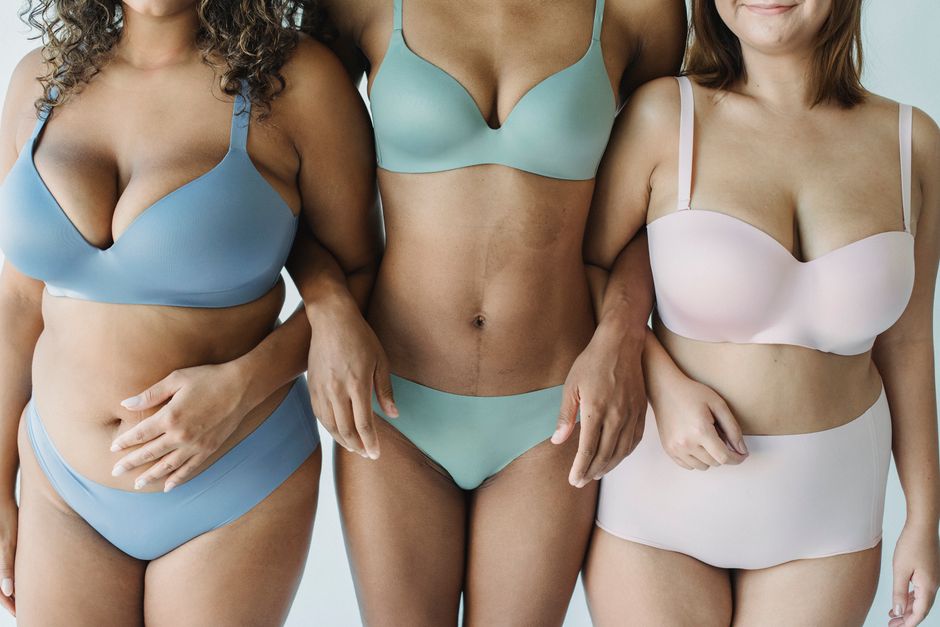
Body fat percentage is the share of your total weight that comes from fat tissue. The rest is lean mass — muscle, bone, organs, and water. What different body fat percentages look like varies by sex and age, because women carry more essential fat than men and body composition shifts as people get older. A man at 15% body fat and a woman at 25% can both be in the healthy range and look quite different from each other.
What Body Fat Percentage Actually Measures
Body fat percentage is not the same as body mass index. BMI compares your weight to your height and cannot tell muscle from fat. Body fat percentage tries to separate the two.
Some fat is not optional. It cushions organs, insulates the body, stores energy, and supports hormone production. This is called essential fat. Men need roughly 2-5% essential fat to stay alive. Women need more — around 10-13% — because fat tissue plays a direct role in reproductive hormone function. Going below those levels is not a fitness goal. It is a health risk.
The fat you can see under the skin is subcutaneous fat. Fat stored around the organs is visceral fat. Visceral fat matters more for metabolic health than the number on a scale suggests, and two people with the same body fat percentage can carry their fat in very different places.
What Different Body Fat Percentages Look Like
General ranges are well established, though individual appearance varies enormously within any single range. The figures below reflect commonly used reference ranges for adults. They are guides, not cutoffs.
| Category | Men | Women | Typical Appearance |
|---|---|---|---|
| Essential fat | 2-5% | 10-13% | Not sustainable. Physiologically required minimum, not a target. |
| Athletic | 6-13% | 14-20% | Visible muscle definition, minimal subcutaneous fat, often visible abs in men. |
| Fitness | 14-17% | 21-24% | Lean but not extreme. Muscle definition shows through clothing. Some abdominal definition. |
| Average / acceptable | 18-24% | 25-31% | Soft appearance, little visible muscle separation. This is where most adults sit. |
| Above average | 25%+ | 32%+ | Rounder midsection, less visible definition, more fat stored at hips and thighs (women) or abdomen (men). |
At the athletic end, men often show a defined six-pack and visible veins on the arms. Women at the athletic end show muscle lines but retain more fat at the hips and thighs — that pattern is normal and hormonally driven. It does not mean the woman is “less fit” at the same effort level.
At the average range, most people look healthy and unremarkable in clothes. The difference between 20% and 25% in a man is often invisible under a shirt. This is where body fat percentage stops being a useful visual guide and starts being a number you track for health reasons instead.
Why the Same Percentage Looks Different on Different People
Two people at 22% body fat can look nothing alike. Fat distribution is largely genetic and hormonal. Men tend to store fat in the abdomen and chest. Women tend to store it at the hips, thighs, and lower belly. Menopause shifts fat storage in women toward the abdomen, which is why body shape often changes in midlife even when weight stays the same.
Muscle mass changes the picture too. A person with more muscle at the same body fat percentage looks leaner because muscle is denser than fat. Two people can weigh the same, carry the same fat percentage, and have very different silhouettes.
Height and frame size matter as well. A taller person carries the same percentage of fat spread over a larger frame, which can look leaner than the same percentage on a shorter person.
Skin tone, posture, and clothing all affect how body fat reads visually. This is why guessing body fat by eye is unreliable — even among trainers.
How Body Fat Percentage Is Measured
No home method is precise. Every technique estimates body fat rather than measuring it directly, and each has a margin of error. That margin matters more than most people realize.
- Skinfold calipers — a trained person pinches skin at several sites. Accuracy depends heavily on the skill of the tester.
- Bioelectrical impedance scales — send a small current through the body. Results shift with hydration, food, and time of day. Useful for tracking trends, not absolute numbers.
- DEXA scan — uses low-dose X-rays to estimate fat, muscle, and bone. Considered one of the more reliable methods available outside research settings, though it still carries some error.
- Hydrostatic weighing and air displacement — research-grade methods. Accurate but not widely accessible.
A single reading from a home scale should not be treated as truth. The same person can read several percentage points differently across methods on the same day. Trends over months, measured the same way each time, tell you more than any one number.
What Body Fat Percentage Is Healthy?
For most adults, the “average” range in the table above is considered acceptable for health. For men that is roughly 18-24%, and for women roughly 25-31%. These ranges come from body composition reference standards used in clinical and fitness settings.
Health risk rises at both extremes. Very low body fat can disrupt hormones, weaken bones, impair immunity, and in women, stop menstrual cycles. Very high body fat, particularly visceral fat, is associated with higher risk of type 2 diabetes, heart disease, and sleep apnea. The relationship is a curve, not a straight line.
Age adjusts the picture. Body fat naturally increases with age as muscle mass declines, even when weight stays stable. A 55-year-old at 24% body fat is not in the same position as a 25-year-old at 24%. Some clinicians use age-adjusted ranges for this reason, though there is no single universally agreed standard.
One clarification worth making: body fat percentage is not a diagnosis. It is one data point. Blood pressure, blood glucose, waist circumference, and fitness all carry independent information about health that a body fat number cannot replace.
Can You Change Where You Lose Fat?
No. Spot reduction — the idea that training a body part burns fat from that area — is not supported by evidence. Studies have consistently found that exercising a specific muscle does not preferentially reduce fat over it.
Fat loss happens across the whole body when you are in a calorie deficit. Where you lose it first is largely determined by genetics and hormones, not by which exercises you choose. Some people lose from the face and arms first. Others lose from the abdomen last. This is normal and not a sign that something is wrong.
Building muscle changes how the body looks at any given fat percentage, but it does not change where fat comes off. Resistance training preserves lean mass during weight loss, which is why it matters for body composition even though it does not target fat directly.
When the Number Matters Less Than You Think
Body fat percentage is a useful tool, not a verdict. It tells you something about body composition that a scale cannot. It does not tell you how strong you are, how well your heart works, or how your blood sugar is doing.
For most people, tracking trends in waist circumference, strength, energy, and routine blood work gives a fuller picture than chasing a specific body fat number. If you are considering a significant change in body composition, a doctor or registered dietitian can help you set a target that fits your health history — especially if you have a condition affected by weight, such as diabetes or thyroid disease.
Frequently Asked Questions
What does 20% body fat look like on a man?
A man at 20% body fat typically looks healthy and average in clothes, with little visible muscle separation and a softer midsection. It sits within the acceptable range for adult men and is not considered high.
What does 30% body fat look like on a woman?
A woman at 30% body fat usually has a soft, rounded shape with more fat at the hips and thighs. It falls within the acceptable range for adult women.
Is 15% body fat healthy for a woman?
No. For women, 15% is near the essential fat minimum and is generally considered too low for regular hormonal function. Women need roughly 10-13% essential fat, and sustained levels near that range can disrupt menstrual cycles and bone health.
Can you tell body fat percentage by looking?
Only roughly. Visual estimates are unreliable because fat distribution, muscle mass, height, and frame size all change how the same percentage looks on different people.
