
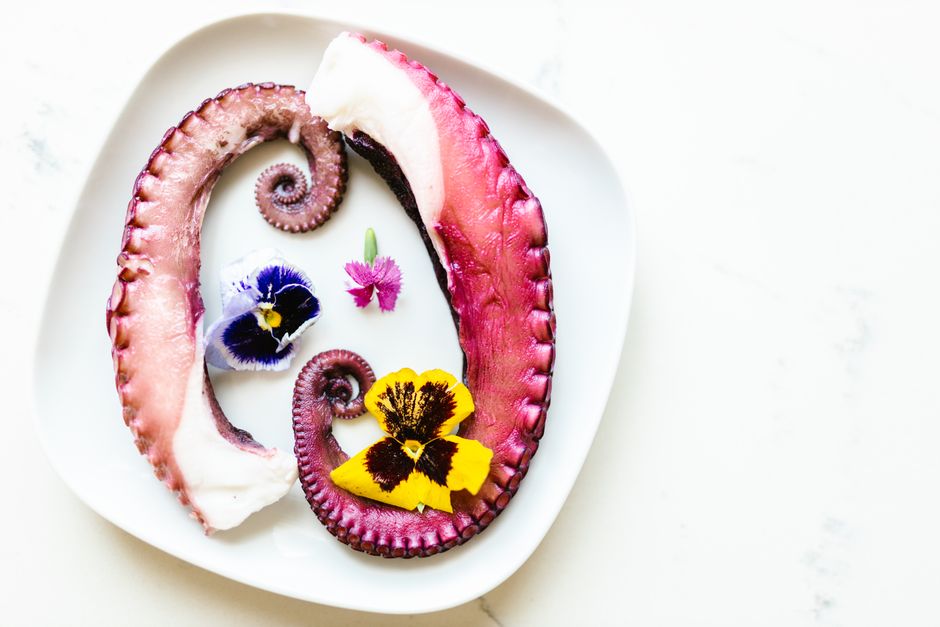
An octopus can be almost any color the ocean allows — red, brown, gray, white, yellow, blue, or green — and most species change that color in a fraction of a second. They do it with millions of tiny pigment sacs in their skin, controlled directly by their nervous system. No other animal switches its appearance quite like this.
That speed is the part people find hard to believe. A fish might take minutes or hours to shift shade. An octopus can flash from pale white to deep crimson faster than you can blink. The reason comes down to how their skin is built and how their brain talks to it.
What Colors Are Octopus And How Do They Change?
Octopuses are not one color. They are a moving target.
Most species spend their lives matching the seafloor, coral, rock, or open water around them. Common resting colors include mottled browns, grays, olive greens, and sandy tans. Some species can turn bright red, deep purple, near-black, or stark white. A few can produce blue and green tones as well.
The change happens because of specialized cells in the skin called chromatophores. Each one is a tiny elastic sac filled with pigment, surrounded by a ring of muscle. When those muscles contract, the sac stretches out flat and wide, and the color shows. When the muscles relax, the sac shrinks back to a dot and the color nearly disappears.
Think of it like a balloon. Stretched, it covers a lot of surface. Deflated, it is barely there. An octopus has millions of these sacs, each one controlled by its own nerve. That is what allows the animal to paint patterns across its skin in real time.
The three layers of octopus skin
Chromatophores are only the first layer of the system.
- Chromatophores sit near the surface and provide the main colors — red, yellow, brown, and black.
- Iridophores sit underneath and reflect light rather than absorb it. They create shimmering blues, greens, silvers, and golds.
- Leucophores sit deeper still and scatter white light. They help produce white patches and give the skin a matte, non-reflective look.
Working together, these three layers let an octopus produce colors that pigment alone cannot create. This matters because octopuses are, in a sense, colorblind. More on that below.
How Fast Can An Octopus Change Color?
Very fast. Chromatophore muscles respond to nerve signals in milliseconds, and a full-body color shift can happen in well under a second.
This is not a slow hormonal process like a tan. It is closer to a reflex. The brain sends a signal, the muscles fire, and the skin changes. Some octopuses can also produce traveling waves of color that ripple across the body, which is thought to be used in communication or to startle predators.
The speed matters because it serves several jobs at once. Camouflage has to happen before a predator closes in. A threat display has to happen before an attacker commits. A fraction of a second is the difference between being seen and not being seen.
Why Do Octopuses Change Color?
Camouflage is the main reason, but it is not the only one.
Octopuses use color change for at least four purposes:
- Hiding from predators. Matching the background makes the animal hard to spot from above or below.
- Ambushing prey. A camouflaged octopus can wait near a crevice and strike when something edible passes.
- Signaling other octopuses. Some species flash dark or light patterns during conflicts or mating.
- Startling threats. Sudden bright flashes or dark eye-spot patterns can make a predator hesitate.
The same animal may use all four in a single day. Context decides which pattern appears.





How Does An Octopus Match Its Background So Well?
This is where things get genuinely interesting, and also where a lot of popular explanations get it wrong.
Octopuses match texture, brightness, and pattern with remarkable accuracy. They can flatten their skin to look like smooth rock or raise small bumps called papillae to mimic rough coral or algae. That part is well documented.
The tricky part is color. The leading view among researchers is that octopuses are colorblind in the way humans understand the term. Their eyes appear to have only one type of light-sensitive cell, which would mean they cannot distinguish colors the way we do.
So how do they pick the right color? The evidence is still not settled. Some research suggests the skin itself may contain light-sensitive proteins that respond to different wavelengths, effectively letting the skin “see” without the eyes. Other work points to the shape and brightness of the background being enough to guide the choice. No single explanation has been confirmed as the full answer.
The honest position is this: octopuses match color extremely well, and we do not yet fully understand how they do it.
Can Octopuses Change Color Instantly And Then Hold It?
Yes. A fast change does not mean a short one.
An octopus can shift into a camouflage pattern in a fraction of a second and then hold that pattern for as long as it needs to. The muscles stay contracted, keeping the pigment sacs stretched. When the animal moves to new terrain, the pattern updates again.
What is less well understood is how much of this is conscious. Some changes look deliberate — a threat display aimed at a specific intruder, for example. Others look automatic, driven by the skin responding to light or the brain responding to a shadow overhead. Researchers are still working out where the line sits.
Do All Octopuses Change Color The Same Way?
No. There is wide variation across species.
Shallow-water octopuses that live on reefs and sand tend to be the most versatile. They have complex skin and frequently shift between many patterns. The common octopus is a good example of a species with a broad palette.
Deep-sea octopuses are different. Many live in water where light is scarce, and some species have reduced or absent color-changing abilities. There is little point in matching a background no one can see.
Some species also have permanent features that do not change — fixed blue rings, for instance — that serve as a warning rather than camouflage.
What About The Blue-Ringed Octopus?
The blue-ringed octopus is a special case, and worth separating from the general topic.
Most of the time, these small octopuses are a dull tan or brown. When threatened, they flash bright, iridescent blue rings across their body. The blue comes from reflective cells rather than pigment, which is why it looks almost electric.
That display is a warning, not camouflage. These octopuses carry a potent venom, and the blue rings signal danger to anything considering an attack. This is one of the few cases where an octopus color change is aimed at being seen rather than hidden.
Why Can’t Octopuses Change Color Like Chameleons?
People often group octopuses and chameleons together, but the mechanisms are different.
Chameleons change color by rearranging reflective crystals in their skin cells, which shifts how light bounces off them. The process is slower and tied more to temperature, mood, and social signaling than to instant camouflage.
Octopuses use muscle-driven pigment sacs, which is a faster system. The two animals arrived at color change through completely different evolutionary routes. Same result, different machinery.
What Limits An Octopus’s Color Change?
Even a good camouflage system has limits.
Octopuses cannot produce every color. Bright reds and yellows are easy because they come from pigment. True, vivid blues and greens are harder and depend on reflective cells rather than pigment. Some shades simply may not be reachable.
Texture matching also has limits. An octopus can raise bumps to imitate rough surfaces, but it cannot perfectly copy every substrate. A very complex background, like a busy coral reef, is harder to match than plain sand.
And camouflage only works if the animal stays still. A moving octopus is easier to spot no matter how good the pattern is.
Frequently Asked Questions
What colors can an octopus actually be?
Octopuses can display red, brown, gray, white, yellow, blue, and green, depending on the species and the situation. Most rest in muted browns and grays that match the seafloor, while some flash bright colors for defense or signaling.
How fast can an octopus change color?
A full color change can happen in well under a second because the pigment sacs in the skin are controlled directly by muscles and nerves. This is far faster than color change in most other animals.
Are octopuses colorblind?
The leading view is that octopuses have only one type of light-sensitive cell in their eyes, which would mean they cannot see color the way humans do. How they still match color so accurately is not fully settled, and researchers are still investigating it.
Why do octopuses change color?
They change color mainly to hide from predators and ambush prey, and also to signal other octopuses or startle threats. The same animal may use several different patterns in a single day depending on what is happening around it.
