
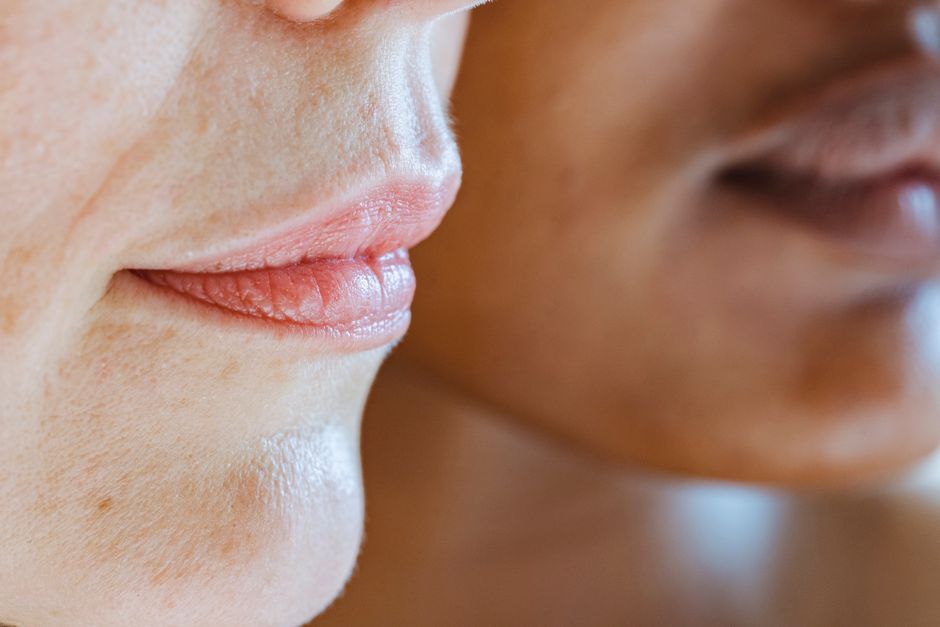
Chin breakouts are the most hormonally sensitive acne on the face. The chin and jawline sit in the “U-zone,” an area packed with oil glands that respond strongly to androgens like testosterone. That is why chin pimples tend to show up in a predictable rhythm for many women — and why a stubborn chin breakout often has less to do with dirty skin than with what is happening inside the body.
Hormones, diet, stress, and skincare habits can all play a role. The tricky part is that these causes often overlap, and the same breakout can have more than one driver. This article breaks down what is well established, what is still debated, and what the evidence does not support.
Why Do Chin Breakouts Happen?
Chin acne is driven by the same basic process as acne anywhere on the face: a pore becomes blocked, oil production increases, and the bacterium Cutibacterium acnes multiplies, triggering inflammation. What makes the chin different is how tightly it is wired to hormonal signals.
Sebaceous (oil) glands in the lower face are more responsive to androgens than glands in other areas. When androgen levels rise, or when the skin becomes more sensitive to normal androgen levels, those glands produce more oil. More oil means more clogged pores and more opportunity for inflammation.
This is why chin breakouts often cluster in specific patterns:
- Deep, tender bumps under the skin (nodules or cysts) rather than surface whiteheads
- Breakouts that repeat in the same spots month after month
- Pimples that flare during predictable hormonal shifts
It is also worth separating two things that get lumped together. A single inflamed pimple on the chin is common and usually harmless. Recurrent, deep, painful breakouts that scar or spread are a different situation and often warrant a dermatologist’s input.
What Chin Breakouts Mean Hormones Diet More?
Hormones are the most common driver of chin acne in adult women. The chin and jawline are the classic “hormonal” distribution of acne, and this pattern is well documented in dermatology.
Androgens — including testosterone, which women also produce — stimulate oil production. In many women with hormonal acne, androgen levels are completely normal. The issue is that the skin’s oil glands are unusually sensitive to those androgens. This is called end-organ sensitivity, and it means a normal blood test does not rule out a hormonal cause.
Several conditions and life stages can shift this balance:
- Menstrual cycle: Breakouts often appear in the days before a period, when estrogen drops and androgens are relatively unopposed.
- Polycystic ovary syndrome (PCOS): A common hormonal condition that can raise androgen levels and cause persistent acne along the jaw and chin.
- Perimenopause and menopause: Fluctuating estrogen can change the androgen-to-estrogen ratio and trigger new chin breakouts, sometimes for the first time in a woman’s life.
- Coming off hormonal birth control: A well-recognized rebound in oil production and acne after stopping certain pills.
If chin acne comes with irregular periods, excess facial hair, or thinning scalp hair, that combination is worth discussing with a doctor. Those signs can point to an underlying hormonal condition rather than routine acne.
Does Diet Really Cause Chin Breakouts?
Diet can influence acne, but the effect is modest and varies a lot between people. The strongest evidence points to high-glycemic diets and, to a lesser degree, dairy.
High-glycemic foods — white bread, sugary drinks, refined carbohydrates — raise blood sugar quickly. That spikes insulin, and insulin can raise androgen activity and increase oil production. Research published in the American Journal of Clinical Nutrition and other journals has found that low-glycemic diets are associated with reduced acne in some studies, though results are not uniform across all trials.
Dairy is more debated. Some studies link skim milk in particular to acne, possibly through hormones naturally present in milk or through effects on insulin-like growth factor 1 (IGF-1). The evidence is suggestive but not conclusive, and many people eat dairy with no effect on their skin.
What the evidence does not support:
- Chocolate as a direct cause of acne (the sugar and fat content may matter more than cocoa itself)
- Greasy foods causing oily skin (dietary fat does not directly become skin oil)
- Any single “acne diet” that works for everyone
If you suspect diet is a trigger, the most practical approach is to note what you ate in the days before a flare rather than cutting entire food groups on a guess.




Can Stress and Poor Sleep Cause Chin Pimples?
Stress can worsen acne, though it is rarely the sole cause. When you are under stress, the body releases cortisol. Cortisol can increase oil production and promote inflammation, both of which feed into breakouts.
Poor sleep works through a similar channel. Sleep deprivation raises cortisol and can disrupt the hormonal balance that keeps oil production steady. The relationship is real but indirect — stress tends to amplify an existing tendency rather than create acne from nothing.
There is a practical wrinkle here that gets overlooked. Stress and poor sleep often come bundled with other acne triggers: skipped skincare routines, more caffeine and sugar, and hands touching the face more often. Untangling which factor is doing the most damage is genuinely hard, and most people never fully separate them.
Does Touching or Resting Your Chin on Your Hands Matter?
Yes, physical habits can contribute, though they are usually a secondary factor rather than the main cause. The chin is one of the most frequently touched parts of the face.
Common habits that can worsen chin acne:
- Resting your chin in your hand while at a desk or on a phone call
- Holding a phone against the jaw and chin for long stretches
- Picking or squeezing existing pimples, which pushes bacteria deeper and increases scarring risk
- Friction from helmets, chin straps, or tight masks
This type of acne has a name — acne mechanica — and it is caused by repeated pressure and friction rather than by hormones. It tends to look different from hormonal acne: more surface-level, and clustered exactly where the pressure happens.
What Actually Helps Chin Breakouts?
Treatment depends on whether the cause is primarily hormonal, dietary, or mechanical. For persistent or scarring acne, a dermatologist can help identify which is at play.
Established approaches include:
- Topical retinoids: Among the most effective over-the-counter and prescription options for unclogging pores. They require consistent use and sun protection.
- Benzoyl peroxide and salicylic acid: Common over-the-counter options that reduce bacteria and help clear blocked pores.
- Hormonal treatments: Certain combined oral contraceptives and the medication spironolactone are used for hormonal acne in women. These require a prescription and medical supervision.
- Prescription oral medications: For severe or stubborn cases, a dermatologist may recommend stronger options.
What matters most is consistency and time. Most acne treatments take several weeks to show visible improvement, and stopping early is a common reason people conclude “nothing works.”
Avoid aggressive scrubbing, harsh do-it-yourself treatments, and popping deep chin cysts. Those habits tend to make inflammation worse and raise the risk of scarring.
When Should You See a Doctor About Chin Acne?
See a doctor or dermatologist if chin breakouts are deep and painful, leave scars, or come with signs of a hormonal condition such as irregular periods or excess facial hair. Persistent acne that does not respond to over-the-counter treatment after a reasonable trial is also a reason to seek help.
Sudden severe acne in an adult, or acne accompanied by other new symptoms, should be evaluated rather than treated at home. In those cases, the skin is often a visible signal of something that deserves a closer look.
Frequently Asked Questions
Why do I only break out on my chin?
The chin and jawline have oil glands that are especially sensitive to androgens, the hormones that drive oil production. That makes this area the most common site for hormonal acne, particularly in adult women.
Does chocolate cause chin breakouts?
No strong evidence shows that chocolate directly causes acne. If a breakout follows chocolate, the sugar and fat content is a more likely factor than cocoa itself.
Can stress alone cause chin pimples?
Stress can worsen existing acne by raising cortisol, which increases oil production and inflammation. It rarely causes acne on its own but often makes a flare worse.
How long does it take for chin acne to clear up?
Most acne treatments take several weeks of consistent use before visible improvement appears. Deep hormonal breakouts may take longer and often need a prescription approach.
