
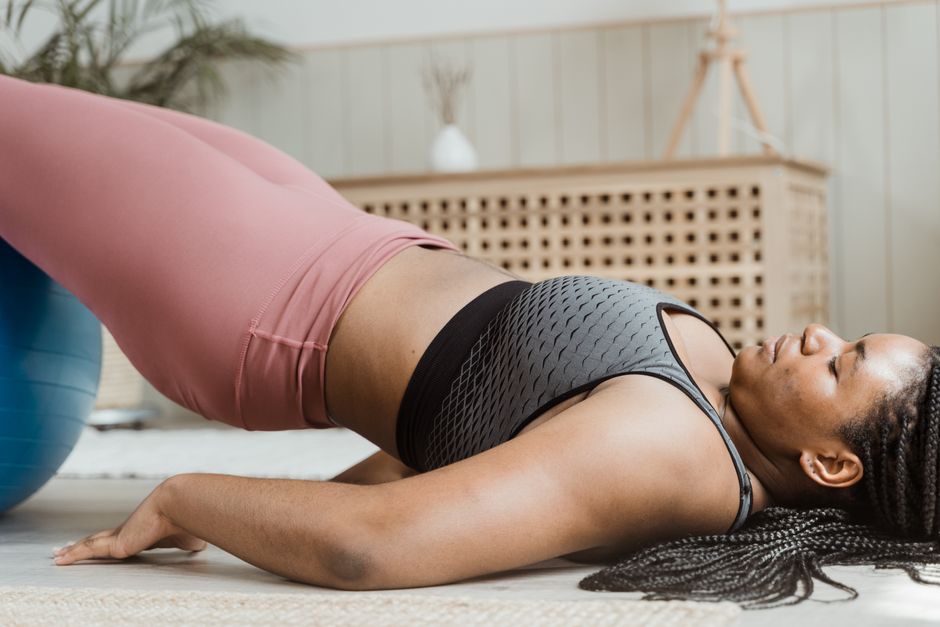
Weak hips can make everyday actions like walking, standing up, or climbing stairs feel harder than they should. The causes range from simple muscle imbalances to serious injuries like labral tears or stress fractures. Most people develop weak hips from a combination of sitting too much, underusing certain muscles, and overusing others — which throws off how your hip joint works. Understanding the root cause matters because the right treatment depends on whether you are dealing with tight glutes, a torn labrum, or something else entirely.
What Does Muscle Imbalance in the Hips Actually Mean?
Muscle imbalance sounds complicated, but it is a simple idea. Some muscles around your hip are too tight. Others are too weak. This mismatch changes how your hip joint moves.
The most common pattern involves tight hip flexors — the muscles at the front of your hip — and weak glutes — the muscles at the back. When you sit for long hours, your hip flexors shorten and stay tight. Your glutes turn off and get weak. Over time, your body starts using the wrong muscles to move. Your lower back or hamstrings take over for your glutes. This creates more problems.
Research published in the Journal of Orthopaedic & Sports Physical Therapy found that people with weak hip abductors — muscles that move your leg sideways — had a higher risk of knee pain and injury. The imbalance does not stay in your hip. It travels down your leg and up your spine.
What Causes Weak Hips From Muscle Imbalances To Injury?
Muscle imbalances do not stay harmless forever. They can lead to real structural injuries over time. The chain of events usually works like this: weak glutes and tight hip flexors change your walking pattern. Your hip joint does not move the way it should. The labrum — a ring of cartilage inside your hip socket — starts taking extra stress.
Studies have found that labral tears are common in people with long-standing muscle imbalances. The labrum acts like a gasket in your hip joint. When surrounding muscles do not stabilize the joint properly, the labrum gets pinched and torn. Hip impingement — where the ball of your hip bone rubs against the socket — often happens alongside these tears.
Another injury from muscle imbalance is greater trochanteric pain syndrome. This affects the outside of your hip. Weak gluteus medius — one of your main hip stabilizers — causes your pelvis to drop when you walk. The tendon on the outside of your hip gets inflamed and painful. The CDC reports that hip pain affects about 1 in 10 adults over age 60. Many of these cases start with muscle imbalances that were ignored for years.
How Do You Know If Your Hip Weakness Is From Muscles or a Joint Problem?
This is where things get tricky. Muscle weakness and joint problems can feel the same at first. Both cause pain in the groin, side of the hip, or buttock. Both make it hard to walk or stand up. But they need different treatments.
Here is a practical way to tell the difference. Muscle weakness usually feels like a lack of power. You try to lift your leg and it feels heavy or shaky. Joint problems often cause sharp pain with specific movements. If you feel a catch or click deep in your groin when rotating your leg, that points toward a labral tear or impingement.
A simple test you can do yourself: lie on your back and lift one straight leg off the ground. If the pain is in the front of your hip or groin, that suggests a joint issue. If the pain is in your buttock or you just cannot lift the leg high, muscle weakness is more likely. But this is not a replacement for a medical exam. An orthopedic doctor or physical therapist can do specific tests to find the source.





What Does Research Say About Fixing Weak Hips?
The evidence for strengthening weak hips is strong. A 2021 review in the British Journal of Sports Medicine looked at dozens of studies on hip strengthening exercises. The researchers found that targeted hip exercises improved pain and function in people with hip osteoarthritis, gluteal tendinopathy, and chronic hip pain. The key word is targeted.
Not all exercises work the same. Glute bridges and clamshells strengthen different parts of your glutes than side-lying leg lifts or single-leg squats. A good program hits multiple angles. The research shows that you need to load the muscle enough to make it stronger. Light resistance bands are a start, but heavier resistance — like cable machines or ankle weights — produces better results for most people.
One non-obvious finding: stretching alone does not fix weak hips. Many people stretch their tight hip flexors but never strengthen their glutes. This is like loosening one side of a rope without tightening the other. The imbalance remains. You need both — release the tight muscles and strengthen the weak ones.
Some studies suggest that manual therapy — like massage or joint mobilization — can help short-term. But the lasting change comes from exercise. A physical therapist can teach you the right exercises for your specific imbalance pattern.
What Injuries Look Like Weak Hips But Are Not?
Several conditions mimic hip weakness. Knowing them prevents wasted time on the wrong treatment.
| Condition | Common Symptoms | Key Difference From Muscle Imbalance |
|---|---|---|
| Hip osteoarthritis | Stiffness in the morning, pain with walking, grinding sensation | X-ray shows joint space narrowing. Pain is in the joint, not the muscles. |
| Femoroacetabular impingement (FAI) | Deep groin pain when sitting or squatting, catching sensation | Pain with hip rotation in specific positions. MRI shows bone shape changes. |
| Stress fracture | Gradual onset of deep ache, worse with weight bearing | Pain does not improve with rest. MRI or bone scan shows fracture line. |
| Piriformis syndrome | Deep buttock pain, sometimes numbness down the leg | Pain with sitting and external rotation of the hip. The piriformis muscle compresses the sciatic nerve. |
Each of these requires different treatment. Osteoarthritis may need activity modification and anti-inflammatory medication. Impingement often responds to physical therapy but sometimes needs surgery. Stress fractures require complete rest from weight bearing. Piriformis syndrome responds to stretching and massage.
If your “weak hip” does not improve after a few weeks of strengthening, get imaging done. An MRI with contrast dye is the best way to see labral tears and cartilage damage. X-rays show bone spurs and arthritis but miss soft tissue problems.
What Should You Avoid When Trying to Strengthen Weak Hips?
Some common advice makes weak hips worse. Avoid these mistakes.
- Do not push through sharp pain. Muscle soreness is normal. Sharp or catching pain is not. Stop that exercise and try a different one.
- Do not rely on stretching alone. As mentioned, stretching tight muscles without strengthening weak ones keeps the imbalance going.
- Do not ignore your feet. Flat feet or poor arch support can change how your hip muscles fire. Some people need orthotics to fix their hip problem.
- Do not jump into advanced exercises. Single-leg deadlifts and deep squats are great when your hips are ready. Starting with them when your glutes are weak reinforces bad movement patterns.
- Do not assume it is just age. Many people in their 60s and 70s have strong hips. Weakness is often from inactivity and imbalance, not aging itself.
One more thing to avoid: ignoring your other leg. If one hip is weak, the other side often compensates and gets overworked. Train both sides equally, even if only one hurts.
Common Misconceptions About Weak Hips
A widespread myth is that weak hips are a normal part of getting older. They are common, but not normal. The National Institute on Aging states that muscle loss — sarcopenia — can be prevented and reversed with resistance training. Hip weakness is a sign of underuse, not inevitability.
Another misconception is that hip pain always means arthritis. Many people with hip pain have normal X-rays. Their pain comes from muscles, tendons, or the labrum. Treating arthritis when the real problem is glute weakness wastes time and money.
Some people believe that running ruins your hips. Evidence does not support this. A 2017 study in the American Journal of Sports Medicine found that runners had lower rates of hip osteoarthritis than sedentary people. The issue is not running itself. It is running with poor form or weak stabilizer muscles.
A final myth: you need surgery for weak hips. Surgery is for structural problems like labral tears that do not heal with therapy, or advanced arthritis. Most hip weakness resolves with consistent strengthening. Give it three to six months of proper exercise before considering surgery.
Frequently Asked Questions
Can weak hips cause knee pain?
Yes. Weak hip abductors and glutes cause your knee to cave inward during walking or running. This puts extra stress on the knee joint and can lead to patellofemoral pain or IT band syndrome.
How long does it take to strengthen weak hips?
Most people see improvement in 4 to 8 weeks with consistent exercise 3 to 4 times per week. Full correction of a long-standing imbalance can take 3 to 6 months.
Is walking good for weak hips?
Walking is good for overall health but does not strengthen weak hips enough by itself. You need targeted resistance exercises like glute bridges, clamshells, and side-lying leg lifts to build real strength.
What doctor should I see for weak hips?
Start with your primary care doctor. They can refer you to a physical therapist for exercise-based treatment or an orthopedic specialist if imaging is needed.
