
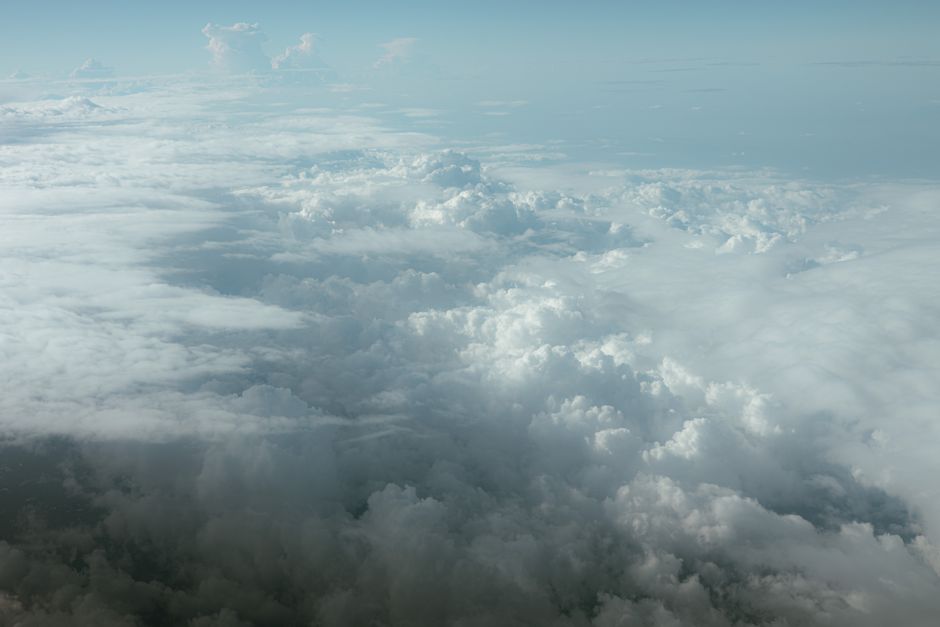
Tropospheric ducting happens when radio waves bend and travel far beyond their normal range because of a layer of warm air sitting above cooler air in the lower atmosphere. This temperature inversion acts like a pipe, or duct, trapping the radio signals and guiding them along the Earth’s surface instead of letting them escape into space. The main triggers are weather patterns that create these inversions, such as high-pressure systems, sea breezes, and cooling ground at night.
What Is Tropospheric Ducting?
Radio signals normally travel in a straight line. The horizon limits how far they can go. But the atmosphere is not uniform. Temperature and humidity change with altitude, and these changes bend radio waves slightly.
Under normal conditions, the air gets cooler as you go higher. This bends radio waves upward, away from the ground. But when the opposite happens — when warm air sits on top of cooler air — the bending reverses. The waves bend downward, back toward the Earth. If the inversion is strong enough, the waves get trapped in that layer and travel hundreds of miles instead of tens of miles.
This is not a rare event. It happens all the time. The question is whether the inversion is strong enough to create a duct that actually traps the signal.
What Causes Tropospheric Ducting Types And Triggers?
Tropospheric ducting types are classified by how the duct forms. There are three main types: surface ducts, elevated ducts, and evaporation ducts. Each one forms under different weather conditions.
Surface ducts form when the ground cools rapidly at night, especially after a warm day. The air right next to the ground cools faster than the air above it. This creates a shallow inversion layer near the surface. Radio signals from low antennas can get trapped in this layer and travel along the ground for long distances.
Elevated ducts form higher up, often thousands of feet above the ground. These are typically caused by large high-pressure systems. As air sinks in a high-pressure system, it warms and dries. This creates a strong inversion layer well above the surface. Elevated ducts are the most powerful type and can carry signals for extremely long distances.
Evaporation ducts form over large bodies of water. Warm ocean water evaporates, creating a layer of moist air right above the surface. Above that moist layer, the air is drier. This sharp change in humidity bends radio waves. Evaporation ducts are common in tropical and subtropical oceans and can persist for days.
What Weather Patterns Trigger Ducting?
High-pressure systems are the most common trigger. The sinking air in a high-pressure system creates a temperature inversion that can last for days. This is why ducting events often coincide with clear skies and calm weather.
Sea breezes also trigger ducting, especially along coastlines. When cool marine air moves inland, it slides under warmer air. The boundary between the two air masses creates a duct. This type of ducting often appears in the afternoon when the sea breeze is strongest.
Radiational cooling is another common trigger. On clear nights, the ground loses heat quickly. The air near the ground cools faster than the air above it. This creates a surface inversion that is strongest just before sunrise. Amateur radio operators and FM broadcast listeners often notice enhanced signals during these early morning hours.
Frontal boundaries can also create ducts. When a warm front passes, warm air rises over cooler air. The boundary between the two air masses can act as a duct, though these ducts are usually short-lived.





Why Does Ducting Matter for Radio Communications?
Ducting can dramatically extend the range of radio signals. A signal that normally travels 30 miles can suddenly reach 300 miles or more. This is exciting for amateur radio operators, who use ducting to make long-distance contacts on VHF and UHF bands that normally only work line-of-sight.
But ducting also causes problems. FM radio stations can interfere with each other when their signals travel far beyond their intended coverage area. Television broadcasts can experience similar interference. Emergency communication systems that rely on VHF radios can be disrupted when distant signals overpower local ones.
For marine and aviation communications, ducting can be a serious issue. A ship may hear a distress call from hundreds of miles away, but the signal may be weak or distorted. Conversely, a ship may not hear a nearby vessel because the signal is trapped in a duct and skipping over it.
How Can You Predict When Ducting Will Occur?
Weather forecasts are the best tool. Look for high-pressure systems, especially those that are slow-moving. Clear skies and light winds are also good indicators. If you see a large high-pressure system sitting over your area, ducting conditions are likely.
Ducting is more common in certain seasons. In many parts of the United States, late summer and early fall are prime ducting seasons. The warm ground and cooling upper atmosphere create strong inversions. Spring can also produce ducting, especially when warm air moves over cooler ground.
Coastal areas experience ducting more frequently than inland areas. The interaction between land and sea creates more temperature and humidity contrasts. The Gulf of Mexico, the southeastern coast, and the Great Lakes region are known for frequent ducting events.
Radio amateurs often use a tool called a ducting forecast map. These maps show where atmospheric conditions are favorable for ducting. They are based on weather model data and are useful for planning long-distance contacts.
Does Ducting Affect All Radio Frequencies the Same Way?
No. Ducting affects VHF and UHF frequencies much more than HF frequencies. VHF ranges from 30 to 300 MHz, and UHF ranges from 300 MHz to 3 GHz. These frequencies are most affected because their wavelengths are comparable to the thickness of the duct layer.
FM radio, which operates around 88 to 108 MHz, is commonly affected. Television frequencies, especially UHF channels, are also affected. Amateur radio bands at 144 MHz and 432 MHz are popular for ducting contacts. Cell phone frequencies, which range from about 700 MHz to 2.6 GHz, can also be affected, though the impact on cellular networks is usually managed by network design.
Lower frequencies, like AM radio at 530 to 1700 kHz, are not affected by tropospheric ducting. These frequencies propagate differently, using the ionosphere for long-distance travel. Microwave frequencies above 10 GHz are also less affected because they are more easily absorbed by atmospheric gases and water vapor.
How Long Do Ducting Events Last?
Ducting events can last anywhere from a few hours to several days. The duration depends on the weather system that created the duct. A surface duct caused by nighttime cooling typically disappears a few hours after sunrise when the sun warms the ground and breaks the inversion.
Elevated ducts from high-pressure systems can last much longer. A strong, slow-moving high-pressure system can maintain ducting conditions for several days. The most intense ducting events often occur when the high-pressure system is centered over a coastal region, combining the effects of sinking air and sea breezes.
Evaporation ducts over the ocean are the most persistent. They can last for weeks in tropical regions where the ocean surface stays warm. These ducts are a major reason why maritime radio communications can be unpredictable.
Frequently Asked Questions
What is the difference between tropospheric ducting and sporadic E?
Tropospheric ducting happens in the lower atmosphere and is caused by weather conditions like temperature inversions. Sporadic E happens in the ionosphere, about 60 to 70 miles up, and is caused by patches of ionized gas that reflect radio waves.
Can tropospheric ducting affect GPS signals?
GPS signals are in the L-band around 1.5 GHz, which can be affected by ducting. However, GPS receivers are designed to work with line-of-sight signals, and ducting can cause signal fading or distortion in rare cases.
How can I tell if ducting is happening right now?
Tune to a distant FM station that you normally cannot receive. If you hear it clearly, ducting is likely occurring. You can also check online ducting forecast maps that show current atmospheric conditions.
Is tropospheric ducting dangerous?
No, ducting is a natural atmospheric phenomenon and poses no danger to people. It can cause radio interference, but it does not affect health or safety in any way.
