
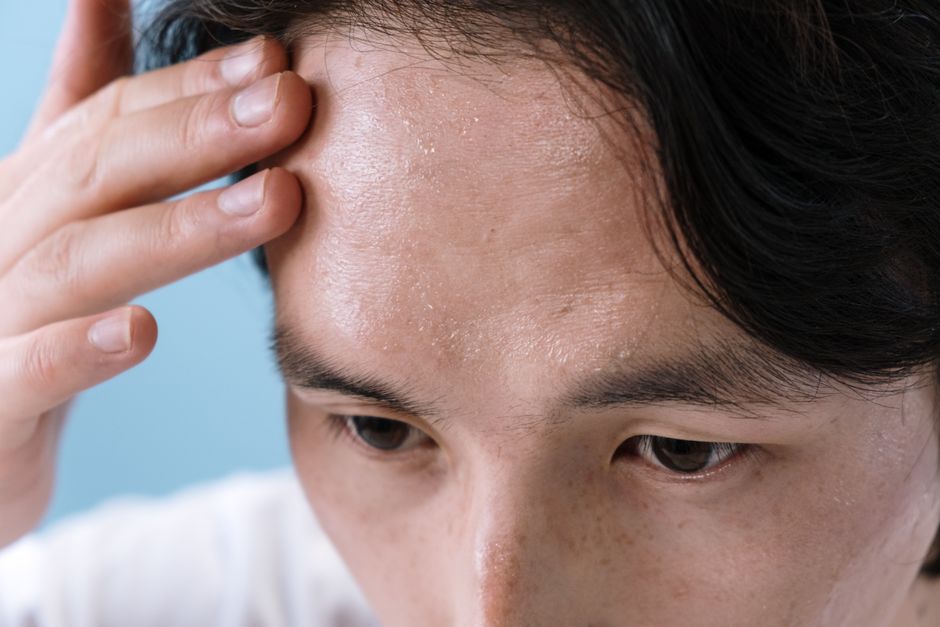
Seborrheic dermatitis is a common inflammatory skin condition that shows up most often on the scalp, face, and chest. It happens when a naturally occurring skin yeast called Malassezia triggers an inflammatory reaction in skin that is sensitive to it, and when the skin’s oil production and turnover are running in a way that supports that reaction. Flare-ups happen when something shifts that balance — stress, weather, illness, a change in routine, or stopping treatment too soon.
It is not caused by poor hygiene. It is not contagious. And it is not a sign that something is wrong with your immune system in a serious way. Most people who have it will deal with it on and off for years, which is frustrating but manageable.
What Causes Seborrheic Dermatitis And Flare Ups?
The core driver is a yeast called Malassezia that lives on almost everyone’s skin. It feeds on sebum, the oil your skin produces. In people with seborrheic dermatitis, the skin reacts to the yeast or its byproducts with inflammation — redness, scaling, and itching — rather than tolerating it quietly.
This is why the condition appears in oily areas. The scalp, the sides of the nose, the eyebrows, behind the ears, the upper chest, and the groin all have dense oil glands. Those are the places Malassezia thrives.
Several things influence how strongly the skin reacts:
- Sebum production. Higher oil output gives the yeast more to feed on. This is partly why the condition is more common in adolescence and young adulthood, when oil production peaks.
- Skin barrier function. Skin that is irritated, dry, or damaged reacts more strongly to the same yeast load.
- Individual immune response. Two people can carry the same amount of Malassezia and only one will develop visible dermatitis. The difference is how the skin’s immune system responds.
- Genetics. Seborrheic dermatitis runs in families, which points to inherited differences in skin and immune response.
One point that often gets lost: the yeast is not an infection in the usual sense. It is normal skin flora. Treatment targets the reaction and the yeast load together, not an invading organism.
Is Seborrheic Dermatitis Caused By Poor Hygiene?
No. Hygiene has nothing to do with causing it. People who shower daily get seborrheic dermatitis, and so do people who do not.
The confusion probably comes from the appearance. Flaking and scaling on the scalp can look like a hygiene problem to an observer. It is not. Washing more aggressively usually makes things worse, because harsh shampoos and scrubbing irritate the skin barrier and can increase inflammation.
What actually helps is consistent, gentle cleansing with a product that addresses the yeast — not more scrubbing. If someone has told you or someone you know to “just wash better,” that advice is wrong and can delay proper treatment.
What Triggers Seborrheic Dermatitis Flare-Ups?
Flare-ups are usually tied to something that shifts oil production, skin barrier health, or the immune response. The triggers are well described in clinical practice, though the precise mechanism behind each one is not fully worked out.
Stress is one of the most commonly reported triggers. The link is real but the pathway is not simple — stress affects sleep, hormone levels, and skin barrier recovery all at once.
Cold, dry weather tends to worsen symptoms for many people. Indoor heating in winter lowers humidity, which dries the skin and compromises the barrier. Summer and humid conditions help some people and worsen others, so individual patterns vary.
Illness and fatigue can set off a flare. So can significant lack of sleep.
Hormonal shifts matter. Seborrheic dermatitis often first appears or worsens during adolescence, and some women notice changes around their menstrual cycle.
Certain medications are associated with flares, including some that affect the immune system or hormone levels. If a flare began after starting a new medication, that is worth raising with a clinician rather than assuming it is coincidence.
Harsh skin products — strong exfoliants, alcohol-based toners, rough physical scrubs — can damage the barrier and provoke a flare.
One flare trigger that gets less attention: stopping treatment too early. Seborrheic dermatitis responds to treatment, but the yeast and the skin’s tendency to react do not disappear. Symptoms often return within weeks of stopping, and that return is frequently mistaken for a new trigger when it is really incomplete control.
Why Does Seborrheic Dermatitis Come Back?
Because the underlying conditions do not go away. Malassezia is a permanent resident of human skin. Your oil glands keep producing sebum. Your skin’s immune response stays the same.
Treatment reduces the yeast load and calms inflammation. It does not remove the yeast or change your skin type. So when treatment stops, the yeast population recovers and the reaction returns.
This is why clinicians often recommend maintenance treatment rather than a short course. Using an anti-yeast shampoo or topical product intermittently — for example, once a week or every other week after symptoms are controlled — is common practice. The exact schedule varies by person and by product, and there is no single guideline schedule that fits everyone.
It is also why “cured” is the wrong word. Controlled is the right word. Many people manage seborrheic dermatitis effectively for years with a simple routine.
Is Seborrheic Dermatitis Linked To Other Health Conditions?
Seborrheic dermatitis is more common in people with certain conditions, and this association is well established.
Parkinson’s disease is strongly associated with seborrheic dermatitis. The reason is not fully understood, but it may involve changes in sebum production and skin flora regulation that accompany the disease. Seborrheic dermatitis can sometimes appear before other Parkinson’s symptoms are obvious, though it is common enough in the general population that its presence alone does not suggest Parkinson’s.
HIV infection is associated with more severe and persistent seborrheic dermatitis. In people with advanced HIV, the condition can be extensive and harder to treat. This does not mean everyone with seborrheic dermatitis should be tested for HIV — far from it. But severe, sudden, or treatment-resistant cases sometimes prompt a clinician to look at broader health factors.
Depression and anxiety are associated with seborrheic dermatitis, though the direction of the relationship is not clear. Stress and poor sleep can trigger flares, and having a visible skin condition can affect mood.
Obesity and metabolic conditions have been linked to higher rates of seborrheic dermatitis in some studies, possibly through effects on oil production and inflammation.
None of these associations mean seborrheic dermatitis causes those conditions or that having it means you have them. They are patterns observed in populations, not predictions for individuals.
What Makes Seborrheic Dermatitis Worse In Winter?
Low humidity is the main culprit. Cold outdoor air holds little moisture, and indoor heating dries it further. Skin loses water faster, the barrier weakens, and irritated skin reacts more strongly to the same yeast load.
People also tend to take hotter showers in winter, which strips oils and further damages the barrier. Wool hats and heavy clothing can trap heat and sweat on the scalp, creating conditions the yeast likes.
Practical adjustments that clinicians commonly suggest include shorter, lukewarm showers, a humidifier in dry rooms, and consistent use of a gentle moisturizer on affected areas. These are supportive measures, not treatments for the underlying condition, but they can reduce how often flares happen.
Does Diet Cause Seborrheic Dermatitis?
There is no established dietary cause of seborrheic dermatitis. No clinical guideline recommends a specific diet for it.
Some people report that certain foods — often sugar, dairy, or alcohol — seem to worsen their symptoms. The evidence for these reports is limited. Small studies have looked at connections between diet and skin oil production, but no large trials have confirmed that changing diet improves seborrheic dermatitis.
That does not mean diet is irrelevant to skin health in general. It means that if you want to test whether a food affects your symptoms, treat it as a personal experiment rather than a known treatment. And be cautious about restrictive diets promoted online — the evidence is not there to support them, and unnecessary restriction carries its own costs.
Frequently Asked Questions
Is seborrheic dermatitis contagious?
No. The yeast involved is normal skin flora present on nearly everyone, and the condition cannot be passed from person to person. Close contact with someone who has it will not cause you to develop it.
Can seborrheic dermatitis be cured permanently?
No. It can be controlled effectively, but the underlying yeast and skin tendency remain, so symptoms typically return when treatment stops. Most people manage it long-term with intermittent maintenance treatment.
Does stress cause seborrheic dermatitis flare-ups?
Stress is one of the most commonly reported triggers, though the exact mechanism is not fully understood. It likely works through effects on sleep, hormones, and skin barrier recovery rather than a single pathway.
Is seborrheic dermatitis the same as dandruff?
They are related but not identical. Dandruff is mild scaling of the scalp without significant inflammation, while seborrheic dermatitis involves redness and inflammation and can affect the face, chest, and other oily areas.
