
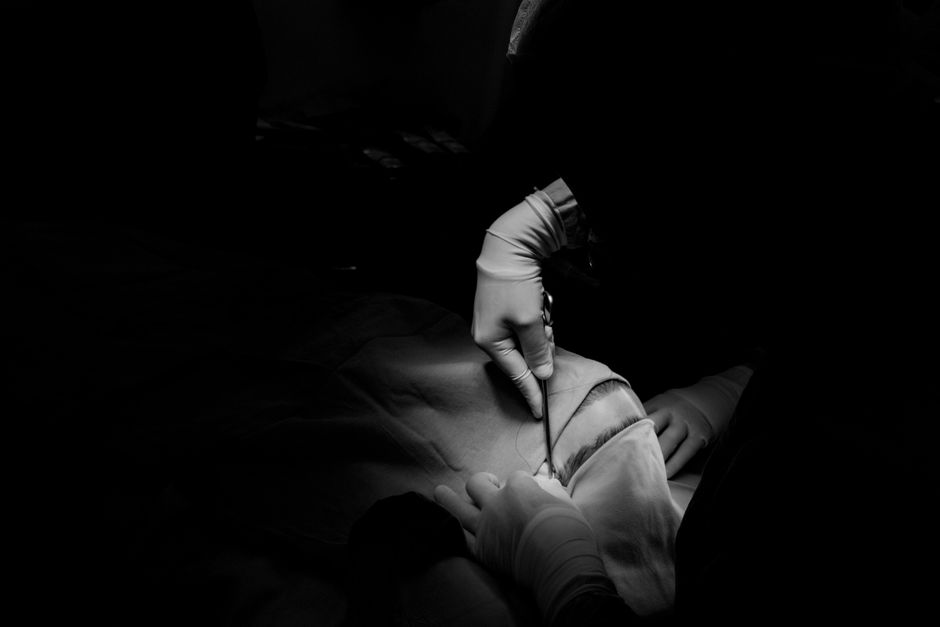
Scaphocephaly is a head shape that develops when the sagittal suture — the seam running front to back along the top of a baby’s skull — fuses earlier than it should. That early fusion is called craniosynostosis, and the sagittal suture is the most commonly affected one. Most cases are not inherited and have no clear external cause, though a minority are linked to specific gene changes or genetic syndromes.
The skull is not one solid piece of bone in an infant. It is a set of plates joined by flexible seams called sutures. These seams let the head pass through the birth canal and allow the brain to grow rapidly in the first years of life. When one suture closes too soon, the skull cannot expand in that direction. Growth gets redirected to the other seams, and the head takes on an unusual shape. That is the whole mechanism behind scaphocephaly, and understanding it explains nearly everything else about the condition.
What Causes Scaphocephaly Suture Fusion And Risk Factors?
The sagittal suture normally stays open for years, closing gradually well after infancy. In scaphocephaly it fuses during pregnancy or in the first months of life. The cause in most cases is not known.
Researchers describe two broad categories. The first is nonsyndromic craniosynostosis, which means the fusion happens on its own without other health problems or a recognized genetic syndrome. This accounts for the large majority of sagittal cases. The second is syndromic craniosynostosis, where early suture fusion is one feature of a broader genetic condition. Syndromic cases are a smaller share but tend to involve more than one suture.
For the nonsyndromic majority, no single trigger has been identified. Research points to a mix of genetic and environmental factors acting together, but for any one child the specific cause usually cannot be named. This is an honest limit of current knowledge, not a gap in the parents’ care.
How Does the Sagittal Suture Shape the Skull?
The sagittal suture runs down the middle of the skull from the soft spot at the front (the anterior fontanelle) toward the back. When it fuses early, the skull cannot widen. The brain keeps growing, so the head compensates by getting longer from front to back.
The result is a head that looks narrow and elongated — the classic boat shape that gives scaphocephaly its name. The forehead may bulge, and the back of the head may look prominent. A ridge can sometimes be felt along the fused seam.
The skull responds this way because brain growth is the driving force. The brain roughly doubles in size in the first year and keeps growing after that. A fused suture blocks growth in one direction, and the open sutures absorb the rest. This is why the timing of fusion matters so much — the earlier it happens, the more the shape is affected.
Is Scaphocephaly Inherited?
Most cases are not passed down in a simple pattern. When a child has nonsyndromic sagittal craniosynostosis, the chance of a sibling having it is low, though slightly higher than in the general population. Some research suggests a family history of craniosynostosis raises risk modestly, but the effect is small for most families.
A minority of cases are linked to specific gene changes. Several genes involved in how skull bones and their seams develop have been associated with craniosynostosis, including genes in the FGFR family and TWIST1, among others. Changes in these genes can run in families or appear for the first time in a child.
When a genetic syndrome is involved, inheritance depends on the syndrome. Some follow an autosomal dominant pattern, meaning a parent with the same gene change can pass it on. Others occur spontaneously. Genetic counseling is the appropriate way to sort out what applies to a specific family, because the answer varies by condition.
What Are the Known Risk Factors?
Several factors are associated with a higher chance of craniosynostosis in general. These are statistical associations from population research, not causes proven in any individual case. A risk factor being present does not mean it caused the fusion.
- Male sex. Sagittal craniosynostosis is more common in boys than girls.
- Multiple pregnancy. Twins and higher-order multiples have a higher rate, though the reason is not fully understood.
- Certain maternal conditions and medications. Some studies link specific maternal health conditions and certain medications used during pregnancy to higher risk. Evidence here is mixed and should not be read as proof of cause.
- Family history. A close relative with craniosynostosis raises risk modestly.
- Genetic syndromes. Conditions such as Apert, Crouzon, and Pfeiffer syndromes involve craniosynostosis, though these more often affect multiple sutures.
Many infants who develop scaphocephaly have none of these factors. That is the norm, not the exception.
Can Positional Head Shape Be Confused With Scaphocephaly?
Yes, and this is a common and important distinction. A flat or elongated head can develop without any suture fusion at all. This is called positional or deformational plagiocephaly or brachycephaly, and it comes from repeated pressure on one part of the head — often from sleep position.
Positional head shape is not the same as craniosynostosis. In positional cases the sutures are open and normal. The skull is being molded by outside pressure, not restricted by a fused seam. The two can look similar to a parent’s eye, which is why a proper exam matters.
This distinction changes everything about what happens next. Positional molding is managed differently from a fused suture. Only a clinician can tell them apart, often with imaging when the exam is unclear.
How Is Early Fusion Diagnosed?
Diagnosis starts with a physical exam. A clinician feels the sutures and fontanelles and looks at the head shape from above and from the side. A ridge along the sagittal seam, a narrow head, and a prominent forehead or back of the head raise suspicion.
Imaging confirms the diagnosis when needed. A skull X-ray or a CT scan can show whether the suture is truly fused. CT gives the clearest picture but exposes the child to radiation, so it is used selectively. Some centers increasingly rely on careful exam and other imaging to limit radiation in infants.
When a syndrome is suspected — because of other physical features, developmental concerns, or a family history — genetic evaluation may be recommended. Not every child with scaphocephaly needs genetic testing. The decision depends on the full clinical picture.
What Does Early Fusion Mean for Brain Development?
For most children with isolated sagittal craniosynostosis, brain development is normal. The concern with a fused suture is pressure. If the skull cannot grow enough to accommodate the brain, pressure inside the head can rise. This is uncommon in single-suture cases but is the reason the condition is monitored and often treated.
Single-suture sagittal fusion is generally the least likely of the craniosynostosis types to cause raised pressure, compared with cases involving multiple sutures. Even so, follow-up matters, and clinicians watch for signs of pressure or developmental changes over time.
Treatment decisions are made by a craniofacial team — typically including a neurosurgeon and a plastic surgeon — and depend on the child’s age, the specific findings, and the team’s experience. Surgery is common for sagittal craniosynostosis, but the timing and technique vary. This is a decision for that team, not something to generalize across every child.
When Should Parents Seek Evaluation?
Any unusual head shape deserves a conversation with a pediatrician. That includes a head that looks long and narrow, a noticeable ridge along the top, a forehead that bulges, or a head shape that is not improving as the baby grows.
Some signs warrant faster attention. These include a head that is growing unusually fast or slow, a baby who seems irritable or vomits repeatedly, developmental concerns, or a soft spot that feels bulging or sunken. These can have many causes, and most are not craniosynostosis, but they should be checked promptly.
Early evaluation gives more options. The earlier a fused suture is identified, the more flexibility the care team has in planning. That does not mean every head shape needs urgent action — it means unusual shapes are worth asking about rather than watching indefinitely.
Frequently Asked Questions
What causes scaphocephaly?
Scaphocephaly is caused by early fusion of the sagittal suture, the seam running front to back along the top of the skull. In most cases the specific cause is not identified, though a minority are linked to genetic syndromes or gene changes.
Is scaphocephaly inherited?
Most cases are not inherited in a simple pattern, and the chance of a sibling being affected is low. A minority are linked to specific gene changes, some of which can run in families, so genetic counseling helps clarify risk for a given family.
Can a baby’s head shape be fixed without surgery?
Positional head shape from sleep position often improves with repositioning and time, and it does not involve a fused suture. True sagittal craniosynostosis is a different condition, and treatment decisions should come from a craniofacial team rather than general rules.
Does scaphocephaly affect brain development?
Most children with isolated sagittal craniosynostosis have normal brain development. The main concern is pressure inside the head, which is uncommon in single-suture cases but is why follow-up and specialist evaluation matter.
