
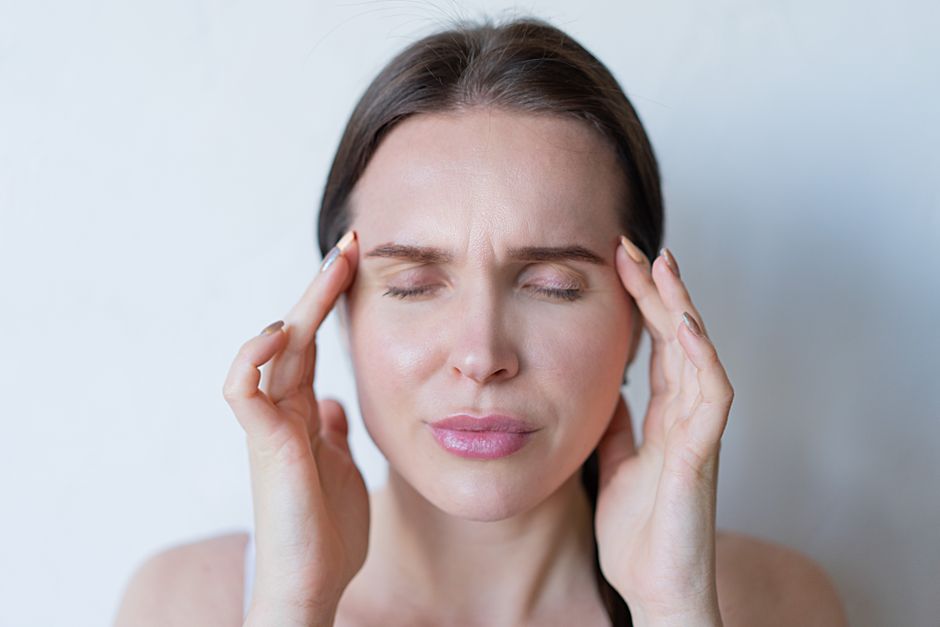
Waking up to a pounding headache is a strange and unsettling way to start the day. The pain was not there when you fell asleep. Now it is throbbing behind your eyes or at the back of your head, and you have no idea why.
Pounding headaches during sleep usually come from one of a few well-defined sources: sleep apnea and other breathing problems that lower oxygen and raise carbon dioxide, sleep-related bruxism (teeth grinding), migraine that follows a natural circadian pattern, or rebound headaches from frequent painkiller use. Less often, they point to a sleep disorder called hypnic headache, or to high blood pressure, medication side effects, or another underlying condition. The pattern of the headache — when it starts, how long it lasts, and what it feels like — usually tells a doctor which of these is most likely.
What Causes Pounding Headaches While Sleeping?
Sleep is normally a time when the body quiets down. Blood pressure dips. Breathing slows. Stress hormones drop. For some people, one of these normal shifts goes wrong, and the result is pain.
Three mechanisms explain most cases. The first is oxygen and carbon dioxide imbalance. When breathing becomes shallow or stops repeatedly during sleep, oxygen levels fall and carbon dioxide builds up in the blood. Blood vessels in the brain widen in response, and that widening is felt as a throbbing, pounding sensation. The second is muscle activity. Clenching and grinding the jaw during sleep loads the muscles of the head, neck, and jaw for hours, and that load shows up as a headache on waking. The third is timing. Migraine and some other headache disorders follow the body’s internal clock, which is why they can strike in the early morning hours or wake a person from sleep.
Which of these is happening in your case depends on the details. A headache that wakes you at the same time every night looks different from one that is present only on waking after a night of loud snoring.
Can Sleep Apnea Cause Morning Headaches?
Yes, and it is one of the most common explanations for a headache that is worst right after waking.
Obstructive sleep apnea happens when the upper airway repeatedly narrows or closes during sleep. Breathing pauses, oxygen drops, and the brain briefly rouses the sleeper to reopen the airway. This cycle can repeat many times an hour without the person ever fully waking or remembering it. The repeated drops in oxygen and rises in carbon dioxide are thought to trigger widening of cerebral blood vessels, which produces the pressure and throbbing felt on waking.
Morning headache is recognized as a common symptom of sleep apnea in clinical literature, though not everyone with apnea gets one and not everyone with a morning headache has apnea. The features that raise suspicion include loud snoring, witnessed pauses in breathing, gasping or choking during sleep, unrefreshing sleep, and daytime sleepiness. If several of these are present alongside morning headaches, a sleep study is the standard way to confirm or rule out the condition.
It is worth being clear about one thing: treating the apnea does not guarantee the headaches disappear, but in many people they improve once breathing is supported during sleep.
Why Do Migraines Strike During Sleep or on Waking?
Migraine has a strong relationship with sleep, in both directions. Sleep can end a migraine attack. Sleep can also trigger one.
A large share of migraine attacks begin in the early morning hours or wake people from sleep. This timing reflects the body’s circadian rhythm — the internal 24-hour clock that governs hormone release, body temperature, and blood pressure. Migraine is known to be influenced by that clock. Shifts in sleep schedule, too little sleep, and too much sleep are all recognized migraine triggers.
Morning migraine often comes with nausea, light sensitivity, and pain on one side of the head, though not always. The pounding quality is typical. If headaches are waking you regularly and you also get migraines during the day, the nighttime pattern is likely part of the same condition rather than a separate problem.
What Is a Hypnic Headache?
Hypnic headache is a rare sleep disorder in which headaches wake a person from sleep, usually at the same time each night.
The defining features are distinctive. The headache wakes the sleeper, lasts from about 15 minutes to a few hours, and typically affects both sides of the head. It is not usually accompanied by nausea, light sensitivity, or tearing, which helps separate it from migraine and cluster headache. It occurs most often in older adults, and it is more common in women than men.
Hypnic headache is uncommon. It is diagnosed by its pattern after other causes have been ruled out, which is one reason a doctor will usually look for sleep apnea and other conditions first. The exact mechanism is not fully understood. Because the condition is rare, most of what is known comes from case reports and small case series rather than large trials.
How Do Teeth Grinding and Jaw Clenching Fit In?
Bruxism — grinding or clenching the teeth — happens in many people during sleep, often without their awareness.
The muscles involved in chewing are powerful, and when they contract repeatedly for hours, they can produce soreness that radiates into the temples, jaw, and back of the head. The result is often a dull pressure headache on waking, sometimes with jaw tightness, tooth sensitivity, or worn tooth surfaces. Bruxism is also associated with sleep apnea, so the two can occur together and reinforce each other.
If your dentist has mentioned signs of grinding, or you wake with a tight jaw and temple pressure, bruxism is worth discussing with a doctor or dentist. A dentist can often see the evidence on the teeth even when the sleeper has no memory of grinding.
Can Medication and Caffeine Cause Morning Headaches?
Yes, and this cause is easy to miss because the trigger is something the person is taking to feel better.
Frequent use of over-the-counter or prescription pain relievers for headaches can lead to medication-overuse headache, also called rebound headache. The pattern is characteristic: the medication helps for a while, then the headaches become more frequent, and a headache appears when the medication wears off — often overnight or on waking. Caffeine is a related factor. It is an ingredient in many headache medicines, and both caffeine withdrawal and caffeine overuse can influence headache timing.
The clinical picture here is well described, but the threshold at which medication overuse becomes a problem varies between individuals and between drug types. This is a situation where a doctor’s guidance matters, because stopping a pain reliever abruptly can temporarily make headaches worse before they improve.
When Should a Pounding Headache During Sleep Be Taken Seriously?
Most sleep-related headaches are not dangerous. Some patterns, however, need prompt medical attention.
Seek urgent care for a headache that is sudden and severe — often described as the worst headache of your life — or one accompanied by fever and stiff neck, confusion, weakness, numbness, vision changes, trouble speaking, or a headache that follows a head injury. These features can point to serious causes such as bleeding in the brain or infection, and they should not be managed at home.
For less dramatic but persistent patterns, see a doctor if headaches wake you regularly, if they are getting worse over weeks, if they interfere with sleep or daytime function, or if you are taking pain relievers for headaches more than a couple of days a week. A medical evaluation can sort out whether the cause is a sleep disorder, a primary headache condition, medication overuse, or something else.
What Helps Identify the Real Cause?
Getting to the right answer usually starts with a careful history and a physical exam, not with a scan.
A doctor will want to know when the headaches occur, how long they last, what they feel like, what makes them better or worse, and what else happens around them — snoring, jaw clenching, nausea, or daytime sleepiness. A headache diary that records sleep times, headache timing, and medication use can be genuinely useful here.
Depending on what the history suggests, next steps may include a sleep study to look for apnea, blood pressure checks, a review of all medications and supplements, and in some cases imaging of the brain. Imaging is not routine for typical headache patterns, because most sleep-related headaches do not show a structural cause on a scan.
Frequently Asked Questions
Why do I wake up with a pounding headache every morning?
The most common explanations are sleep apnea, migraine that follows a circadian pattern, teeth grinding, or medication-overuse headache. A doctor can usually narrow it down from the timing and other symptoms.
Can high blood pressure cause headaches while sleeping?
High blood pressure is often listed as a possible contributor to morning headaches, but the relationship is not straightforward and many people with high blood pressure have no headaches at all. Blood pressure should be checked as part of an evaluation rather than assumed to be the cause.
Are headaches that wake me from sleep a sign of something serious?
Usually not, but certain features are warning signs. A sudden severe headache, or one with fever, stiff neck, confusion, weakness, or vision changes, needs urgent medical care.
Does treating sleep apnea stop the morning headaches?
In many people morning headaches improve once apnea is treated, though this is not guaranteed for everyone. Response varies, and some people continue to have headaches for other reasons.
