
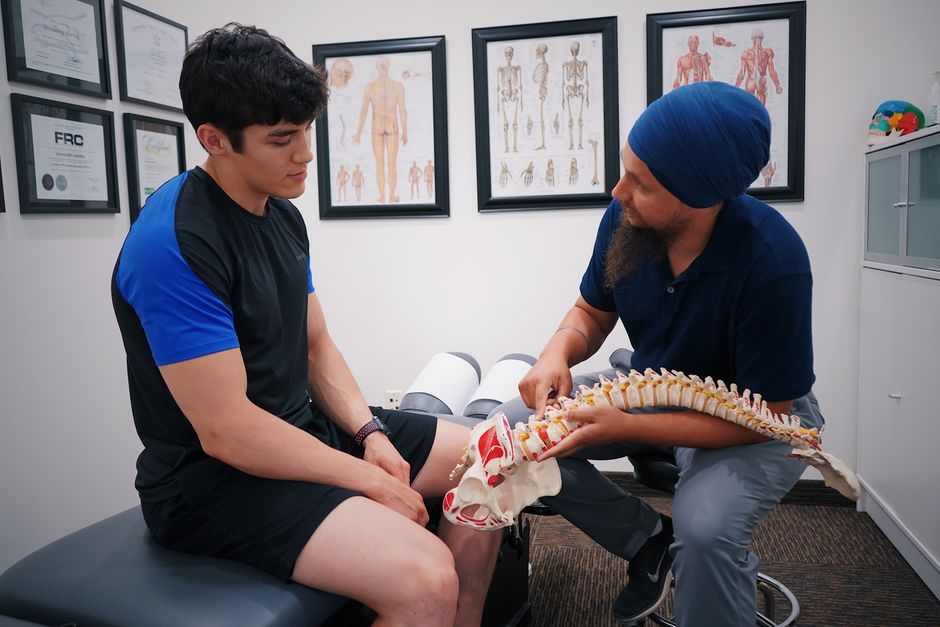
Lumbar spinal stenosis develops when the open spaces within the spine narrow, putting pressure on the spinal cord and the nerves that travel through the lower back. This narrowing is most often a direct result of the natural aging process, where years of wear and tear cause the spine’s tissues to thicken and bone to overgrow. For most people, this is a slow, progressive condition that develops over many years, not a sudden injury.
What Causes Lumbar Spinal Stenosis To Develop?
The most common cause is osteoarthritis. As the cartilage that cushions the spinal joints wears down, the body responds by growing new bone to stabilize the area. These bony growths, called bone spurs, can protrude into the spinal canal and narrow the space available for nerves.
At the same time, the ligaments that hold the spine together can thicken and bulge inward with age. The ligamentum flavum, a band of tissue that runs along the back of the spinal canal, often becomes stiff and enlarged over time. This combination of bone spurs and thickened ligaments gradually reduces the space inside the spinal canal.
Wear and tear on the intervertebral discs also plays a role. These discs act as shock absorbers between the vertebrae. With age, they lose water content and height, which can cause the discs to bulge backward into the spinal canal and further reduce available space.
Are There Other Causes Besides Aging?
Aging is the primary driver, but it is not the only one. Some people are born with a naturally narrow spinal canal, a condition called congenital spinal stenosis. These individuals may not notice symptoms until later in life when age-related changes add to the existing narrowing.
Spondylolisthesis is another cause. This occurs when one vertebra slips forward over the one below it. The slippage can narrow the spinal canal and pinch nerves. In adults, this is often related to degenerative changes from arthritis rather than a single traumatic event.
Less common causes include spinal tumors, which can grow into the canal, and Paget’s disease of bone, a condition that causes abnormal bone remodeling. Trauma or previous spinal surgery can also contribute to narrowing, though these are far less frequent than degenerative causes.
How Does the Narrowing Actually Cause Symptoms?
The spinal canal houses the spinal cord and the nerve roots that branch out to the legs. When the space narrows, these nerves get compressed. The pressure interferes with normal nerve function, which explains why symptoms often include pain, numbness, tingling, or weakness in the legs.
Not everyone with a narrowed spinal canal has symptoms. Many people show significant narrowing on imaging scans but feel completely fine. Symptoms tend to appear when the compression reaches a certain threshold or when the nerves are also irritated by inflammation or lack of blood flow.
The classic symptom pattern is called neurogenic claudication. People experience pain or heaviness in the legs when standing or walking, and the symptoms ease when they sit down or lean forward. Leaning forward opens up the spinal canal, which is why many people with this condition naturally prefer to push a shopping cart or walk bent slightly forward.





What Are the Main Risk Factors?
Age is the strongest risk factor. Most people diagnosed with lumbar spinal stenosis are over 50, and the condition becomes more common with each passing decade. The degenerative changes that cause narrowing are essentially universal with aging, though the severity varies widely.
Genetics play a role in who develops significant symptoms. Some people inherit a naturally smaller spinal canal or a tendency toward more aggressive arthritis. If a close family member has had spinal stenosis, your own risk is somewhat higher.
Occupational and lifestyle factors may contribute. Jobs that involve heavy lifting or prolonged repetitive bending can accelerate disc degeneration. Obesity adds extra load to the spine and may speed up the arthritic process. Smoking is also linked to faster disc degeneration, though the exact mechanism is not fully understood.
How Is Lumbar Spinal Stenosis Diagnosed?
Diagnosis starts with a clinical evaluation. A doctor will review your symptoms, ask about your medical history, and perform a physical exam. The exam often includes checking your reflexes, muscle strength, and sensation in your legs. A key finding is that walking often worsens symptoms while sitting relieves them.
Imaging is needed to confirm the diagnosis. An MRI is the most useful test because it shows the soft tissues, including the nerves and ligaments, in detail. It can clearly reveal where and how severely the spinal canal is narrowed. CT scans and X-rays may also be used, especially if surgery is being considered, because they show the bony anatomy well.
In some cases, a doctor may order nerve conduction studies or electromyography. These tests measure electrical activity in the nerves and muscles. They are not always necessary but can help rule out other conditions like peripheral neuropathy from diabetes.
Can Lumbar Spinal Stenosis Be Prevented?
There is no proven way to completely prevent the degenerative changes that cause lumbar spinal stenosis. The aging process that leads to bone spurs and ligament thickening cannot be stopped. However, certain habits may slow the progression or reduce the severity of symptoms.
Maintaining a healthy weight reduces the load on the lumbar spine. Regular exercise, particularly activities that strengthen the core and back muscles, can improve spinal stability. Stronger muscles support the spine and may reduce the stress placed on the joints and discs.
Good posture and body mechanics during lifting and bending can reduce wear on the spine over time. Avoiding prolonged periods of sitting or standing may also help. None of these measures have been proven to prevent stenosis, but they are reasonable steps for overall spinal health.
What Are the Treatment Options?
Treatment focuses on managing symptoms rather than reversing the narrowing itself. Physical therapy is often the first step. Exercises that strengthen the core and lower back can improve stability and reduce pain. Therapy also focuses on flexibility and posture.
Medications can help manage pain. Over-the-counter anti-inflammatory drugs like ibuprofen or naproxen are commonly used. For more severe pain, a doctor may prescribe stronger pain relievers or medications that target nerve pain, such as gabapentin or pregabalin.
Epidural steroid injections are another option. A corticosteroid is injected into the space around the spinal nerves to reduce inflammation. These injections can provide temporary relief, sometimes lasting for weeks or months, but they do not fix the underlying narrowing.
Surgery is reserved for people with severe symptoms that do not improve with conservative treatment. The most common procedure is a decompressive laminectomy, where the surgeon removes part of the bone to create more space for the nerves. Surgery is generally effective for relieving leg symptoms, though it carries the usual risks of any spinal operation.
Frequently Asked Questions
Can lumbar spinal stenosis go away on its own?
No, the anatomical narrowing does not reverse on its own. Symptoms can fluctuate, and some people find their pain improves with conservative treatment, but the structural changes remain.
Is walking good or bad for lumbar spinal stenosis?
Walking often triggers symptoms because it extends the spine and narrows the canal further. However, walking with a forward lean or using a shopping cart can be more comfortable, and staying active is generally better than being sedentary.
What makes lumbar spinal stenosis worse?
Standing upright and walking tend to worsen symptoms because these positions narrow the spinal canal. Bending forward, sitting, or lying down usually provides relief because these positions open up the space.
When is surgery necessary for lumbar spinal stenosis?
Surgery is typically considered when leg pain or weakness is severe, when walking becomes very difficult, or when conservative treatments fail to provide adequate relief after several months. Bowel or bladder dysfunction is a rare but urgent sign that requires immediate medical evaluation.
