
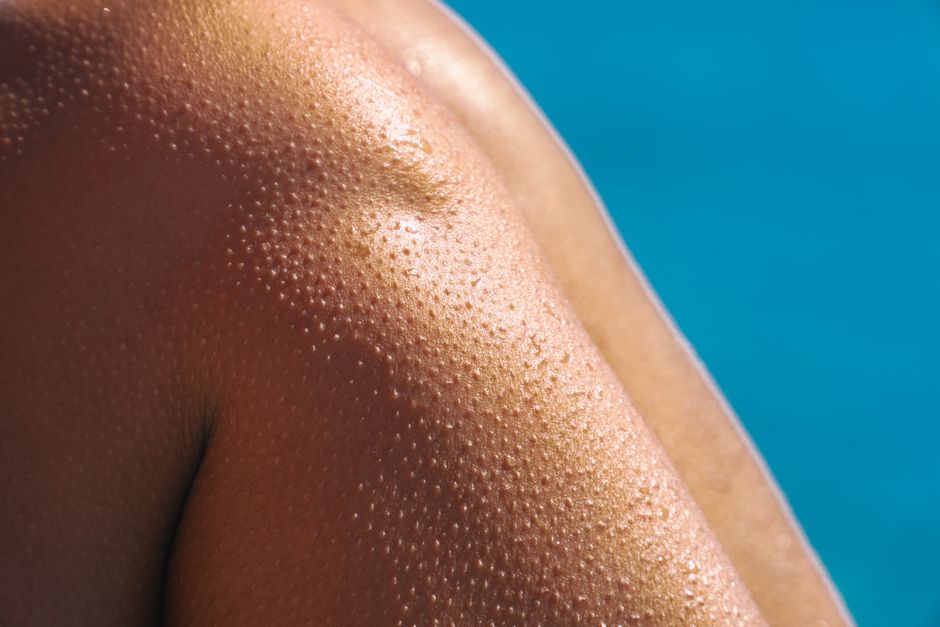
Pores are openings in your skin that let oil and sweat reach the surface. They are not holes that open and close like windows. Their size is mostly set by your genes, your oil glands, and how much collagen your skin holds. That is why some people have visibly larger pores on their nose and cheeks no matter what they put on their face.
Large pores are a normal part of skin anatomy, not a flaw you caused. But several things can make them look bigger over time. Oil production, sun damage, age, and inflammation all play a role. Understanding what actually drives pore size helps you sort real information from marketing claims.
What Causes Large Pores On Face?
Three factors do most of the work: genetics, sebum (oil) production, and the structural support of the skin around each pore.
Each pore is the opening of a hair follicle, and a sebaceous gland sits inside that follicle. People with naturally oilier skin tend to have larger pores. The oil gland is bigger, and the follicle opening is wider to accommodate it. This is largely inherited.
The second factor is the tissue surrounding the pore. Collagen and elastin give skin its firmness and keep pore walls pulled tight. When that support weakens, the pore loses tension and looks larger. Sun exposure and the natural aging process both break down collagen over years.
The third factor is what collects inside the pore. Dead skin cells and oil can build up and stretch the opening. This is temporary, but repeated clogging can keep pores looking enlarged.
None of these factors involve pores “opening and closing.” That idea is a common misconception. Pores do not have muscles. Steam, cold water, and toners do not change their actual size.
Does Oily Skin Make Pores Bigger?
Yes, oily skin is strongly linked to larger pores. The connection is structural, not just cosmetic.
Sebaceous glands produce sebum to lubricate and protect the skin. In people with higher oil production, these glands are typically larger. A larger gland needs a wider follicle opening to release oil efficiently. So the pore itself is physically bigger.
Oil production is driven largely by hormones, particularly androgens like testosterone. This is why pores often become more noticeable during puberty and why some women notice changes around their menstrual cycle. Hormonal shifts can increase oil output, which can make pores appear larger.
Here is a detail that often gets missed. You cannot shrink a sebaceous gland with a face wash or a toner. Products that claim to “shrink pores” are usually reducing the appearance of oil and surface debris, not changing the gland. The pore may look smaller in the short term because it is cleaner, but the underlying structure has not changed.
Managing oil can reduce how large pores look, even if it does not change their actual size. That distinction matters when you are deciding what to spend money on.
How Does Sun Damage Affect Pore Size?
Sun exposure is one of the most significant controllable factors in how large pores look over time.
Ultraviolet radiation damages collagen and elastin in the deeper layers of skin. These proteins form the scaffolding that keeps skin firm and pores taut. When they break down, the skin loses elasticity, and pores can appear stretched and more prominent.
This damage accumulates. A single day in the sun does not enlarge your pores, but years of unprotected exposure can. The effect tends to show up more in areas that get the most sun, like the nose and cheeks.
This is also why pore appearance often changes with age. Collagen production naturally declines over time, and skin loses some of its structural support. Combined with sun damage, this can make pores look larger even in people who had small pores when they were younger.
Daily sun protection is one of the few steps with real evidence behind it for protecting skin structure. It will not reverse existing pore size, but it can help prevent further collagen loss. The evidence for sunscreen slowing skin aging is well established.





Can Clogged Pores Look Larger?
Yes. A clogged pore can look bigger than a clean one, and this effect is often reversible.
When dead skin cells do not shed normally, they mix with oil and block the follicle opening. This can stretch the pore and make it more visible. The same process contributes to blackheads and whiteheads.
Blackheads are open clogged pores. The dark color comes from oxidized oil and melanin, not dirt. Whiteheads are closed clogged pores. Both can make pores look larger, especially on the nose and chin.
Keeping pores clear can reduce this appearance. But it is worth being precise about what helps:
- Regular cleansing removes surface oil and debris but does not change pore structure.
- Products containing salicylic acid can help clear clogged pores by breaking down the material inside them. This is a common ingredient in acne treatments, and its role in unclogging pores is well established.
- Retinoids, available by prescription or over the counter, can help with cell turnover and may improve pore appearance over time. Some studies suggest they can reduce pore size, though results vary.
- Clay masks absorb surface oil temporarily. The effect is short-lived and does not change pore size.
Pore strips and extraction tools remove material from pores, but they do not shrink them. Overuse can irritate the skin.
Do Pores Actually Change Size?
Pore size is not fixed for life, but it changes slowly and mostly for reasons outside your control.
Genetics set your baseline. Hormones can shift oil production. Sun exposure and aging gradually break down the collagen that keeps pores tight. These factors can make pores look larger over years, not days.
What does not change pore size: steaming, cold water, pore-filling primers, or “pore tightening” creams. These can create a temporary visual effect, but they do not alter the follicle or the gland inside it.
Some cosmetic ingredients can make pores look smaller in the short term. Niacinamide, a form of vitamin B3, has been studied for its effect on skin oil and pore appearance. Some research suggests it may help, but the evidence is not strong enough to call it a guaranteed fix. Results vary by person.
It is reasonable to expect improvement in how pores look, not a permanent change in their actual size. Anyone promising to “eliminate” pores is overselling.
When Should You See a Dermatologist?
Large pores are not a medical problem on their own. But they can sometimes signal an underlying skin condition worth checking.
If you notice pores that look enlarged along with frequent breakouts, oily skin, and blackheads, this may be acne or oily skin that a dermatologist can help manage. Prescription treatments can be more effective than over-the-counter options for some people.
If pore appearance changes suddenly, or if you have redness, swelling, or pain around the area, see a doctor. These are not typical features of large pores and could point to another condition.
A dermatologist can also assess whether sun damage or another factor is driving the change. They can recommend treatments based on your skin, not a general claim.
For most people, large pores are simply a normal variation in skin. They are not a sign of poor hygiene or a health problem. But if they bother you, a dermatologist can talk through realistic options and what to expect.
Frequently Asked Questions
Can you actually shrink large pores on your face?
You cannot permanently shrink pores because their size is set by genetics and oil gland structure. You can reduce how large they look by managing oil, clearing clogs, and protecting collagen with sun protection.
Why are my pores bigger on my nose and cheeks?
The nose and cheeks have more sebaceous glands and produce more oil than other parts of the face. Larger oil glands need wider follicle openings, so pores in these areas tend to look bigger.
Does sunscreen help with large pores?
Sunscreen helps protect the collagen and elastin that keep pores looking tight. It will not shrink pores, but daily use can help prevent the collagen breakdown that makes pores look larger over time.
Do pore strips make pores smaller?
No, pore strips remove material from inside the pore but do not change its size or structure. The effect is temporary, and overuse can irritate the skin.
