
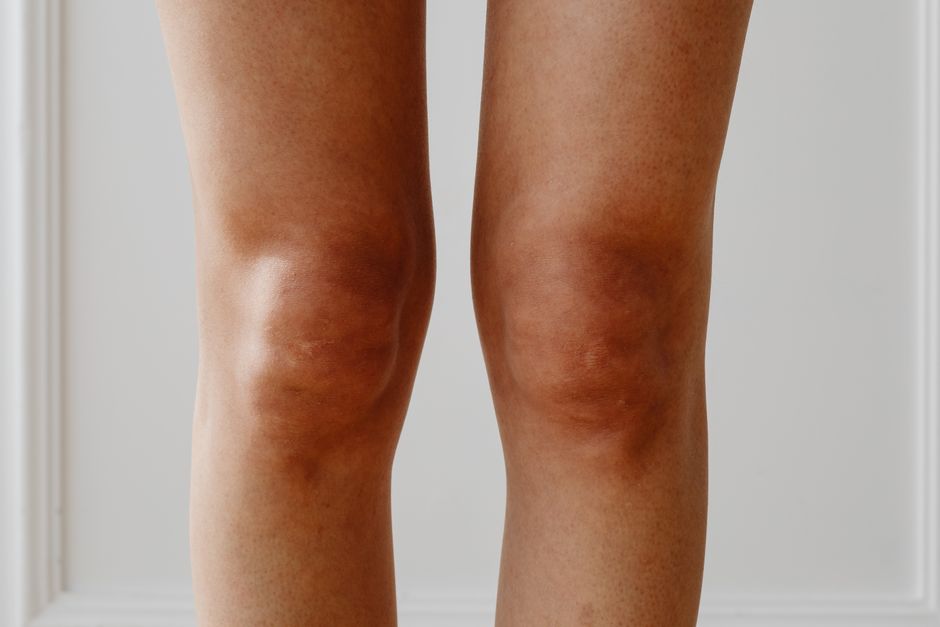
Knobby knees are knees where the bony structures around the joint — particularly the tibial tuberosity, the bump on the shinbone just below the kneecap — stick out more visibly than usual. In most children and teenagers, this is a normal stage of growth. The bones of the leg grow faster than the soft tissues around them during puberty, which makes joint edges look more pronounced. For most people, knobby knees are simply anatomy, not a sign of disease.
There are times when a noticeably bony or painful bump below the knee points to a specific condition. Osgood-Schlatter disease is the most common one in growing kids. Knowing the difference between normal bony anatomy and a problem worth checking is the practical question most people actually have.
What Causes Knobby Knees And Are They Normal?
Knobby knees are usually normal. The knee joint is made of bone, and bone shape varies widely from person to person. Some people have wider femoral condyles (the rounded ends of the thigh bone), a more prominent tibial tuberosity, or less fat padding around the joint. All of these make the knee look knobby without any underlying problem.
During childhood and adolescence, growth adds another layer. The long bones of the leg lengthen at the growth plates near the knee. This growth can temporarily make the knee area look more angular and bony. Once growth finishes, the appearance often softens, though some adults keep prominent knee bones for life. That is normal variation, not a defect.
Body composition matters too. People with less subcutaneous fat around the knees show bone structure more clearly. This is why knobby knees are often more noticeable in lean children and adults. It reflects anatomy, not health status.
A genuinely important point: knobby knees on their own are not a sign of poor nutrition, weak bones, or a growth disorder. Those conditions have other signs. Appearance alone does not diagnose anything.
When Is A Bony Bump Below The Knee A Real Problem?
A bony bump below the kneecap that is painful, tender to touch, or swollen is different from ordinary knobby knees. The most common cause in growing children is Osgood-Schlatter disease. It affects the area where the patellar tendon attaches to the tibial tuberosity — the growth plate at the top of the shinbone.
During rapid growth, this growth plate is vulnerable. Repeated pulling from the patellar tendon during running and jumping can cause irritation and inflammation. The result is a painful, sometimes swollen bump just below the knee. It is most common in children roughly ages 9 to 14, and it occurs more often in kids who play sports involving running and jumping.
Osgood-Schlatter is not dangerous, and it usually resolves once growth is complete. The bump itself may remain permanently, even after the pain goes away. That leftover bump is harmless.
Other causes of a prominent or painful bump near the knee exist, and they are less common. These include:
- Sinding-Larsen-Johansson syndrome — irritation at the bottom of the kneecap, similar in mechanism to Osgood-Schlatter but at a different attachment point
- Bursitis — inflammation of a fluid-filled sac near the joint
- Bone cysts or other bone lesions, which are uncommon
- Injury or fracture near the growth plate
Because several conditions can produce a similar-looking bump, a painful or rapidly changing bump should be evaluated by a clinician rather than assumed to be Osgood-Schlatter.
What Does Osgood-Schlatter Disease Feel Like?
The hallmark is pain right at the bony bump below the kneecap, made worse by activity. The pain typically builds with running, jumping, squatting, or climbing stairs, and eases with rest. The area is often tender to press. One or both knees can be affected.
Swelling over the bump is common. Some children describe a dull ache after sports that lingers into the evening. The pain usually follows a pattern tied to activity rather than being constant at rest. Pain that persists at rest, or that wakes a child from sleep, is not typical of Osgood-Schlatter and warrants a medical look.
It is worth separating two things that get confused. The bump is the bony prominence of the tibial tuberosity. The pain comes from irritation at the growth plate and tendon attachment. A child can have a prominent bump with no pain at all — that is just anatomy. A child can also have pain with only a modest bump. The size of the bump does not reliably predict how much pain someone feels.
How Is Osgood-Schlatter Diagnosed?
Most cases are diagnosed by history and physical exam alone. A clinician asks about activity level, when the pain started, and what makes it worse, then examines the knee and presses on the tibial tuberosity. Imaging is not routine.
X-rays are sometimes ordered when the diagnosis is unclear, when symptoms are atypical, or when another cause needs to be ruled out. X-rays can show the bony changes associated with Osgood-Schlatter, but the condition is fundamentally a clinical diagnosis. Advanced imaging like MRI is rarely needed.
This is a place where overtesting is common. A painful bump in a growing, active child with a typical story usually does not need imaging to be managed well. Clinicians differ on how readily they order X-rays, so the decision is best made case by case.
What Helps With Osgood-Schlatter Pain?
The core approach is to reduce the load on the irritated growth plate while the child keeps growing. That generally means adjusting activity rather than stopping it completely. Many clinicians recommend cutting back on the activities that provoke pain — especially running and jumping — while allowing other movement.
Ice applied to the painful area after activity is commonly used to ease discomfort. Over-the-counter pain relievers are sometimes used for short-term relief. Stretching and strengthening of the surrounding muscles, often guided by a physical therapist, is frequently recommended, though the evidence for any single exercise program is not strong.
Protective padding or a strap worn below the knee is sometimes used to reduce tension on the tendon attachment. Some clinicians recommend it; the evidence for how well it works is limited.
The honest position on treatment: Osgood-Schlatter usually improves on its own as growth finishes, and no treatment has been shown in strong trials to speed that process. The goal of most interventions is comfort and staying active, not curing the condition faster. Because this involves a child’s growth plate, activity decisions and any use of medication should be discussed with a clinician rather than decided from general advice.
When Should A Bony Knee Bump See A Doctor?
Most knobby knees never need medical attention. A few situations do call for an evaluation. These include pain that is severe, pain that persists at rest or at night, swelling that keeps increasing, a bump that is growing quickly, or a knee that looks red and warm.
Other reasons to seek care: a recent injury, a limp, inability to bear weight, or pain that is not improving over weeks despite activity changes. Fever along with knee pain is a reason to seek care promptly.
These signs do not mean something serious is present. They mean the picture is no longer typical of ordinary growth-related knobby knees, and a clinician should look. The distinction matters because most cases are benign, but a small number are not, and only an exam can tell them apart.
Do Knobby Knees Affect Adults?
Yes, and usually harmlessly. Some adults simply have prominent knee bones as a lifelong feature of their build. The tibial tuberosity can stay enlarged into adulthood, especially in people who had Osgood-Schlatter as a teenager. The bump may persist even though the pain resolved years earlier.
For most adults, a knobby knee is a cosmetic and structural detail with no health consequence. It does not predict arthritis, weaken the joint, or limit activity. There is no evidence that having prominent knee bones causes knee problems later in life.
In rare cases, a small piece of bone can remain separated near the tibial tuberosity after adolescent Osgood-Schlatter. This is usually painless. If it becomes painful with activity in adulthood, it can be evaluated, but this is uncommon.
What Does Not Cause Knobby Knees?
Several popular beliefs about knobby knees do not hold up. Knobby knees are not caused by “growing pains,” by a calcium deficiency, or by poor posture. They are not a sign that a child is not eating enough or is overexercising, unless other signs point that way.
Knobby knees are also not something to “fix” with supplements or special exercises. No supplement has been shown to change the shape of the knee bones. Bone shape is largely determined by genetics and growth, not by diet beyond the basics of adequate nutrition for normal growth.
One clarification worth making: the phrase “knock-knees” is a different thing entirely. Knock-knees (genu valgum) describes knees that angle inward so they touch while the ankles stay apart. Knobby knees describe a bony, prominent appearance. They are often confused in conversation but mean different things. Knock-knees in young children are usually a normal stage of development that corrects with growth, though pronounced or persistent cases can be evaluated.
Frequently Asked Questions
Are knobby knees normal?
Yes, in most cases knobby knees are normal anatomy or a temporary effect of growth. Prominent knee bones without pain, swelling, or other symptoms do not indicate a health problem.
What causes a bony bump below the knee?
The most common cause in growing children is Osgood-Schlatter disease, which irritates the growth plate where the patellar tendon attaches to the shinbone. A painless bump can also simply be a prominent tibial tuberosity, which is normal.
Does Osgood-Schlatter go away on its own?
Yes, the pain usually resolves once the child finishes growing. The bony bump itself may remain permanently, but a leftover bump without pain is harmless.
Can adults have knobby knees?
Yes, and it is usually harmless. Some adults keep prominent knee bones for life, and a bump from adolescent Osgood-Schlatter can persist into adulthood without causing problems.
