
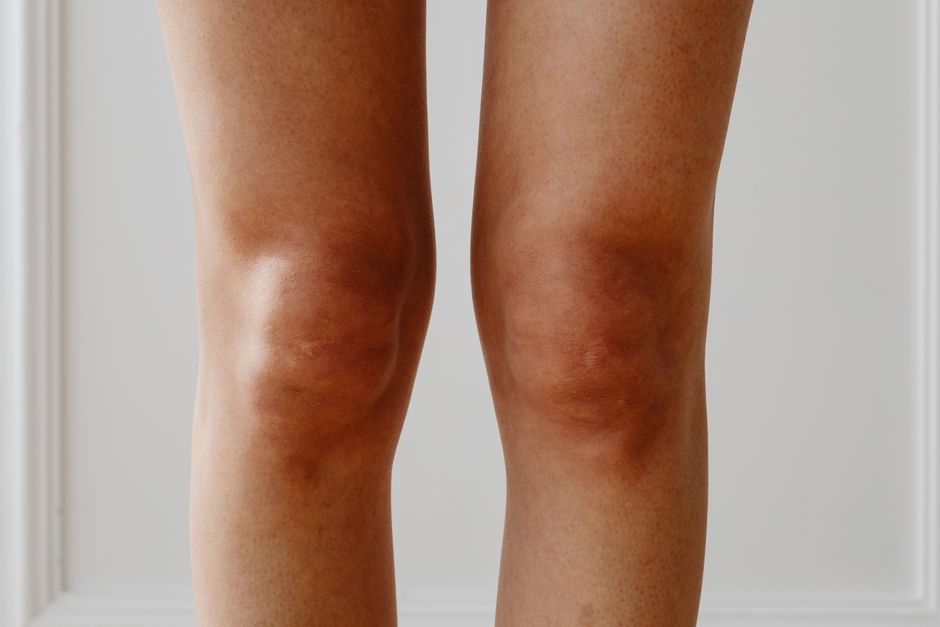
Knee hyperextension in gait happens when the knee joint straightens beyond its normal range of 0 degrees during walking, forcing the leg into a backward-bent position under body weight. This is not a random event — it is a mechanical failure in the chain of muscles, ligaments, and neurological signals that control how your leg moves through each step. The root causes fall into three categories: muscle weakness or imbalance, ligament laxity or injury, and neurological conditions that disrupt normal coordination.
What Exactly Happens in the Knee During Hyperextension in Gait?
To understand what causes knee hyperextension in gait, it helps to picture the knee as a hinge that is designed to stop at a straight line. The anterior cruciate ligament (ACL) and the posterior capsule act as physical brakes. The quadriceps and hamstrings work together to control how fast and how far the knee extends.
When you walk, your knee normally bends to about 15 degrees during the stance phase — the moment your foot is on the ground and your body weight is over that leg. In hyperextension, the knee goes past 0 degrees and can reach 10, 15, or even 20 degrees backward. This places extreme stress on the ACL, the menisci, and the joint capsule. Research published in the Journal of Orthopaedic & Sports Physical Therapy found that even 5 degrees of hyperextension during gait increases ACL strain by over 200 percent.
The body does not tolerate this well. Over time, repeated hyperextension stretches out the ligaments further, creating a vicious cycle where the knee becomes looser and more prone to buckling backward.
What Causes Knee Hyperextension in Gait? The Main Muscle Imbalances
The number one driver of knee hyperextension in gait is quadriceps weakness combined with poor hamstring timing. The quadriceps are responsible for controlling knee extension as your foot lands and your leg accepts weight. If they are weak or slow to activate, the knee keeps extending past where it should stop.
Several studies have identified specific patterns. A 2019 study in Gait & Posture measured muscle activation in people who walked with hyperextension. They found that the vastus medialis — the teardrop-shaped part of the inner quad — fired significantly later in the gait cycle compared to people with normal knee motion. This delay of just 30 to 50 milliseconds was enough to allow the knee to snap into hyperextension.
Other common imbalances include:
- Tight gastrocnemius (calf muscle): Limits ankle dorsiflexion, which forces the knee to compensate by hyperextending
- Weak gluteus maximus: Reduces hip extension control, shifting load to the knee
- Hamstring weakness or delayed activation: The hamstrings normally decelerate knee extension — when they are slow, the knee keeps going
These imbalances do not happen overnight. They build over months or years from sedentary habits, improper training, or compensation for an old injury.
How Ligament Laxity and Past Injury Contribute
People who have torn or sprained their ACL are at high risk for knee hyperextension in gait. The ACL is the primary ligament that prevents the knee from going backward. Once it is damaged, even if surgically repaired, the knee often has increased laxity — meaning it moves more than it should.
A study from the American Journal of Sports Medicine tracked 120 patients after ACL reconstruction. At two years post-surgery, 38 percent still showed hyperextension during walking. The researchers noted that these patients had not fully regained quadriceps strength, which left the reconstructed ligament taking more load than it could handle.
Ligament laxity is not always from injury. Some people are born with naturally looser ligaments — a condition called generalized joint hypermobility. This affects about 10 percent of the population. For these individuals, knee hyperextension is not caused by trauma but by connective tissue that stretches more easily. Walking with hyperextension becomes a lifelong habit unless actively corrected.





Neurological Conditions That Disrupt Gait Control
Some cases of knee hyperextension in gait have nothing to do with muscles or ligaments at the knee itself. They come from the brain and spinal cord failing to coordinate movement properly.
Stroke is a major cause. After a stroke, many people develop spasticity in the quadriceps — the muscle stays tight and overactive. Combined with weak hamstrings and poor ankle control, the leg extends too forcefully during stance. The result is a stiff, straight leg that snaps backward at the knee with every step. Research in Stroke journal reported that up to 40 percent of stroke survivors show knee hyperextension during walking at six months post-stroke.
Multiple sclerosis and cerebral palsy also cause hyperextension through similar mechanisms. Weakness, spasticity, and loss of proprioception — the sense of where your body is in space — all contribute. When the brain cannot feel where the knee is, it cannot tell the muscles to stop extending.
For people with these conditions, knee hyperextension is not a choice or a bad habit. It is the brain’s attempt to create stability where there is none. The locked-back knee position makes the leg feel more solid during standing, even though it damages the joint.
Can Foot and Ankle Problems Cause Knee Hyperextension?
Yes, and this is often overlooked. The knee does not operate in isolation. If your foot and ankle mechanics are off, the knee has to adapt.
The most common foot-related cause is limited ankle dorsiflexion — the ability to bend your ankle upward. When your ankle cannot bend enough during the stance phase, your body finds the missing motion somewhere else. The knee hyperextends to create the forward movement that the ankle should have provided. A 2020 study in Clinical Biomechanics measured ankle range of motion in people with knee hyperextension. Those with less than 10 degrees of ankle dorsiflexion were three times more likely to walk with hyperextended knees.
Wearing shoes with elevated heels, even small ones, can worsen this. High heels keep the ankle in a plantarflexed (pointed) position, shortening the calf muscles over time. When you switch to flat shoes, the tight calves limit ankle motion and push the knee into hyperextension.
Flat feet or fallen arches also play a role. When the arch collapses during walking, the tibia (shin bone) rotates inward excessively. This changes the alignment of the knee and can trigger hyperextension as the body tries to stabilize the leg.
What Does the Research Say About Fixing Knee Hyperextension?
Treatment depends entirely on the root cause. There is no single fix that works for everyone.
For muscle-driven hyperextension, quadriceps strengthening is the most evidence-backed approach. A 2021 randomized trial in Physical Therapy in Sport had participants do three exercises — straight leg raises, seated knee extensions, and step-ups — three times per week for eight weeks. The group that trained showed a 62 percent reduction in hyperextension angle during walking. The key was not just getting stronger but retraining the timing of muscle activation.
For ligament-related hyperextension, bracing may help temporarily, but long-term outcomes are mixed. A systematic review in the Journal of Athletic Training found that neoprene sleeves and hinged braces reduced hyperextension during walking by an average of 4 degrees. However, once the brace was removed, the hyperextension returned. The review concluded that bracing works best when combined with neuromuscular training.
For neurological causes, the approach changes. Botulinum toxin (Botox) injections into the overactive quadriceps can reduce spasticity for three to six months. A study in Archives of Physical Medicine and Rehabilitation found that stroke patients who received Botox combined with physical therapy showed 50 percent less knee hyperextension at three months compared to therapy alone.
The table below summarizes the main interventions and their evidence levels:
| Root Cause | Intervention | Evidence Level |
|---|---|---|
| Quadriceps weakness | Strengthening exercises | Strong — multiple RCTs |
| Hamstring delay | Neuromuscular retraining | Moderate — small studies |
| ACL laxity | Bracing + strengthening | Moderate — short-term benefit |
| Limited ankle motion | Calf stretching + ankle mobilization | Moderate — biomechanical evidence |
| Stroke-related spasticity | Botox + therapy | Strong — well-designed trials |
| Generalized hypermobility | Proprioception training | Weak — limited research |
Common Misconceptions About Knee Hyperextension
One widespread myth is that knee hyperextension is always caused by weak hamstrings. While hamstring weakness can contribute, the primary driver is usually quadriceps weakness. The hamstrings are active for only a brief moment at the end of knee extension. The quadriceps control the entire extension movement. Strengthening only hamstrings while ignoring quads will not fix the problem.
Another misconception is that hyperextension is harmless if it does not hurt. Pain is a late sign. Many people walk with 5 to 10 degrees of hyperextension for years without discomfort. By the time pain appears, the ACL and menisci may already have micro-tears. A 2018 study in Knee Surgery, Sports Traumatology, Arthroscopy found that people with asymptomatic knee hyperextension during gait had significantly higher rates of cartilage thinning on MRI compared to controls.
Some believe that walking with a slight bend in the knee at all times is the answer. This is not practical. The knee normally straightens during walking — the goal is to stop at 0 degrees, not to avoid straightening entirely. The fix is control, not stiffness.
Frequently Asked Questions
Can knee hyperextension be fixed without surgery?
Yes, in most cases. Physical therapy focused on quadriceps strengthening, hamstring timing, and ankle mobility can correct hyperextension caused by muscle imbalance.
Is knee hyperextension during walking always a sign of ACL damage?
No. Many people with intact ACLs walk with hyperextension due to weak muscles, tight calves, or neurological conditions.
How do I know if I hyperextend my knee when I walk?
Have someone watch you walk from the side. If your knee locks backward past straight at any point during stance, you are hyperextending.
Does wearing a knee brace prevent hyperextension?
Hinged braces can limit the angle, but they do not retrain the muscles. Long-term improvement usually requires strengthening and gait retraining.
