
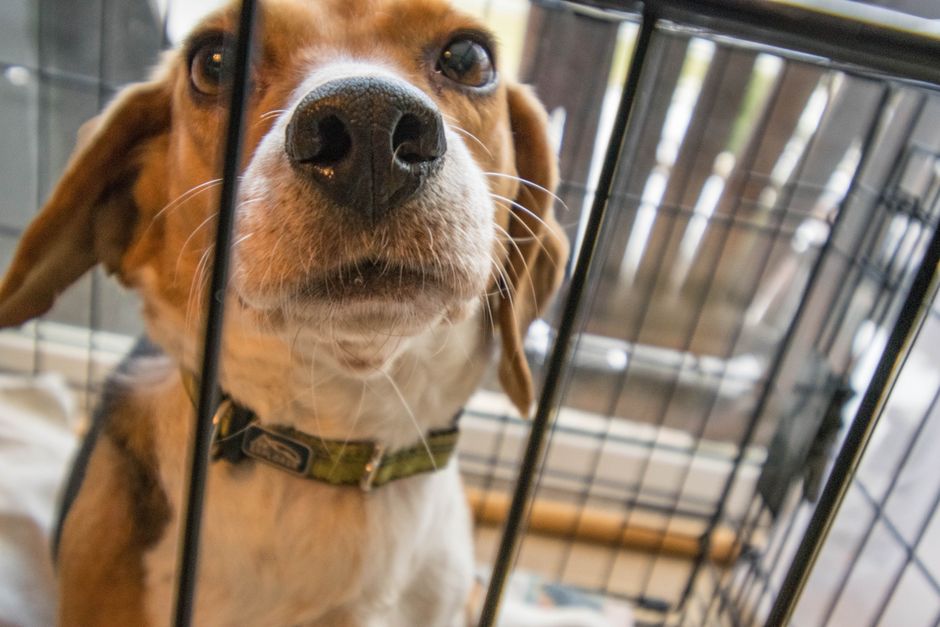
Kennel cough is a contagious respiratory infection in dogs, usually caused by the bacterium Bordetella bronchiseptica, often alongside a virus such as canine parainfluenza. It spreads through airborne droplets and direct contact, which is why outbreaks move quickly through kennels, shelters, doggy daycares, and training classes.
The name is a little misleading. Most dogs that develop kennel cough have never set foot in a kennel. Any place where dogs gather — a park, a groomer, a vet’s waiting room — can move the infection from one dog to another.
What Causes Kennel Cough?
Kennel cough is caused by an infection in the upper airways, most often a mix of a bacterium and a virus working together. The classic culprit is Bordetella bronchiseptica. It damages the tiny hair-like structures called cilia that line the windpipe and help clear out debris and germs.
Once those cilia stop working, irritants and mucus build up. That buildup triggers the dry, honking cough most people recognize. A virus often does the first damage. Canine parainfluenza virus is a common partner, and canine adenovirus, canine distemper virus, and canine influenza can also be involved.
The combination matters. A virus weakens the airway lining, then bacteria move in and make things worse. This is why the infection is often described as a complex rather than a single germ.
Some bacteria that live in a dog’s airways normally — including Streptococcus species and Mycoplasma — can also contribute. They usually cause trouble only when the airway is already irritated or the dog’s defenses are down.
How Does Kennel Cough Spread So Easily?
The infection spreads through respiratory droplets. When an infected dog coughs or sneezes, tiny droplets carrying bacteria and viruses travel through the air. A nearby dog breathes them in and can become infected.
It also spreads through direct contact and shared items. Nose-to-nose greetings, shared water bowls, toys, and even a handler’s hands can move germs between dogs. The incubation period — the time between exposure and the first cough — is typically a few days, though it can stretch longer.
Here is the part many owners miss. A dog can shed the bacteria and spread infection even before showing symptoms, and some dogs keep shedding after they seem fully recovered. That is a major reason outbreaks are so hard to contain once they start.
Environments that concentrate dogs in close quarters raise the risk. Boarding kennels, animal shelters, dog shows, and busy daycare centers all fit that description. Stress and poor ventilation add to the problem. A dog that is stressed or breathing recycled air is more likely to pick up an infection and more likely to get sick from it.
Is Kennel Cough Always Caused by Bordetella?
No. Bordetella bronchiseptica is the most common bacterial cause, but it is not the only one. Kennel cough is a syndrome — a pattern of symptoms — with several possible triggers.
Viral causes include canine parainfluenza virus, canine adenovirus type 2, canine distemper virus, and canine influenza virus. Any of these can irritate the airway and set the stage for a cough. In many cases, more than one germ is present at the same time.
That overlap is why testing is not always straightforward. A dog can test positive for one organism and still have others contributing. In routine cases, veterinarians often diagnose based on history and symptoms rather than running a full panel of tests.
It also means vaccination does not cover every possible cause. The Bordetella vaccine targets the most common bacterium. It does not protect against every virus that can produce a similar cough.





What Raises a Dog’s Risk of Getting Kennel Cough?
Exposure to other dogs is the single biggest factor. A dog that never meets other dogs rarely gets it. A dog that regularly attends group settings is far more likely to encounter the infection.
- Close contact with other dogs — boarding, daycare, dog parks, training classes, and shows.
- Age — puppies and senior dogs tend to have weaker immune defenses.
- Stress — travel, boarding, or a new environment can lower resistance.
- Poor ventilation — enclosed spaces with recycled air concentrate droplets.
- Underlying airway problems — a dog with a collapsed trachea or other airway disease may be more vulnerable.
- Incomplete vaccination — missing or lapsed vaccines leave gaps in protection.
None of these guarantees a dog will get sick. They simply raise the odds. A healthy adult dog in a low-contact home may never develop it, while a stressed puppy in a crowded shelter can pick it up quickly.
What Does Kennel Cough Look Like?
The hallmark is a dry, harsh cough that often sounds like a goose honking. Some owners describe it as a dog trying to clear something stuck in its throat. The cough may end with a gag or a retch, and it often gets worse with activity, excitement, or pressure on the windpipe.
Other signs can include:
- A runny nose or sneezing
- Watery eyes
- Mild lethargy
- A low-grade fever in some cases
- Reduced appetite, though this is less common
Most dogs stay alert and continue eating and drinking normally. That is a key distinction. A dog with a mild case often acts fine between coughing fits.
More serious signs warrant a call to a veterinarian. These include a persistent high fever, heavy nasal discharge that is thick or colored, difficulty breathing, or a dog that becomes lethargic and stops eating. Those signs can point to pneumonia rather than a simple upper airway infection.
Can Kennel Cough Turn Into Something Worse?
Usually not, but it can. In most healthy adult dogs, kennel cough is a self-limiting illness. That means it runs its course and resolves on its own, often within one to three weeks.
In some dogs, the infection moves deeper into the lungs and causes pneumonia. Puppies, senior dogs, dogs with weakened immune systems, and dogs with existing airway disease are at higher risk. Pneumonia is the main complication to watch for, and it is more serious than the cough itself.
The evidence on how often this happens is not precise. Most cases are mild, but there is no reliable single number for how frequently pneumonia develops. That is one reason it makes sense to have a veterinarian evaluate any dog whose symptoms are worsening rather than improving.
How Is Kennel Cough Diagnosed and Treated?
Diagnosis is usually based on history and symptoms. A veterinarian may ask whether the dog has been around other dogs recently and will listen to the chest and windpipe. In straightforward cases, no lab testing is needed.
When testing is done, it may include a swab of the airway or a sample of fluid to identify the organism. This is more common in severe cases, in outbreaks, or when pneumonia is suspected.
Treatment depends on how sick the dog is. Mild cases often need only rest, isolation from other dogs, and time. Some veterinarians prescribe cough suppressants to help a dog rest, though this is not appropriate for every case. Antibiotics are used when a bacterial infection is confirmed or strongly suspected, but they do not help viral causes.
Here is an honest point about evidence. The routine use of antibiotics for every case of kennel cough is common in practice, but it is not always supported by strong evidence. Many mild cases are viral or resolve without them. Whether to use antibiotics is a judgment call a veterinarian makes based on the individual dog.
Keeping an infected dog away from other dogs matters. Because shedding can continue after symptoms fade, a veterinarian’s guidance on when it is safe to return to group settings is worth following.
Can Kennel Cough Be Prevented?
Vaccination reduces the risk but does not eliminate it. Vaccines against Bordetella bronchiseptica are available in injectable, intranasal, and oral forms. The intranasal version tends to produce faster local immunity in the airway, which is where the infection starts.
Vaccination is most useful for dogs that spend time in group settings. It lowers the chance of severe illness and can reduce spread, but no vaccine covers every possible cause. A vaccinated dog can still develop a cough from a virus the vaccine does not target.
Other steps help too:
- Avoid shared water bowls and toys in group settings.
- Keep sick dogs home until a veterinarian says they are no longer contagious.
- Ask about vaccination requirements before boarding or daycare.
- Reduce stress around travel and boarding when possible.
None of these steps offers a guarantee. They lower risk, and that is the honest framing.
Frequently Asked Questions
What is the main cause of kennel cough?
The most common cause is the bacterium Bordetella bronchiseptica, often combined with a virus such as canine parainfluenza. The two together damage the airway lining and trigger the characteristic cough.
Can a dog get kennel cough without being in a kennel?
Yes. Any contact with an infected dog or contaminated surface can spread it, including parks, groomers, and vet clinics. The name describes a common setting, not a requirement.
How long does kennel cough usually last?
Most mild cases resolve within one to three weeks in healthy adult dogs. A dog that is getting worse instead of better should be seen by a veterinarian.
Is kennel cough contagious to humans?
Bordetella bronchiseptica can infect people in rare cases, mainly those with weakened immune systems. It is not considered a common risk for healthy adults.
