
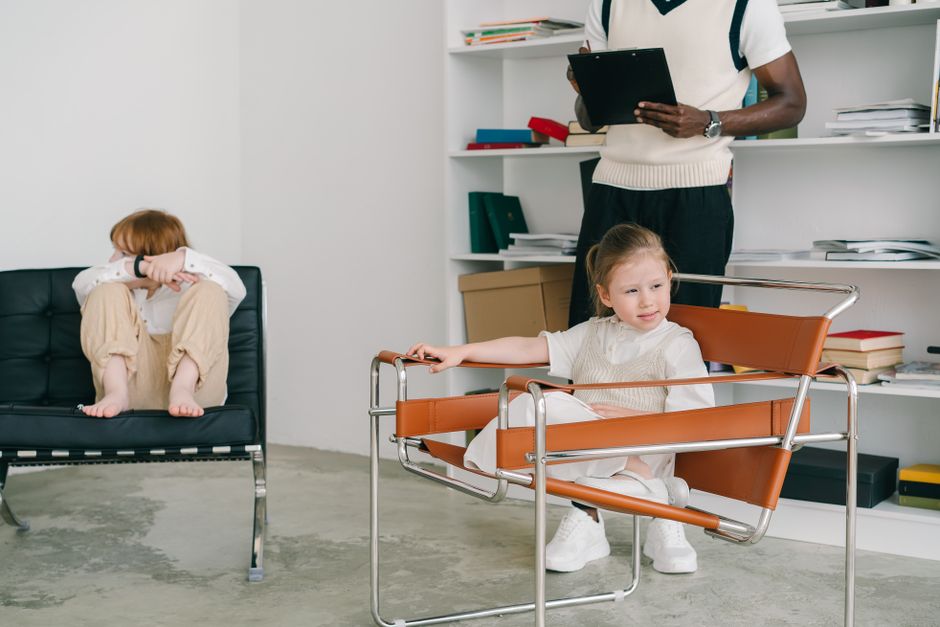
Jealousy in children is a normal, healthy emotion. It usually appears when a child feels a valued relationship is threatened, most often by a new sibling, a parent’s attention, or a friend’s success. While it feels uncomfortable for both child and parent, jealousy is not a behavioral problem to fix; it is a signal to decode. The goal is not to eliminate jealousy but to teach a child how to name it, tolerate it, and handle it without acting out.
What Causes Jealousy In A Child And How To Help?
Jealousy is rooted in a child’s deep need for security. A child who feels their place in a parent’s heart is secure can tolerate sharing attention. A child who feels uncertain will cling, act out, or withdraw.
The most common trigger is a new sibling. A toddler or preschooler sees a baby getting constant care and interprets it as a loss. They cannot yet understand that parental love is not a limited resource. Their brain is wired to protect what keeps them safe, so they fight for it.
Jealousy also appears when a parent returns to work, when a child starts school, or when a close friend makes a new friend. Any shift in attention can trigger it. Even positive changes—like a parent getting a promotion—can make a child feel less central.
Helping starts with validation. Say clearly, “You are upset because I am holding the baby. You want me to hold you too.” This names the emotion and confirms the child is seen. From there, you can teach coping skills.
How Jealousy Shows Up In Different Ages
Toddlers show jealousy physically. They may hit a sibling, push the baby, or have sudden tantrums. They lack the language to say “I feel left out,” so their body says it instead.
Preschoolers are more verbal but still impulsive. They may regress—demanding a bottle, wetting the bed, or wanting to be carried. This is not naughty behavior. It is a child saying, “I need proof that I am still your baby too.”
School-age children show jealousy socially. They may brag, exclude others, or make hurtful comments. They compare themselves to siblings and peers constantly. At this age, jealousy is often about fairness: “Why does she get more than me?”
Teenagers experience jealousy in friendships and romantic crushes. Their emotions are intense, and their judgment is still developing. They may sulk, give the silent treatment, or make passive-aggressive remarks.
Why Punishing Jealousy Backfires
When a child acts out of jealousy and gets punished, they learn two things: their feeling is wrong, and they are bad for having it. Neither is true.
Punishment does not remove the jealousy. It drives it underground. A child who cannot safely express envy may develop indirect behaviors like stomachaches, sleep problems, or withdrawal. The feeling does not disappear; it finds another exit.
Instead of punishing, separate the feeling from the behavior. The feeling is acceptable. Hitting is not. Say, “You are allowed to be angry. You are not allowed to hit. Let us find a safe way to show that anger.”
This approach teaches emotional regulation. The child learns that feelings are information, not commands. Over time, they develop the internal skill to pause before acting.





Practical Strategies To Reduce Jealousy At Home
Create protected one-on-one time. Even ten minutes of undivided attention daily can reassure a jealous child. Put the phone away, look them in the eye, and let them lead the play. This is not a reward for good behavior. It is a baseline need.
Use preventive attention. Give a child a warm moment before a known trigger. Before you sit down to feed the baby, spend two minutes with the older child. Before a playdate, remind them they are loved. This fills the emotional tank before it runs low.
Point out what stays the same. A child who gets a new sibling may fear their own place is gone. Remind them of routines that have not changed: “We still read books together every night. That is our time.”
Read books about jealousy together. Stories let a child see their own feelings in a safe, distant way. Many children’s books address sibling jealousy and friendship envy directly. Discuss the character’s feelings and ask, “Have you ever felt like that?”
Do not force sharing of affection. A child should not be forced to hug a sibling or hand over a favorite toy on demand. Forced generosity breeds resentment. Let sharing come from a place of security, not pressure.
When Jealousy Signals A Deeper Problem
Most jealousy is temporary and manageable. But some patterns deserve attention. If jealousy causes aggression that hurts others, if it interferes with school, or if a child becomes persistently withdrawn, seek professional guidance.
Watch for physical symptoms. Repeated stomachaches, headaches, or trouble sleeping around jealousy triggers may indicate anxiety. A child may not connect their emotions to their body. A pediatrician or child therapist can help sort this out.
Jealousy that follows a major life event—divorce, a move, a death—may be layered with grief. In these cases, the jealousy is a surface symptom of a deeper loss. Counseling can help a child process the underlying pain.
Some research suggests that chronic, intense jealousy in childhood is linked to later anxiety and low self-esteem. This is not a prediction of a child’s future. It is a reason to take persistent jealousy seriously and address it early rather than waiting for it to fade.
How Parents Can Manage Their Own Jealousy Triggers
Parents feel jealous too, often toward other parents or their own children’s preferences. A child who says “I like Daddy better” can sting. How you handle your own envy models how your child will handle theirs.
Do not take a child’s preference personally. Children cycle through favorite parents based on who meets their current need. It is not a verdict on your worth as a parent. Let it pass without making it significant.
Be honest about your own feelings in age-appropriate ways. Say, “I feel a little sad when you say you like Dad better. But I know you love me too.” This shows a child that adults have feelings and survive them.
If you grew up in a home where jealousy was punished or ignored, you may react strongly to your child’s envy. Notice your own discomfort. It often comes from your history, not your child’s present behavior.
What Not To Say To A Jealous Child
Certain phrases escalate jealousy instead of calming it. Avoid “Be nice to your sister” as a first response. It dismisses the feeling and demands behavior the child does not yet feel.
Avoid comparisons. “Your brother does not act like this” fuels exactly the competition you want to reduce. Each child needs to be seen as an individual, not a benchmark.
Avoid “You are too old for this.” Jealousy is not age-appropriate. It is human. A child hearing this learns to hide their feelings rather than share them.
Avoid false reassurance. “I love you all the same” may not land if the child feels differently. Instead, be specific: “I love the way you laugh. I love how you help me. You are my only you.”
Do not use jealousy as a behavior tool. Phrases like “If you do not stop, I will hold the baby instead” teach a child that love is conditional and weaponized. This deepens insecurity rather than resolving it.
Long-Term Outcomes For Children Who Learn To Handle Jealousy
Children who learn to manage jealousy gain a lifelong skill. They learn that a feeling does not have to control them. They learn to name what they feel and choose a response. This is emotional intelligence in practice.
These children become adults who can handle competition without collapsing. They can celebrate a colleague’s success without feeling diminished. They can feel envy, acknowledge it, and move on. That is a realistic and healthy outcome.
Research on emotional regulation in childhood consistently shows that children who can name and manage their feelings have better peer relationships and academic focus. The mechanism is straightforward: an unregulated emotional brain hijacks attention and learning. A child who can self-soothe can return to the task at hand.
Jealousy is not a flaw to erase. It is a feeling to understand. When a child learns that, they carry that understanding into every relationship they will ever have.
Frequently Asked Questions
Is it normal for a child to be jealous of a new sibling?
Yes. Jealousy toward a new sibling is one of the most common and developmentally normal reactions in early childhood. It usually decreases as the child feels secure in their continued place in the family.
How long does sibling jealousy last in children?
Most sibling jealousy fades within a few months as routines settle and the child adapts. If intense jealousy lasts longer than six months or worsens, consider speaking with a pediatrician or child therapist.
Can jealousy in a child cause long-term problems?
Occasional jealousy does not cause long-term harm. Chronic, intense jealousy that is never addressed may contribute to anxiety or relationship difficulties later, which is why early support matters.
What should I do when my child acts out because of jealousy?
Separate the feeling from the behavior. Validate the jealousy first, then set a clear limit on the action, and offer a safe alternative for expressing the emotion.
