
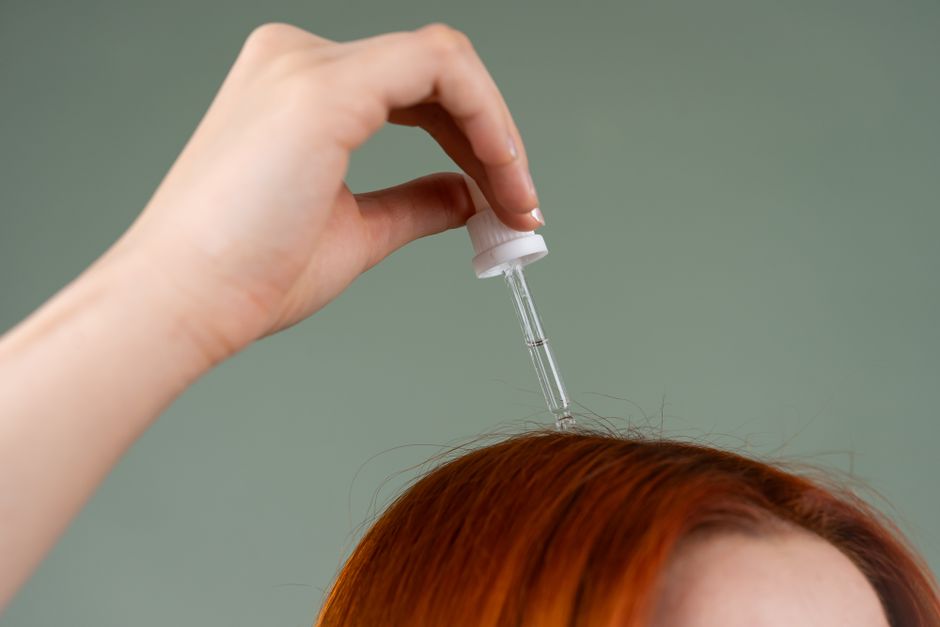
An itchy scalp and hair loss often travel together, and the reason is usually inflammation around the hair follicle. The scalp reacts to something — a fungus, an immune reaction, an oil imbalance, or a product — and that reaction disrupts the follicle’s normal growth cycle. When the follicle is under stress, hair sheds more than it should, and new growth slows down.
The two symptoms are linked but not identical. Itching is a nerve and immune response in the skin. Hair loss is a follicle problem. One can cause the other, or a single underlying condition can cause both. Figuring out which is happening is the whole game.
What Causes Itchy Scalp and Hair Loss at the Same Time?
Four conditions account for most cases where both symptoms appear together. Each has a different mechanism, and each looks different up close.
Seborrheic dermatitis is the most common. It causes red, greasy, flaky patches, usually along the hairline, behind the ears, and on the crown. The driver is a yeast called Malassezia that lives on everyone’s scalp. In some people, the immune system reacts to it more strongly, producing inflammation. That inflammation makes the scalp itch and can push follicles into a resting phase, which increases shedding.
Scalp psoriasis is an autoimmune condition. Skin cells multiply too fast, building thick silvery scales. It can extend past the hairline onto the forehead, neck, and ears — a detail that helps distinguish it from seborrheic dermatitis. Psoriasis on the scalp can cause temporary hair thinning, though it rarely destroys follicles permanently.
Fungal infection — tinea capitis — is more common in children but does occur in adults. It causes scaling, broken hairs, and sometimes patches of hair loss with black dots where hairs have snapped off. This one needs medical treatment. Over-the-counter shampoos alone usually do not clear it.
Contact dermatitis happens when a product irritates the scalp or triggers an allergy. Hair dyes, especially those containing paraphenylenediamine, are a frequent culprit. So are some shampoos, conditioners, and styling products. The itch and irritation can lead to scratching, and scratching damages follicles.
There is one non-obvious point worth making here. A lot of people assume an itchy scalp means their hair is dirty or that they need to wash less. With seborrheic dermatitis, the opposite is often true. Malassezia feeds on sebum, and leaving oil on the scalp can make things worse. Washing regularly with an appropriate shampoo is part of managing it, not a cause of it.
How Does an Itchy Scalp Actually Lead to Hair Loss?
Two mechanisms do the damage. The first is inflammation. When the scalp is inflamed, immune cells release signaling molecules that interfere with the hair follicle’s growth cycle. Hair spends more time in the resting phase and less in the growing phase. The result is more shedding and slower regrowth.
The second is mechanical. Scratching pulls hair out and damages the follicle and surrounding skin. Chronic scratching can cause scarring in some conditions, and scarred follicles do not grow hair back. This is why persistent, intense itching is worth taking seriously rather than just tolerating.
It helps to understand the hair growth cycle. Each follicle cycles through a growing phase, a transition phase, and a resting phase. Most people shed somewhere between 50 and 100 hairs a day as part of this normal cycle. When inflammation or trauma pushes more follicles into the resting phase at once, shedding increases noticeably a few months later. That delay is why people are often confused about what triggered their hair loss.
Is It Dandruff or Something Else?
Dandruff and seborrheic dermatitis sit on the same spectrum. Dandruff is the milder end — flaking without much visible redness or inflammation. Seborrheic dermatitis is the more inflamed end, with redness, greasy scales, and often itching.
Both involve Malassezia. The difference is how strongly the scalp reacts to it. This matters because mild dandruff rarely causes meaningful hair loss on its own, while more inflamed seborrheic dermatitis can contribute to shedding.
Things that point away from simple dandruff:
- Thick silvery scales that extend beyond the hairline onto the face or neck
- Patches of broken hairs or smooth bald spots
- Severe itching that interferes with sleep
- Scaling that does not improve after several weeks of anti-dandruff shampoo
- Swelling, pus, or open sores on the scalp
Any of those warrant a medical evaluation rather than more shampoo experiments.





What Other Conditions Cause Scalp Itching and Shedding?
Several conditions cause hair loss with scalp symptoms, and they are easy to confuse.
Lichen planopilaris is a scarring form of hair loss. It causes itching, burning, and redness around follicles, and it can permanently destroy them if untreated. It is uncommon but important to identify early.
Folliculitis is inflammation or infection of the hair follicles themselves. It shows up as small red bumps or pustules. It can be caused by bacteria, fungus, or physical irritation from shaving or tight hairstyles.
Telogen effluvium is diffuse shedding triggered by a stressor — illness, surgery, major weight loss, or severe emotional stress. It usually does not cause itching by itself. If itching is present alongside it, something else is likely going on too.
Androgenetic alopecia — pattern hair loss — does not typically cause itching. It is driven by genetics and hormones. But it commonly occurs alongside seborrheic dermatitis, which can make it seem like the pattern loss is causing the itch.
Traction alopecia comes from tight hairstyles pulling on follicles over time. It causes soreness and sometimes itching, and it can lead to permanent loss if the pulling continues.
When Should You See a Doctor?
See a doctor if the hair loss is patchy rather than diffuse, if you can see smooth bald spots, if the scalp is swollen or has pus, or if symptoms have not improved after several weeks of consistent treatment with an anti-dandruff or antifungal shampoo.
Also see a doctor if the itching is severe enough to disrupt sleep, or if you notice broken hairs, black dots, or scaling that spreads beyond the scalp.
A dermatologist can usually tell a lot from a scalp exam. Sometimes they use a dermatoscope to look at the follicles up close. In some cases they take a small scalp biopsy to confirm a diagnosis, especially when scarring hair loss is a possibility.
Getting the diagnosis right matters. Treatments for seborrheic dermatitis, psoriasis, fungal infection, and scarring alopecia are different. Using the wrong one wastes time, and with scarring conditions, time is the thing you cannot get back.
What Actually Helps?
Treatment depends entirely on the cause, so the honest answer is that there is no single fix. What follows is what the evidence supports for the most common causes.
For seborrheic dermatitis and dandruff, shampoos containing ketoconazole, zinc pyrithione, selenium sulfide, or coal tar are the standard approach. These are available over the counter in various strengths. Ketoconazole 1% is available without a prescription in the US; higher concentrations require a prescription. These ingredients reduce Malassezia and calm inflammation.
A practical point many people miss: rotate between two different active ingredients rather than using the same one continuously. And leave the shampoo on the scalp for several minutes before rinsing, since the active ingredients need contact time to work.
For scalp psoriasis, topical corticosteroids are commonly prescribed. Some clinicians also recommend salicylic acid preparations to soften scales. More severe cases may need other treatments, and a dermatologist should guide that.
For fungal infection, oral antifungal medication is usually required. Topical treatments alone often fail because the infection involves the hair follicle itself, where topical products do not reach well.
For contact dermatitis, the fix is identifying and stopping the irritant. That usually means switching products and giving the scalp time to recover.
For scarring alopecia, early treatment with anti-inflammatory medication can slow or stop the damage. Hair that is already lost to scarring does not grow back.
Across all of these, one thing helps: stop scratching. It is easier said than done when the itch is intense, but scratching adds mechanical damage on top of whatever is already happening. Keeping fingernails short and using cool compresses can reduce the urge.
Be skeptical of products that promise to regrow hair while also treating an itchy scalp. No single product does both, because the two problems usually have different causes. If a marketing claim sounds like it covers everything, it probably covers nothing well.
Frequently Asked Questions
Can an itchy scalp cause hair loss?
Yes, when the itching comes from inflammation or scratching that damages hair follicles. The hair loss is usually temporary if the underlying cause is treated, but scarring conditions can cause permanent loss.
What is the most common cause of itchy scalp with hair loss?
Seborrheic dermatitis is the most common cause of both symptoms together. It involves an immune reaction to Malassezia yeast on the scalp, which produces inflammation, flaking, and increased shedding.
Does dandruff cause hair loss?
Mild dandruff by itself rarely causes meaningful hair loss. More inflamed seborrheic dermatitis can contribute to shedding, and constant scratching can damage follicles.
How long does it take for hair to grow back after treating an itchy scalp?
Hair typically regrows over several months once the underlying condition is controlled, since follicles need time to return to their growing phase. Hair lost to scarring does not grow back.
