
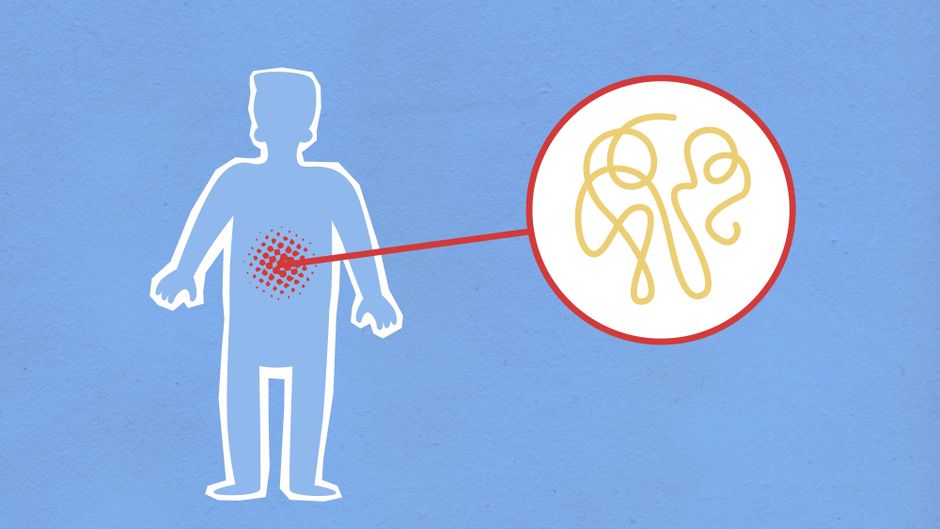
Intestinal inflammation happens when your immune system mounts a response inside the gut. That response can be triggered by infections, by your own immune system mistaking gut tissue for a threat, by food reactions, or by ongoing irritation. It is not one condition. It is a process, and the cause determines everything about how it is treated.
Your gut is not a sterile tube. It holds trillions of bacteria, fungi, and viruses. It also holds the largest collection of immune cells in your body. Those immune cells sit just beneath the surface of your intestinal lining, waiting. When something crosses that lining that should not, or when the immune system misreads a harmless signal, inflammation follows.
Understanding what causes inflammation in the intestines starts with understanding that acute inflammation is normal and protective. Chronic inflammation is where problems begin.
What Causes Inflammation in the Intestines?
The causes fall into a few broad groups, and they often overlap.
Infections are the most common trigger of short-term intestinal inflammation. Bacteria like Salmonella and Campylobacter, viruses like norovirus, and parasites like Giardia all provoke an immune response in the gut lining. This is acute inflammation. It usually resolves within days to a couple of weeks as the infection clears.
Autoimmune and immune-mediated conditions are different. In Crohn’s disease and ulcerative colitis, the immune system attacks the intestinal lining without an infection to fight. This is chronic inflammation. It does not resolve on its own. These are the two main forms of inflammatory bowel disease, or IBD.
Food reactions can cause inflammation in some people. Celiac disease is an autoimmune reaction to gluten that damages the small intestine. It is not the same as gluten sensitivity or wheat allergy. Each has a different mechanism and different consequences.
Reduced blood flow to the intestines, called ischemic colitis, damages tissue and triggers inflammation. This is more common in older adults and in people with certain heart or blood vessel conditions.
Radiation therapy to the abdomen or pelvis can inflame the intestines. This is called radiation enteritis or radiation colitis, depending on which part is affected.
Medications can cause intestinal inflammation as a side effect. Nonsteroidal anti-inflammatory drugs (NSAIDs) are a well-known example. They can irritate and inflame the gut lining, especially with long-term use.
There is also a category that gets less attention: low-grade inflammation linked to diet, stress, and the gut microbiome. This is real, but it is also where a lot of marketing exaggerates what we actually know. More on that below.
How Do You Tell Acute Inflammation From Chronic Inflammation?
The difference matters because the causes, the risks, and the treatments are not the same.
Acute intestinal inflammation comes on fast and usually ends fast. You might have diarrhea, cramping, and nausea for a few days. It is uncomfortable, but it typically resolves without lasting damage.
Chronic intestinal inflammation persists. It may come in flares with periods of relief, or it may be continuous. Over time, ongoing inflammation can damage the intestinal lining, lead to ulcers, narrowing, or fistulas, and increase the risk of colorectal cancer in people with long-standing IBD.
The timeline is one clue. Acute inflammation tied to an infection usually improves within one to two weeks. Inflammation that lasts weeks to months, or that keeps returning, needs medical evaluation.
Another clue is what comes with it. Blood in the stool, unintended weight loss, fever, and waking at night with pain or diarrhea are warning signs. These suggest something more than a passing infection.
What Role Does the Gut Microbiome Play?
The gut microbiome is the community of bacteria and other microorganisms living in your intestines. It interacts with your immune system constantly.
A healthy microbiome helps train the immune system to tolerate harmless substances and to respond appropriately to real threats. When the balance of bacteria shifts, that training can go wrong. Some research suggests that changes in the microbiome are involved in IBD, but whether they are a cause or a consequence is still being studied.
What we do know is that the relationship is real. People with IBD often have different gut bacterial communities than people without it. What we do not know is whether correcting those differences treats the disease. So far, the evidence for most microbiome-based treatments is limited.
This is where a lot of probiotic marketing gets ahead of the science. Some specific probiotic strains have shown benefit in certain conditions, like reducing antibiotic-associated diarrhea. For treating IBD, the evidence is mixed and no probiotic has been established as a primary treatment.





Can Diet Cause Intestinal Inflammation?
Diet can influence intestinal inflammation, but the picture is more complicated than headlines suggest.
Certain dietary patterns are associated with higher levels of inflammation in the body. Diets high in processed foods, refined sugars, and certain fats tend to correlate with more inflammation. Diets rich in vegetables, fruits, fiber, and omega-3 fatty acids tend to correlate with less.
But correlation is not causation. It is hard to separate diet from other factors like weight, activity, stress, and genetics. And “inflammation” measured in a blood test is not the same as inflammation in the intestine.
For people with specific conditions, the connection is clearer. In celiac disease, gluten directly triggers an immune reaction that damages the small intestine. Removing gluten is not optional; it is the treatment.
In IBD, no single food has been proven to cause flares. Some people find that certain foods make symptoms worse. That is different from those foods causing the underlying inflammation. Dietary changes can help manage symptoms, but they do not replace medical treatment for IBD.
If you suspect a food is triggering your symptoms, tracking what you eat and when symptoms occur can help you and your doctor identify patterns. Elimination diets should be done with medical guidance, especially in children, to avoid nutritional gaps.
What About Stress and Intestinal Inflammation?
Stress affects the gut. That part is well established.
The gut and the brain are connected through the vagus nerve and through hormones and immune signals. Stress can change how fast food moves through your intestines, how much fluid is absorbed, and how sensitive your gut is to pain.
Whether stress directly causes intestinal inflammation is less clear. In animal studies, chronic stress can worsen inflammation. In humans, the evidence is more indirect. Stress clearly worsens symptoms in conditions like irritable bowel syndrome (IBS) and IBD, but IBS does not involve visible inflammation, and in IBD, stress appears to influence flares rather than cause the disease itself.
What this means practically: managing stress is worth doing for many reasons. It may help your symptoms. It is not a substitute for treating an underlying inflammatory condition.
When Should You See a Doctor?
See a doctor if you have symptoms that suggest chronic intestinal inflammation rather than a passing bug.
- Diarrhea lasting more than a week
- Blood or mucus in your stool
- Unintended weight loss
- Fever that is not explained by a short illness
- Abdominal pain that wakes you at night
- Symptoms that keep coming back
Your doctor may order blood tests, stool tests, or imaging. A colonoscopy with biopsy is often needed to confirm a diagnosis of IBD or to rule it out. These steps matter because the treatments for different causes are not the same.
Do not assume your symptoms are “just IBS” without evaluation. IBS and IBD can feel similar, but they are different conditions with different risks. IBS does not cause visible inflammation or damage to the intestine. IBD does.
Can Intestinal Inflammation Be Treated?
Treatment depends entirely on the cause.
For acute infectious inflammation, treatment focuses on fluids and rest. Most cases resolve without medication. Antibiotics are used only for specific bacterial infections, not for viral ones.
For IBD, treatment usually involves medications that reduce inflammation or suppress the immune system. These include aminosalicylates, corticosteroids, immunomodulators, and biologic drugs. The choice depends on the type, location, and severity of the disease. Surgery may be needed in some cases.
For celiac disease, the treatment is a strict gluten-free diet. There is no medication that replaces it.
For inflammation caused by NSAIDs, stopping the medication is often the first step, under a doctor’s guidance.
What about supplements? This is where honesty matters. Many products claim to reduce intestinal inflammation. Most have weak or no evidence in humans. Curcumin, omega-3 fatty acids, and certain probiotics have been studied, but results are mixed and no supplement has been established as a reliable treatment for IBD. Some may help as add-ons. None replace medical care.
The realistic goal for chronic intestinal inflammation is usually management, not cure. That is not a pessimistic statement. It is an accurate one. Many people with IBD live full lives with treatment that controls their disease.
Frequently Asked Questions
What are the most common causes of inflammation in the intestines?
Infections, autoimmune conditions like Crohn’s disease and ulcerative colitis, food reactions such as celiac disease, reduced blood flow, radiation, and certain medications are the main causes. Acute inflammation from infection usually resolves on its own, while chronic causes need medical treatment.
How long does intestinal inflammation last?
Inflammation from an infection typically improves within one to two weeks. Chronic inflammation from conditions like IBD can last for months or years and often comes in flares. If symptoms last more than a week or keep returning, see a doctor.
Can certain foods cause intestinal inflammation?
In celiac disease, gluten directly triggers inflammation and damage in the small intestine. For other conditions, no single food has been proven to cause intestinal inflammation, though some foods may worsen symptoms. Dietary changes can help manage symptoms but do not replace medical treatment.
Is intestinal inflammation the same as IBS?
No. Irritable bowel syndrome does not involve visible inflammation or damage to the intestinal lining, while conditions like IBD do. The symptoms can feel similar, so testing is often needed to tell them apart.
