

What Causes Hiccups?
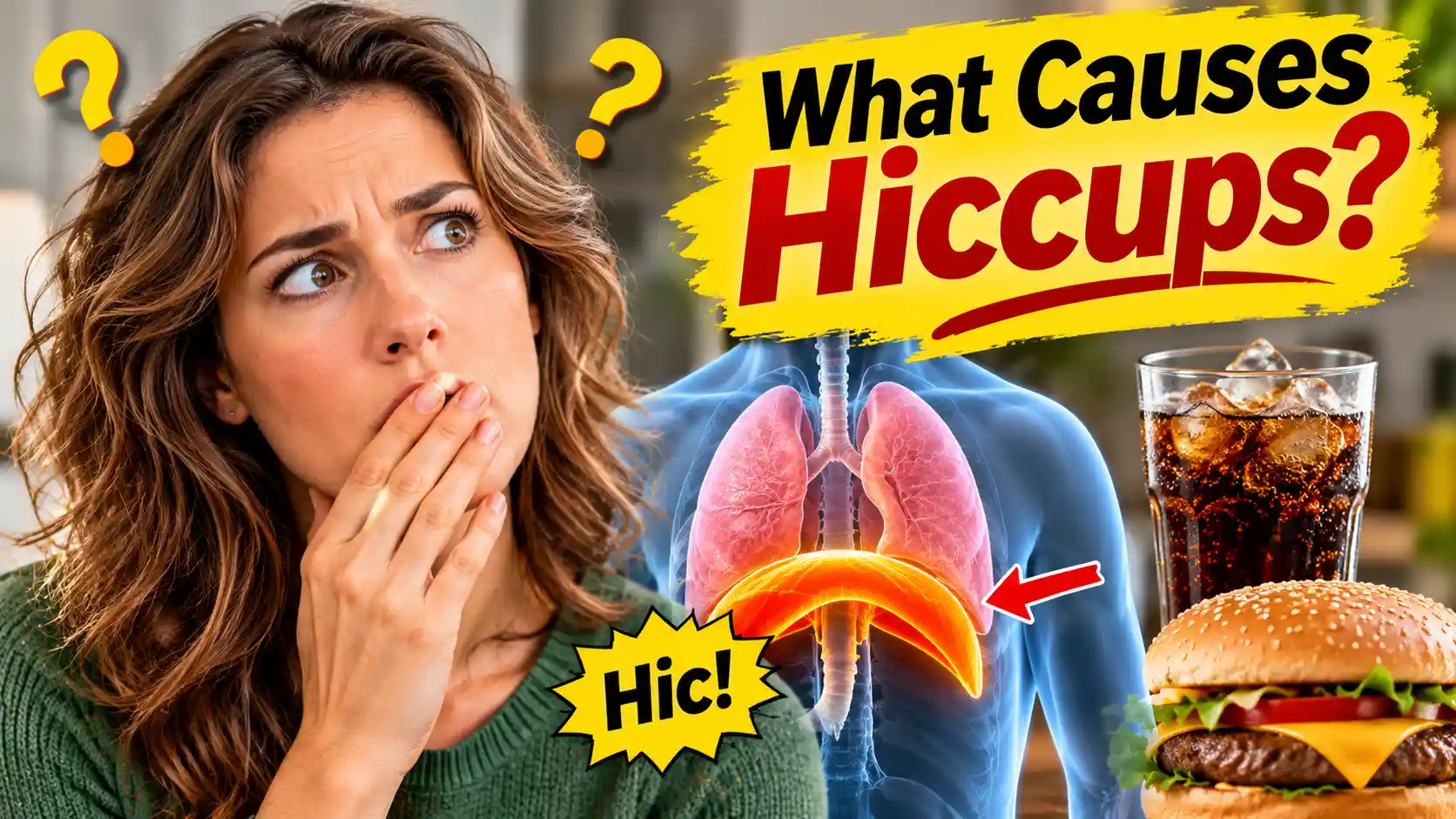
Hiccups happen when your diaphragm suddenly spasms. The diaphragm is the large muscle beneath your lungs that controls breathing. Each spasm pulls air in so fast that your vocal cords snap shut — that snap is the “hic” sound. Common triggers include eating too fast, drinking carbonated drinks, alcohol, and sudden excitement. Most hiccups stop within a few minutes on their own.
Hiccups are caused by an involuntary contraction of the diaphragm — the dome-shaped muscle below your lungs. The contraction happens without warning. It pulls a rush of air downward, and your vocal cords close to block it. The result is that sharp, familiar sound.
Almost everyone gets hiccups. They usually last under ten minutes and need no treatment. But sometimes hiccups go on for hours, days, or longer. That is a different story, and the causes are different too.
This article explains the full picture — what triggers a normal bout of hiccups, the medical conditions that keep them going, what actually stops them and why, and when it is time to call a doctor.
What Actually Happens When You Hiccup
Your body runs hiccups like a reflex — the same way it runs a knee-jerk. No thought required. No warning.
Here is the sequence, step by step.
- The diaphragm spasms. Something irritates the phrenic nerve — the nerve that runs from your brainstem down through your neck and chest to control the diaphragm. The brainstem sends a sudden signal. The diaphragm contracts hard and fast.
- Air rushes in. The sharp contraction yanks your lungs downward, pulling a burst of air through your airway.
- The vocal cords slam shut. A split second later, your glottis — the opening between your vocal cords — snaps closed to stop that air rush. That closure is what makes the sound. The “hic” is literally your vocal cords colliding.
- The cycle repeats. If the irritation continues, the reflex fires again. And again.
Two nerves are mainly responsible. The phrenic nerve (which originates at cervical spine levels C3 to C5) controls the diaphragm.1Anatomy, Thorax, Phrenic Nerves, National Library of Medicine.↓ The vagus nerve runs alongside it and monitors the stomach, esophagus, and chest cavity. When either nerve gets irritated — by a full stomach pressing upward, by acid, by temperature change, or by inflammation — the hiccup reflex can be triggered.
The brainstem coordinates the whole response. This is why hiccups are largely outside your conscious control. The reflex center sits below the level where voluntary thinking operates.
One thing that surprises most people: Hiccups serve no known useful purpose. Coughing clears your airway. Sneezing clears your nasal passages. Hiccups do nothing helpful. Scientists believe they may be a vestigial reflex left over from an earlier stage of evolution — possibly related to the gill-breathing movements of ancient fish ancestors, or to the way unborn babies practice using their respiratory muscles in the womb. Fetuses hiccup regularly from around 9 weeks of pregnancy, long before their lungs are ready to breathe air.
Common Triggers
| Category | Common Triggers | Why It Causes Hiccups |
|---|---|---|
| Eating habits | Eating too fast, overeating, swallowing air | A full or rapidly stretched stomach presses up against the diaphragm and irritates the phrenic nerve |
| Food types | Spicy food, very hot food, very cold food | Extreme temperatures and capsaicin in spicy food directly irritate the vagus nerve lining the esophagus |
| Drinks | Carbonated drinks, alcohol, drinking too fast | Bubbles stretch the stomach wall; alcohol irritates the esophagus and lowers the threshold for the hiccup reflex |
| Emotions | Sudden excitement, stress, laughing hard, anxiety | Emotional surges alter breathing rhythm and can trigger an involuntary diaphragm contraction |
| Temperature changes | Sudden cold air, cold water, rapid temperature swings | A sharp temperature drop near the esophagus or airway can startle the vagus nerve into triggering the reflex |
| Medications | Corticosteroids (e.g. dexamethasone), benzodiazepines, chemotherapy drugs, barbiturates | These drugs can disrupt normal nerve signalling in the brainstem reflex arc — a cause most people never suspect |
| Medical triggers | Acid reflux (GERD), general anesthesia, bowel distension | Acid burns the esophageal lining near the vagus nerve; anesthesia disrupts brainstem reflex control |
Sources: Mayo Clinic · MedlinePlus (NIH) · StatPearls
Short vs. Persistent Hiccups: When to Worry
Most hiccups are harmless. But duration is the number that matters most.
Doctors use three categories to classify hiccups:
Warning signs that mean see a doctor now — not later:
Who gets chronic hiccups most? Men are significantly more likely to experience persistent and intractable hiccups than women.2Analysis of Factors Associated with Hiccups Using the FAERS Database,https://doi.org/10.3390/ph15010027.↓ Most medical case reports and clinical studies show a strong male predominance, though the exact reason is not fully understood. Older adults, people with chronic acid reflux, and those on long-term steroid medications are also at higher risk.
The duration threshold of 48 hours is not arbitrary. Under 48 hours, the cause is almost always benign and self-limiting. Beyond 48 hours, a clinical investigation nearly always finds something that needs to be addressed.
Medical Conditions That Cause Chronic Hiccups
When hiccups go on longer than 48 hours, there is almost always a medical reason. The body is not malfunctioning randomly — something specific is irritating the phrenic or vagus nerve, or disrupting the brainstem’s control over the hiccup reflex. Here is where that irritation most commonly comes from.
Gastrointestinal conditions are the most frequent cause. Gastroesophageal reflux disease (GERD) is the leading culprit — stomach acid repeatedly burns the esophageal lining near the vagus nerve, keeping the reflex triggered. Stomach ulcers, esophageal inflammation, bowel obstruction, and pancreatitis can all do the same thing by putting pressure on or directly irritating nearby nerves.
Central nervous system conditions are the most serious cause. A stroke, brain tumor, traumatic brain injury, meningitis, or multiple sclerosis can damage or disrupt the brainstem region that regulates the hiccup reflex. When hiccups appear suddenly after a neurological event, they are a symptom — not a side effect.
Metabolic and kidney conditions are a less obvious but well-documented cause. Chronic kidney disease causes a buildup of waste products in the blood (uremia), which irritates the central nervous system and can trigger persistent hiccups. Diabetes-related nerve damage and electrolyte imbalances (particularly low sodium or low calcium) are also known triggers.
Thoracic conditions — problems inside the chest cavity — can press directly on the phrenic nerve. Pneumonia, pleurisy (inflammation of the lung lining), pericarditis (inflammation around the heart), and mediastinal tumors all sit close enough to the nerve to cause ongoing irritation.
Drug-induced hiccups are more common than most people realise. The main offenders are:
- Corticosteroids (especially intravenous dexamethasone — widely used in cancer care) — one of the most frequent medication-related causes seen in hospitals
- Chemotherapy drugs (particularly cisplatin and carboplatin)
- Benzodiazepines (sedatives like diazepam, used for anxiety and sleep)
- Opioids (morphine, oxycodone at high doses)
- Barbiturates and some anaesthetic agents
If hiccups started shortly after a new drug was prescribed, that drug is the first place to look.
Post-surgical hiccups occur most often after abdominal or thoracic surgery, or following general anaesthesia. The intubation tube used during surgery can irritate the vagus nerve directly. These usually resolve within days but occasionally persist.
If you or someone you care for has hiccups lasting more than 48 hours, telling a doctor about all current medications is as important as describing any other symptoms.
How to Stop Hiccups: What Works and Why
Most home remedies for hiccups are not folk myths. Several have a real mechanism behind them. Understanding why they work helps you choose the right one — and do it correctly.
Hold your breath or breathe into a paper bag.
This is the most effective home remedy, and the science is clear. Holding your breath causes carbon dioxide (CO2) to build up in your bloodstream. Rising CO2 signals the brainstem to override the hiccup reflex and prioritise normal breathing. Breathing into a paper bag does the same thing — you re-inhale the CO2 you just exhaled. Hold your breath for as long as you comfortably can, then breathe out slowly.3CO2 retention: The key to stopping hiccups, PubMed.↓
Swallow repeatedly or drink water slowly.
Swallowing is a competing reflex. Each swallow sends a signal through the vagus nerve that partially interrupts the hiccup cycle. Drinking a full glass of water slowly — without pausing — forces multiple consecutive swallows, which can reset the reflex pattern. Some people find swallowing cold water more effective than room temperature water because the temperature adds a second type of stimulus to the same nerve.4How to Stop Hiccups: What Actually Works, According to Physiology, Acibadem Hospital.↓
Lean forward or pull your knees to your chest.
Both positions compress the diaphragm from the outside, reducing its ability to contract sharply. It is a purely mechanical approach, and it works better for hiccups caused by overeating than for other triggers.5Things you can do yourself to stop or prevent hiccups, NHS.↓
Swallow a teaspoon of sugar.
This is not purely superstition. Swallowing something textured or sweet may stimulate the vagus nerve endings at the back of the throat, interrupting the reflex at its source. The same principle applies to swallowing a small piece of bread or peanut butter slowly.
Gargle with cold water.
Gargling activates the same vagus nerve endings in the throat. It is a less-studied remedy but uses the same nerve pathway as swallowing-based remedies.
What does not work: being frightened.
The idea that sudden shock cures hiccups is widely believed but has no clinical evidence behind it. A fright can briefly change your breathing pattern, but it does not reliably interrupt the hiccup reflex arc. Startling someone with hiccups is more likely to annoy them than help.
Medical treatments for persistent hiccups.
When hiccups last beyond 48 hours and have a confirmed cause, doctors treat both the underlying condition and the symptom directly. The only drug approved by the FDA specifically for hiccups is chlorpromazine (an antipsychotic with a strong effect on the brainstem reflex centre). Other medications used off-label include:
- Baclofen — a muscle relaxant that reduces the phrenic nerve’s excitability
- Metoclopramide — primarily a nausea drug, but it also speeds stomach emptying, reducing upward pressure on the diaphragm
- Gabapentin — an anticonvulsant that calms nerve overactivity, particularly useful when the cause involves the central nervous system
None of these are appropriate for ordinary, short-lived hiccups. They are tools for persistent and intractable cases under medical supervision.
Surprising Facts About Hiccups
- Hiccups serve no useful purpose. Unlike coughing or sneezing, hiccups do not clear your airway or protect your body in any known way. Scientists still debate why the reflex exists at all.
- Babies hiccup before they are born. Fetuses start hiccupping from around 9 weeks of pregnancy. It may be an early way the developing nervous system exercises the breathing muscles — long before the lungs are ready to work.
- The world record is 68 years. An American man named Charles Osborne hiccupped continuously from 1922 to 1990. He hiccupped an estimated 430 million times over his lifetime and lived to age 96.
- Men get chronic hiccups far more than women. Nearly all documented cases of persistent and intractable hiccups occur in men. The reason is not fully understood.
- Hiccups have a steady rhythm. Each person’s hiccup rate stays fairly consistent during an episode — typically between 4 and 60 hiccups per minute. It does not speed up or slow down much on its own.
- Animals hiccup too. Cats, dogs, rats, and many other mammals experience hiccups. This supports the theory that the reflex is ancient and deeply wired into the mammalian nervous system.
Frequently Asked Questions
What causes hiccups?
Hiccups are caused by a sudden, involuntary spasm of the diaphragm. The spasm pulls air in sharply, your vocal cords slam shut, and that closure makes the “hic” sound. Common triggers include eating too fast, carbonated drinks, alcohol, and sudden excitement.
How long do hiccups normally last?
Most hiccups last under 10 minutes and stop on their own. Any episode lasting more than 48 hours is considered persistent and needs medical attention.
What is the fastest way to stop hiccups?
Hold your breath as long as you comfortably can. This builds up CO2 in your blood, which signals your brainstem to override the hiccup reflex. Alternatively, drink a full glass of water slowly in one go — the repeated swallowing interrupts the reflex cycle.
When should I see a doctor about hiccups?
See a doctor if hiccups last longer than 48 hours, if they disrupt sleep, or if they started after a head injury, stroke, or new medication. Hiccups with chest pain or difficulty swallowing also need prompt evaluation.
Can hiccups be a sign of something serious?
Yes, but only when they are persistent. Short hiccups (under 48 hours) are almost never serious. Hiccups lasting more than 48 hours can be linked to acid reflux, kidney disease, neurological conditions, or drug side effects and should be investigated.
Why do I get hiccups when I eat too fast?
Eating too fast causes you to swallow air and distend your stomach rapidly. The stretched stomach presses upward against the diaphragm and irritates the phrenic nerve, triggering the hiccup reflex.
Can stress or anxiety cause hiccups?
Yes. Strong emotions — including stress, anxiety, excitement, and even hard laughter — can alter your breathing rhythm and trigger an involuntary diaphragm contraction. These hiccups are usually brief and stop once you calm down.
Scientific References
- 1Anatomy, Thorax, Phrenic Nerves, National Library of Medicine. ↩︎
- 2Analysis of Factors Associated with Hiccups Using the FAERS Database,https://doi.org/10.3390/ph15010027. ↩︎
- 3
- 4How to Stop Hiccups: What Actually Works, According to Physiology, Acibadem Hospital. ↩︎
- 5
