
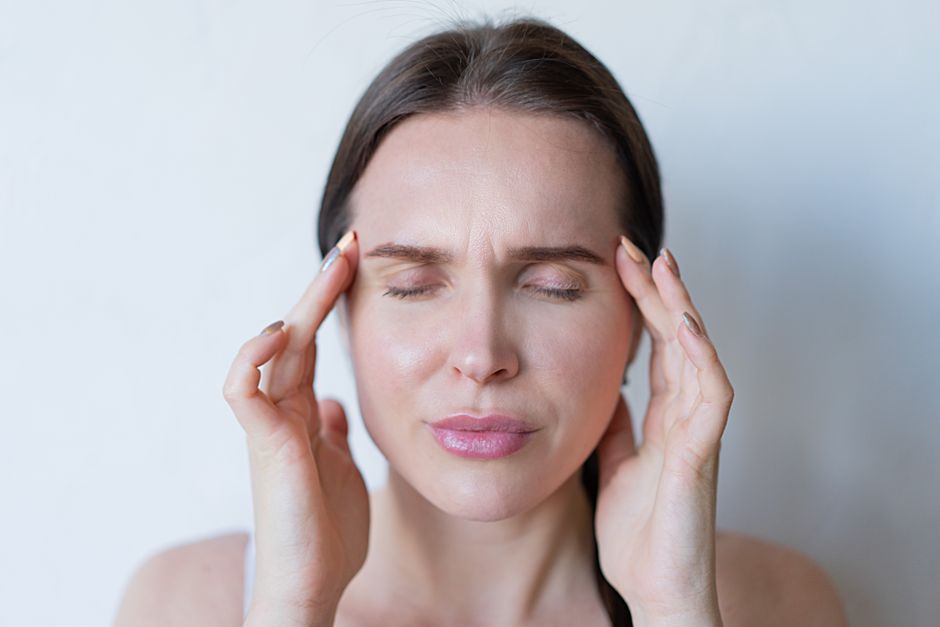
Waking up with a headache is common, and most of the time the cause is ordinary: dehydration, poor sleep, alcohol the night before, teeth grinding, or a rebound effect from pain medication taken too often. The timing matters, though. A headache that is reliably worse in the morning or that wakes you from sleep deserves a closer look, because a few serious conditions — including sleep apnea and, rarely, raised pressure inside the skull — produce exactly that pattern.
Why Headaches Often Show Up in the Morning
Several normal overnight changes make the early morning hours a common time for head pain.
You do not drink for seven or eight hours. Mild dehydration can trigger a headache in people who are already prone to them. Sleep itself changes the way the brain regulates blood vessels and pain signals, and for some people that shift is enough to start a headache. If you took a pain reliever the night before and it wore off, pain can return as you surface from sleep.
There is one mechanism worth understanding because it explains a lot of morning headaches. During sleep, breathing can become shallow or stop briefly. When that happens, oxygen in the blood drops and carbon dioxide rises. Blood vessels in the brain widen in response. Waking repeatedly through the night also fragments sleep, and poor sleep on its own lowers the threshold for headache. This is why morning headaches cluster so tightly with sleep-related breathing problems.
For most people, morning headaches are occasional and respond to simple fixes. The question is when the pattern stops being ordinary.
What Causes Headaches in the Morning and When to Worry?
Morning headaches fall into two groups: primary headaches, which are not caused by another disease, and secondary headaches, which are a symptom of something else. Knowing which group you are in is the whole point of the evaluation.
Common, usually harmless causes
- Tension-type headache. The most common type. A dull, pressing band around the head, often linked to stress, poor posture, or jaw clenching during sleep.
- Migraine. Migraine can occur on waking, and some people notice attacks more in the early morning. It is often one-sided, throbbing, and worse with movement, light, or sound.
- Dehydration. A full night without fluids can be enough to set one off.
- Alcohol. Alcohol is a diuretic and also disrupts sleep architecture, so a headache the next morning is a familiar result.
- Sleep deprivation or disrupted sleep. Both too little sleep and fragmented sleep are established headache triggers.
- Caffeine withdrawal. If you normally have coffee early and delay it, a morning headache can follow.
- Medication overuse. Taking pain relievers more days than not can cause headaches to become more frequent, and they often appear on waking. This is a real and under-recognized problem.
- Bruxism. Grinding or clenching the teeth at night strains the jaw and surrounding muscles, which can refer pain into the temples and head.
Causes that need medical attention
- Obstructive sleep apnea. Repeated pauses in breathing during sleep. Morning headache is a recognized symptom, along with loud snoring, gasping, unrefreshing sleep, and daytime sleepiness.
- Raised pressure inside the skull. Uncommon but serious. A headache that is worst on waking, worse when lying flat, or that wakes you from sleep is a classic warning pattern.
- High blood pressure that is poorly controlled. Severe elevations can cause headache, though mild to moderate high blood pressure usually causes no symptoms at all.
- Depression and anxiety. Both are associated with more frequent headaches, and the relationship runs in both directions.
- Medication side effects. Some prescriptions list headache as a known effect.
When Should a Morning Headache Worry You?
Certain features mean you should not wait it out. Seek medical care promptly if any of these apply.
- A headache that wakes you from sleep or is clearly worst right after waking, especially if it has become a pattern.
- The worst headache of your life, or one that comes on suddenly and severely.
- Headache with fever, stiff neck, rash, confusion, or a seizure.
- Headache after a head injury.
- Headache with weakness, numbness, trouble speaking, vision loss, or trouble walking.
- A new headache pattern after age 50.
- A headache that is getting steadily worse over days or weeks.
- Headache with vomiting that is not explained by another illness.
- A headache that changes with position — worse lying down, better sitting or standing.
None of these automatically means something dangerous is present. They are red flags, which means they change the urgency of getting checked, not the diagnosis. A clinician can decide whether imaging or other tests are needed.





How Sleep Apnea Connects to Morning Headaches
Obstructive sleep apnea is one of the most common secondary causes of morning headache, and it is frequently missed. The airway repeatedly narrows or closes during sleep, breathing pauses, and oxygen levels dip. The resulting changes in blood gases and blood flow are thought to drive the headache.
Signs that point toward sleep apnea include loud snoring, pauses in breathing noticed by a partner, gasping or choking awake, a dry mouth on waking, and feeling tired despite a full night in bed. Excess weight raises risk, but sleep apnea occurs in people of normal weight too.
The reason this matters: treating the apnea often reduces the headaches. If your morning headaches come with those sleep signs, a sleep evaluation is a reasonable next step. This is one of the clearer cause-and-effect links in headache medicine, and it is worth taking seriously.
What You Can Do About Morning Headaches
Start with the basics, because they address the most common causes.
- Drink water through the day, and keep some by the bed if you tend to wake thirsty.
- Keep a consistent sleep and wake schedule, including weekends.
- Limit alcohol, especially close to bedtime.
- Watch caffeine timing and total amount, and taper gradually rather than stopping abruptly if you are cutting back.
- Track your headaches — time of day, what you ate and drank, sleep quality, and any medication taken. Patterns are easier to spot on paper than in memory.
- If you grind your teeth, ask a dentist about it.
One caution that gets overlooked: if you use over-the-counter pain relievers for headaches on most days, that habit itself can be keeping the headaches going. Breaking the cycle usually requires medical guidance, and it is a common reason morning headaches persist despite treatment.
Talk to a clinician before starting any new medication or supplement for headaches. What helps one headache type can be unhelpful or even counterproductive for another.
How Morning Headaches Differ by Type
The pattern of the pain often points toward the cause. This table summarizes common features, but it is a guide, not a diagnosis.
| Type | Typical feel | Timing | Other clues |
|---|---|---|---|
| Tension-type | Pressing, band-like, both sides | Any time, often later in day | Stress, jaw clenching, neck tension |
| Migraine | Throbbing, often one side | Can occur on waking | Nausea, light and sound sensitivity |
| Sleep apnea related | Dull, pressing, on waking | Morning, improves over hours | Snoring, gasping, daytime sleepiness |
| Medication overuse | Varies | Often on waking | Frequent pain reliever use |
| Raised pressure | Worse lying flat | Worst on waking, may wake you | Vomiting, vision changes, worsening over time |
Notice that the two most concerning patterns — sleep apnea and raised pressure — both tend to be worst on waking and to ease as the day goes on. That is the opposite of tension-type headache, which often builds through the day. This distinction is one of the more useful things to bring to a doctor’s visit.
Frequently Asked Questions
Are morning headaches a sign of something serious?
Most morning headaches are not serious and come from dehydration, poor sleep, alcohol, or medication overuse. However, a headache that reliably wakes you or is worst on waking should be evaluated, because sleep apnea and, rarely, raised pressure inside the skull cause that pattern.
Can sleep apnea cause headaches every morning?
Yes, morning headache is a recognized symptom of obstructive sleep apnea, along with snoring and daytime tiredness. Treating the apnea often reduces the headaches.
Why do I wake up with a headache after drinking alcohol?
Alcohol causes fluid loss and disrupts sleep, both of which can trigger a headache by morning. Drinking less and having water before bed can reduce the chance.
When should I see a doctor for morning headaches?
See a doctor if the headaches are new, getting worse, wake you from sleep, or come with fever, vision changes, weakness, or vomiting. Also seek care if you take pain relievers for headaches on most days.
