
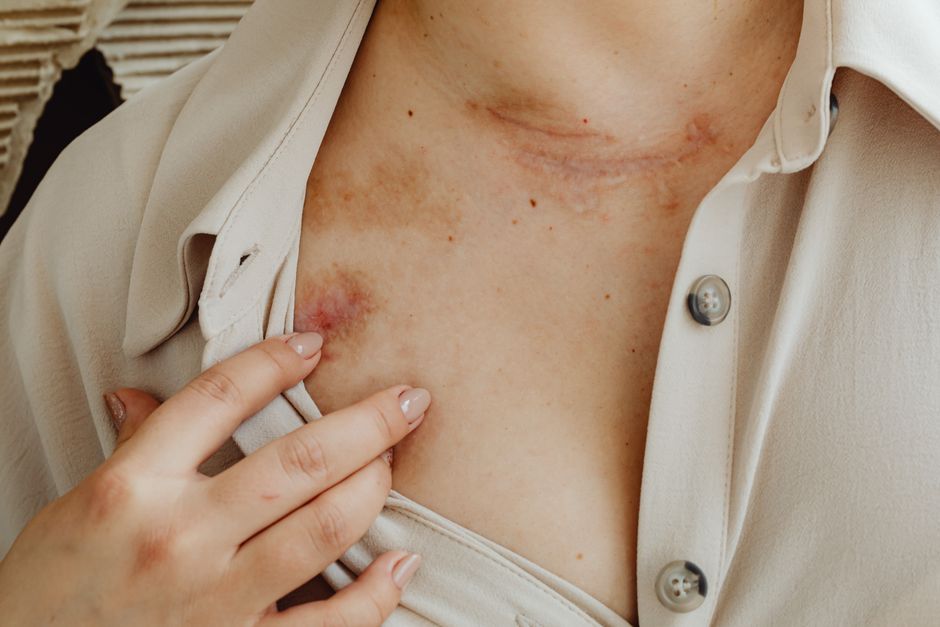
Granulation tissue around a G tube is the body’s normal wound-healing response to a foreign object passing through the skin. The tube creates a small, permanent opening called a stoma, and the skin and stomach lining keep trying to close that opening. New tissue forms at the edges as part of that repair process. When the tube rubs, pulls, or leaks stomach contents onto the skin, that tissue can grow faster than usual and build up into a raised, moist, sometimes tender ring.
What Is Granulation Tissue?
Granulation tissue is not a disease. It is a normal stage of wound healing.
When skin is injured, the body builds new tissue to fill the gap. That tissue is packed with tiny blood vessels, which is why it looks red or pink and feels soft. It also contains connective tissue and immune cells that clean the wound and fight infection.
Around a G tube, this process never fully stops. The stoma is a deliberate, ongoing opening. The body senses a break in the skin barrier and keeps sending repair cells to the site. Over time, that repair activity can produce a small collar of tissue right at the tube exit site.
This is sometimes called hypergranulation or proud flesh. It is the same tissue your body makes to heal a cut, just growing where it was not meant to keep growing.
What Causes Granulation Tissue Around a G Tube?
Four things drive most granulation tissue buildup around a G tube: friction, moisture, leakage, and low-grade irritation or infection. In practice, these usually overlap.
Movement and friction
The tube moves. Every cough, roll, diaper change, or shirt tug puts a small pull on the tube. That pull tugs on the tissue at the stoma edge. Repeated mechanical stress signals the body to keep repairing the area, and repair means more granulation tissue.
A tube that is too loose slides in and out. A tube that is too tight presses against the skin. Both cause irritation.
Moisture and leakage
Stomach contents are acidic and contain digestive enzymes. When gastric fluid leaks onto the skin around the tube, it irritates the tissue. The skin stays wet, which softens it and makes breakdown more likely. Moist, irritated tissue triggers more healing activity, and the cycle continues.
Leakage is often the single biggest driver. It happens when the tube is the wrong size, the balloon or bumper is not positioned well, the stomach is under pressure, or the stoma has stretched over time.
Infection and irritation
A small amount of bacteria always lives on the skin. Around a stoma, that bacteria can multiply in a warm, moist environment. This does not always mean a full infection, but even low-level bacterial irritation keeps the tissue inflamed and growing.
Signs that infection may be involved include increased redness, warmth, swelling, pain, or pus-like drainage. These need medical attention.
Underlying skin conditions
Some people react to the materials in the tube, dressing, or securement device. Contact irritation from tape or adhesive can keep the skin inflamed. Conditions like eczema can also make the surrounding skin more reactive.
Why Does the Body Keep Making It?
The body does not know the G tube is supposed to be there. As far as your immune system is concerned, there is a hole in the skin that has not closed.
Normal wound healing moves through stages: bleeding stops, inflammation cleans the wound, new tissue builds, and the wound remodels and matures. In a closed wound, that process ends. Around a G tube, the opening stays open, so the “build new tissue” phase keeps getting switched back on.
Anything that adds irritation — movement, moisture, bacteria, pressure — restarts the signal. That is why granulation tissue often comes back after it is treated unless the trigger is addressed.
This is the key point many people miss. Removing the tissue without fixing the cause usually means it returns.
What Does It Look Like and Feel Like?
Granulation tissue around a G tube typically appears as a raised, red or pink, shiny ring at the stoma site. It is often moist and may bleed easily with light touch.
Common features include:
- Raised, bumpy tissue at the tube exit site
- Red or pink color, sometimes darker than surrounding skin
- Wet or weeping surface
- Mild tenderness or stinging
- Bleeding when cleaned or bumped
- Clear or slightly bloody drainage
It is usually not painful on its own. Pain, spreading redness, foul-smelling drainage, or fever suggest something more than simple granulation tissue and should be evaluated by a clinician.
How Is It Managed?
Management focuses on removing the trigger first, then treating the tissue if it persists. This is where most of the practical work happens.
General approaches clinicians use include:
- Stabilizing the tube so it does not slide or pull
- Controlling leakage by checking tube size, balloon volume, and positioning
- Keeping the site clean and dry with gentle cleaning and a protective barrier
- Using a barrier cream or dressing to protect skin from stomach contents
- Treating infection if signs are present
For tissue that has already built up, some clinicians use treatments such as silver nitrate, steroid creams, or other topical agents. These approaches are common in practice, but the strength of evidence varies. Silver nitrate can burn or sting and may damage healthy skin if applied too widely, so it is usually applied by a trained clinician.
If granulation tissue keeps coming back despite good care, the tube itself may need to be reassessed. Sometimes a different size, type, or securement method solves the problem.
What Makes It Worse?
Certain habits and situations tend to keep the cycle going.
- Pulling or tugging on the tube during care or movement
- Letting the site stay wet or covered in leaked stomach contents
- Using harsh soaps, alcohol, or hydrogen peroxide on the stoma
- Skipping regular cleaning
- Ignoring early redness or irritation
- Using the wrong tube size or an over-inflated balloon
Hydrogen peroxide is worth calling out specifically. It was once commonly used for stoma care, but it can damage new tissue and delay healing. Many clinicians now advise against it for routine G tube site care.
When to Contact a Healthcare Provider
Granulation tissue itself is usually not an emergency. But some signs point to problems that need prompt attention.
Contact a healthcare provider if you notice:
- Spreading redness or warmth around the stoma
- Foul-smelling or pus-like drainage
- Fever
- Increasing pain
- Bleeding that does not stop
- The tube feels loose, has moved, or will not stay in place
- Signs of dehydration or poor feeding
For children with G tubes, these signs matter even more. A child who is not feeding well, is unusually fussy, or has a fever should be seen promptly.
Can It Be Prevented?
You cannot always prevent granulation tissue, but you can lower the odds by keeping the stoma calm and dry.
Consistent, gentle care matters more than any single product. Clean the site as directed, keep it dry, secure the tube so it does not move, and watch for early signs of irritation. Small problems caught early are easier to manage than tissue that has built up over weeks.
Every person’s stoma behaves a little differently. What works well for one person may not work for another. A clinician who knows your situation can help tailor the approach.
Frequently Asked Questions
Is granulation tissue around a G tube dangerous?
Granulation tissue itself is not dangerous and is a normal part of healing. It becomes a concern when it is accompanied by infection, heavy bleeding, or leakage that will not stop.
Does granulation tissue go away on its own?
It can shrink if the irritation causing it is removed, but it often persists or returns without treatment. Most cases need both the trigger addressed and the tissue treated.
Can I treat granulation tissue at home?
Gentle cleaning and keeping the site dry are reasonable at home. Treatments like silver nitrate or steroid creams should be applied by or under the guidance of a clinician because they can damage healthy skin.
Why does granulation tissue keep coming back?
It usually returns because the underlying cause — friction, moisture, leakage, or irritation — was never fixed. Treating the tissue without correcting the trigger leads to repeat episodes.
