
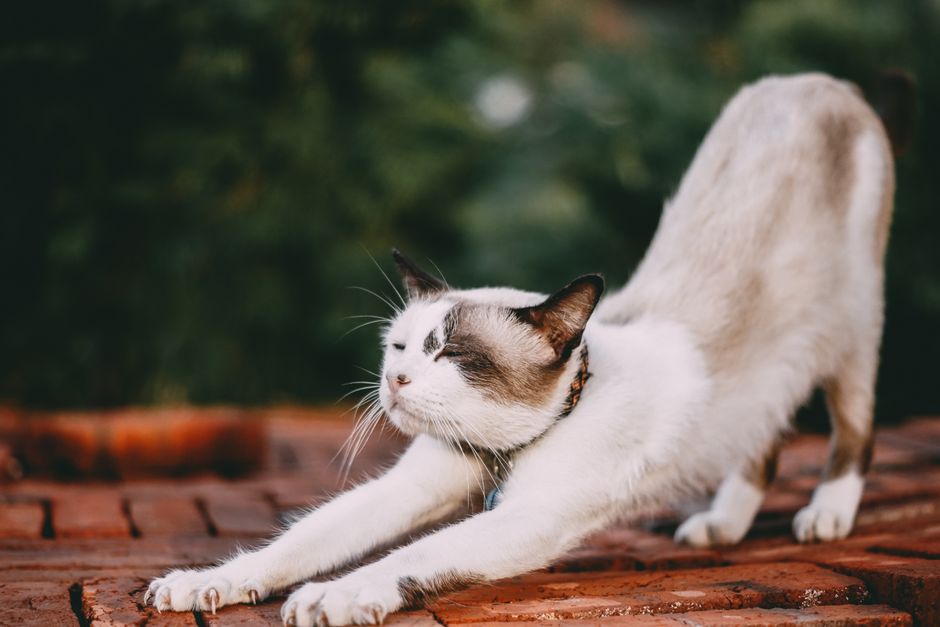
Feline hyperesthesia syndrome (FHS) is a poorly understood condition, and its root causes are not fully known. The most supported explanation is that FHS is a type of seizure disorder or a compulsive behavior problem, possibly triggered by stress, skin sensitivity, or underlying neurological issues. No single cause has been proven, and the condition likely results from a combination of factors that vary between individual cats.
What Is Feline Hyperesthesia Syndrome?
Feline hyperesthesia syndrome is also called rolling skin disease or twitch-skin syndrome. Cats with this condition show sudden episodes of intense skin sensitivity, especially along the back, near the tail. During an episode, the skin ripples or twitches visibly. The cat may suddenly bite or lick its back, tail, or hind legs. Some cats run around frantically, dart away as if startled, or vocalize.
These episodes can last from a few seconds to a couple of minutes. Between episodes, the cat usually acts normal. The syndrome can appear in any breed, but Siamese, Burmese, and other oriental breeds may be overrepresented. It typically begins in young to middle-aged cats, between one and seven years old.
What Causes Feline Hyperesthesia Syndrome? Root Causes
This is the central question that researchers and veterinarians are still working to answer. The leading theory is that FHS is a form of focal epilepsy. Focal seizures affect only part of the brain and can produce localized physical signs without loss of consciousness. The rippling skin, sudden biting, and frantic behavior seen in FHS resemble the type of abnormal sensations and involuntary movements that occur with focal seizures in humans.
Another strong possibility is that FHS is a compulsive behavioral disorder. Like obsessive-compulsive disorder in people, the cat may perform repetitive behaviors — biting, licking, chasing its tail — as a way to cope with stress or anxiety. Some studies show that anti-anxiety medications and environmental enrichment can reduce episodes, supporting this behavioral explanation.
A third theory involves skin hypersensitivity, such as allergies or nerve inflammation. Some cats with FHS also have flea allergy dermatitis or other skin conditions that could trigger the episodes. However, treating the skin problem alone does not always resolve the behavior, suggesting that the cause is more than just a skin itch.
The honest answer is that the evidence does not point to one clear root cause. It is likely that different cats develop FHS for different reasons, and some may have multiple contributing factors working together.
Is Feline Hyperesthesia Syndrome a Seizure Disorder?
Many veterinarians believe FHS is a form of focal epilepsy. A study published in the Journal of the American Veterinary Medical Association found that some cats with FHS had abnormal brain activity on electroencephalograms (EEGs), which measures electrical signals in the brain. Some cats also respond to anticonvulsant medications like phenobarbital, which are used to control seizures.
However, not all cats with FHS show clear seizure activity on EEGs. Some do not improve with seizure medication. This suggests that while epilepsy may be a cause in some cats, it is not the only cause. The evidence is mixed, and more research is needed.





Could It Be a Skin Condition?
Skin problems such as allergies, flea bites, or inflammation of the nerves in the skin (cutaneous neuropathy) may trigger or worsen FHS episodes. When the skin is irritated, the cat may feel a crawling or tingling sensation, leading to the frantic biting and licking. Some cats improve when their skin allergies are treated.
But skin treatment alone rarely eliminates the episodes completely. That suggests the skin issue is not the root cause in most cats, but rather a trigger that sets off the underlying neurological or behavioral problem.
What Role Does Stress and Anxiety Play?
Stress is a well-known trigger for many feline behavior problems, and FHS is no exception. Cats that live in stressful environments — multi-cat households, loud homes, changes in routine — are more likely to have FHS episodes. Some research suggests that environmental enrichment, consistent routines, and anti-anxiety medications can reduce the frequency and severity of episodes.
This does not mean FHS is purely a behavioral problem. Stress likely exacerbates an underlying neurological sensitivity. The brain and the body interact closely. Stress can lower the threshold for seizures and trigger compulsive behaviors in predisposed cats.
How Is Feline Hyperesthesia Diagnosed?
There is no single test for FHS. Diagnosis is based on the cat’s history, a description of the episodes, and ruling out other medical conditions that could cause similar symptoms. A veterinarian will typically perform a full physical exam, neurological exam, and check for skin problems, pain, or orthopedic issues. Blood work, urinalysis, and possibly imaging like X-rays or MRI may be done to rule out other causes.
Conditions that can mimic FHS include flea allergies, skin infections, anal gland problems, spinal pain, hip dysplasia, and other seizure disorders. Only after these are eliminated can a presumptive diagnosis of FHS be made.
How Is Feline Hyperesthesia Treated?
Treatment depends on the suspected cause and the severity of episodes. If a specific trigger like fleas or allergies is found, treating that may help. For cats believed to have seizure activity, anticonvulsant medications such as phenobarbital or levetiracetam are sometimes prescribed. For cats with a behavioral component, anti-anxiety medications like fluoxetine (Prozac) or clomipramine may be used.
Environmental changes are a key part of treatment regardless of cause. Regular play, feeding schedules, hiding spots, and reducing stressors can lower the overall arousal level. Some owners find that providing high perches, scratching posts, and interactive toys helps reduce episodes. No large clinical trials have confirmed the best approach, so treatment is often a process of trial and error guided by a veterinarian.
What Is the Prognosis for Cats With FHS?
Most cats with FHS can live normal lives with appropriate management. The condition is not life-threatening. However, some cats may seriously injure their tails or skin from biting or scratching. Severe cases may require medical intervention to stop self-trauma.
Episodes may come and go. Some cats improve with age. Others need long-term medication. The key is working closely with a veterinarian to find the right combination of treatments for the individual cat.
Are There Any Proven Preventive Measures?
Because the root cause is unknown, there are no proven prevention strategies. Reducing stress, keeping the cat at a healthy weight, and promptly treating skin issues may lower the risk of triggering episodes in predisposed cats. But there is no evidence that these measures can prevent FHS from developing in the first place.
Frequently Asked Questions
Can feline hyperesthesia syndrome go away on its own?
Some cats do experience a reduction in episodes as they age, but the condition rarely disappears completely without treatment.
Is feline hyperesthesia dangerous for my cat?
It is not directly dangerous, but excessive biting can cause skin infections or self-injury that may require veterinary care.
What should I do during a feline hyperesthesia episode?
Stay calm and do not touch your cat during an episode, as they may bite out of confusion or pain.
Does diet affect feline hyperesthesia?
No clinical evidence confirms that diet changes treat or prevent FHS, though a healthy diet supports overall well-being.
