
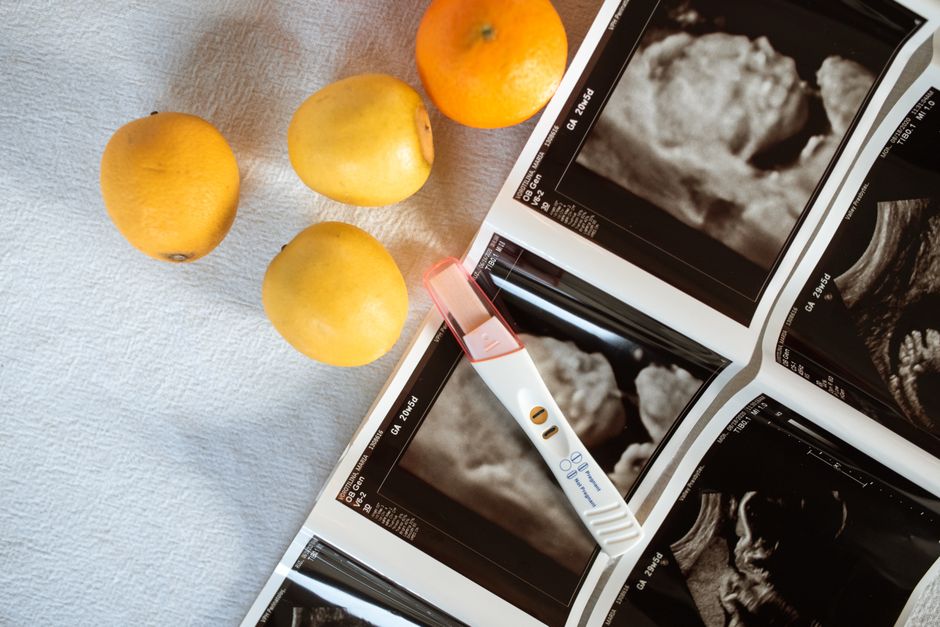
An ectopic pregnancy happens when a fertilized egg implants outside the uterus. In the vast majority of cases, it settles in a fallopian tube. The egg cannot survive there, and the growing tissue can damage the tube or cause serious internal bleeding. This makes ectopic pregnancy a medical emergency that needs prompt care.
Anything that blocks, narrows, or damages a fallopian tube raises the risk. Symptoms often appear between the fifth and ninth week of pregnancy and can include one-sided pelvic pain, vaginal bleeding, and shoulder pain. Some ectopic pregnancies cause no early symptoms at all, which is why early testing matters.
What Causes Ectopic Pregnancy Risks And Symptoms?
An ectopic pregnancy is caused by a fertilized egg getting stuck or slowed on its way to the uterus. The egg implants wherever it stops. Most often that is inside a fallopian tube, but it can also happen on an ovary, in the abdomen, or in the lower part of the uterus near the cervix.
The fallopian tube is a narrow passage lined with tiny hair-like structures called cilia. These cilia sweep the egg toward the uterus with gentle wave-like motions. If the tube is scarred, inflamed, or shaped abnormally, that sweep is disrupted. The egg may never reach the uterus.
Inflammation is a major driver. Pelvic inflammatory disease, often caused by untreated chlamydia or gonorrhea, damages the tube lining. Scar tissue forms. The tube narrows or develops pockets where an egg can lodge. This is one of the clearest and best-documented causes of ectopic pregnancy.
Prior tubal surgery, a previous ectopic pregnancy, and some fertility treatments also raise risk. So does smoking, though the reason is less intuitive. Smoking affects the cilia in the fallopian tubes and can slow egg transport. The link between smoking and ectopic pregnancy is well established in the research.
Here is a point that surprises many people. Roughly half of women who have an ectopic pregnancy have no identifiable risk factor at all. Risk factors raise the odds. Their absence does not rule anything out.
What Are the Most Common Risk Factors?
Certain conditions and histories make ectopic pregnancy more likely. They do not cause it directly. They change the environment inside the tube or alter how an embryo travels.
- Previous ectopic pregnancy. This is one of the strongest risk factors. A woman who has had one is at higher risk of another.
- Pelvic inflammatory disease. Infection and scarring in the reproductive tract damage the tube lining.
- Tubal surgery or sterilization. Surgery on the tubes, including having them tied, raises risk. Pregnancy after tubal ligation is uncommon but carries a higher chance of being ectopic.
- Endometriosis. This condition can cause scar tissue and adhesions that affect tube function.
- Smoking. Smoking is linked to ectopic pregnancy, and the risk appears to rise with more cigarettes per day.
- Age over 35. Risk increases with maternal age.
- Fertility treatment. Assisted reproduction raises the chance of ectopic pregnancy, including in women with no other risk factors.
Some clinicians also point to a history of sexually transmitted infections, multiple sexual partners, and prior abdominal surgery as contributing factors. The evidence for each varies in strength. The list above covers the factors with the most consistent support.
Does an IUD Cause Ectopic Pregnancy?
No. An intrauterine device does not cause ectopic pregnancy. This is one of the most persistent myths, and it needs correcting.
An IUD is highly effective at preventing pregnancy overall. If a woman with an IUD does become pregnant, that pregnancy is more likely to be ectopic than a pregnancy in someone without an IUD. That sounds alarming until you look at the numbers. The absolute risk is very low because pregnancy itself is so rare with an IUD in place.
In other words, the IUD lowers the risk of ectopic pregnancy by preventing most pregnancies. The small fraction that do occur are more likely to be ectopic. Framing it as “the IUD causes ectopic pregnancy” gets the biology backwards.
What Are the Early Symptoms of Ectopic Pregnancy?
Early symptoms can be subtle or absent. Many ectopic pregnancies are caught on ultrasound before any symptoms appear, especially when a woman has known risk factors and is monitored closely.
When symptoms do appear, they typically show up between the fifth and ninth week of pregnancy. The most common signs are:
- Mild to severe pain in the lower abdomen, often on one side
- Vaginal bleeding or spotting, sometimes lighter or darker than a normal period
- Pelvic pain that worsens with movement or bowel movements
- Nausea and vomiting
- Dizziness or fainting
Some women also have shoulder tip pain. That symptom is easy to dismiss, but it has a real mechanism. Internal bleeding irritates the diaphragm, and the nerve that serves the diaphragm also serves the shoulder. Pain is felt at the shoulder even though the problem is in the abdomen. This is called referred pain, and it can be a sign of a ruptured ectopic pregnancy.
Vaginal bleeding can be confusing because it may look like a normal period. Some women do not realize they are pregnant until an ectopic pregnancy is discovered. A positive home pregnancy test followed by bleeding or pain deserves prompt medical attention.
When Does Ectopic Pregnancy Become an Emergency?
A ruptured ectopic pregnancy is a life-threatening emergency. The tube can burst as the embryo grows, causing heavy bleeding into the abdomen. This can lead to shock.
Seek emergency care right away for any of the following:
- Sudden, severe abdominal or pelvic pain
- Shoulder tip pain
- Fainting, extreme dizziness, or feeling like you might pass out
- Pale skin, rapid heartbeat, or weakness
- Heavy vaginal bleeding
These signs suggest internal bleeding and cannot wait. Ruptured ectopic pregnancy remains a leading cause of maternal death in early pregnancy, though deaths have become much less common with earlier diagnosis and treatment.
How Is Ectopic Pregnancy Diagnosed?
Diagnosis relies on a combination of blood tests and imaging. The two main tools are a blood test for human chorionic gonadotropin (hCG) and a transvaginal ultrasound.
hCG is the hormone detected by pregnancy tests. In a normal early pregnancy, hCG levels rise in a predictable pattern. In an ectopic pregnancy, the rise is often slower or plateaus. Doctors track hCG levels over time to see whether the pattern looks normal.
Ultrasound can show where the pregnancy is located. A pregnancy seen inside the uterus is generally not ectopic. If the uterus is empty but hCG is present, an ectopic pregnancy becomes more likely. Sometimes the pregnancy is simply too early to see, so repeat testing is needed.
In some cases, diagnosis requires laparoscopy, a minor surgical procedure that lets a doctor look directly at the tubes. This is used less often now that ultrasound and hCG testing have improved.
How Is Ectopic Pregnancy Treated?
Treatment depends on how far along the pregnancy is, whether the tube has ruptured, and the woman’s overall health. There are three main approaches.
Expectant management. Some very early ectopic pregnancies resolve on their own. Doctors monitor hCG levels closely and intervene if they do not fall. This approach only suits a small number of cases and requires reliable follow-up.
Medication. Methotrexate is a drug that stops the growth of rapidly dividing cells. It can treat some early ectopic pregnancies without surgery. It is not appropriate for everyone. It is not used when the tube has ruptured, when the pregnancy is large, or when certain health conditions are present. Patients treated with methotrexate need follow-up blood tests and must avoid certain things, including alcohol and folic acid supplements, during treatment. A doctor gives specific instructions.
Surgery. When the tube has ruptured or medication is not suitable, surgery is needed. Surgeons can remove just the ectopic pregnancy and repair the tube, or remove the tube entirely. The choice depends on the damage and the woman’s future fertility plans. Emergency surgery is required for a rupture.
Treatment decisions are complex and depend on individual circumstances. No single approach fits every case. This is a conversation to have with a qualified clinician, not something to decide from an article.
Can Ectopic Pregnancy Be Prevented?
Most ectopic pregnancies cannot be prevented. There is no diet, supplement, or lifestyle change proven to prevent them. That is an honest and important point, because some sources imply otherwise.
What can be done is reducing the risk factors that are within reach. Preventing sexually transmitted infections through safer sex practices lowers the risk of pelvic inflammatory disease, which is a major cause of tubal damage. Not smoking helps. Seeking early prenatal care and telling a doctor about any prior ectopic pregnancy or tubal surgery allows for closer monitoring.
For women with known risk factors, early ultrasound and hCG testing can catch an ectopic pregnancy before it becomes dangerous. Early detection is the single most effective way to reduce serious harm.
One clarification worth making: having one ectopic pregnancy does not mean a woman cannot have a healthy pregnancy later. Many women go on to have normal pregnancies, especially if the tube was repaired or if the other tube is healthy. Fertility depends on the individual situation and should be discussed with a specialist.
Frequently Asked Questions
What is the most common cause of ectopic pregnancy?
Damage or scarring to the fallopian tubes, often from pelvic inflammatory disease or prior tubal surgery, is the most common identifiable cause. However, about half of ectopic pregnancies occur in women with no known risk factors.
Can you have a normal pregnancy after an ectopic pregnancy?
Yes, many women go on to have healthy pregnancies after an ectopic pregnancy. The outlook depends on whether the tube was damaged or removed and on the health of the other tube.
What does ectopic pregnancy pain feel like?
It is often a sharp or stabbing pain on one side of the lower abdomen that may worsen with movement. Severe sudden pain with dizziness or shoulder pain can signal a rupture and requires emergency care.
Does an IUD increase the risk of ectopic pregnancy?
An IUD does not cause ectopic pregnancy and lowers the overall risk by preventing most pregnancies. If pregnancy does occur with an IUD in place, the chance it is ectopic is higher than without an IUD, but the absolute risk remains low.
