
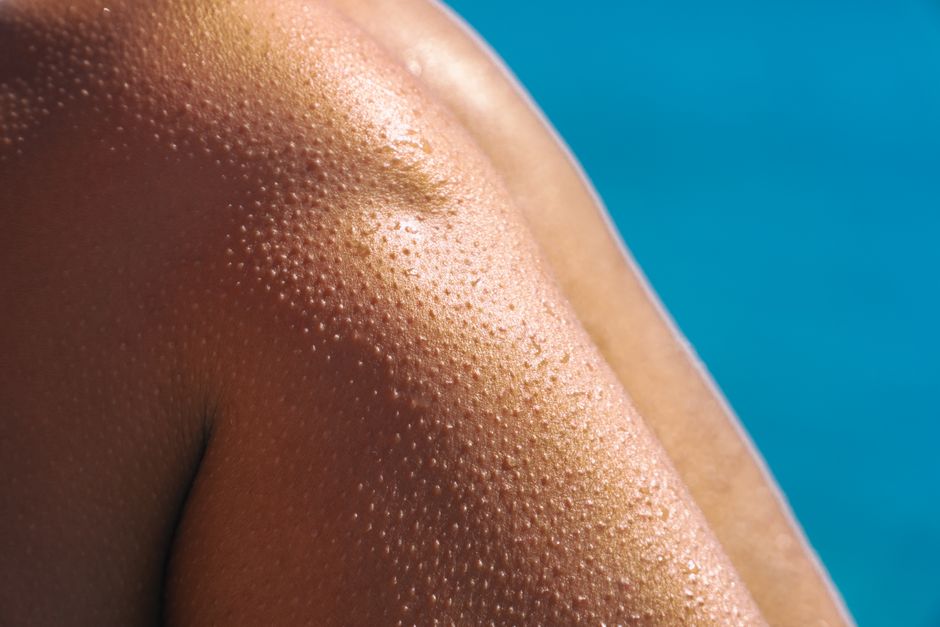
Closed comedones on your forehead are small, flesh-colored or white bumps that form when a pore becomes blocked by dead skin cells and oil — but stays closed at the surface. That closed opening is what separates them from blackheads, which are open to the air and darken through oxidation. The forehead is one of the most common places for them to appear because it has a high density of oil glands and is frequently touched by hair, hats, and hands.
They are not infections and they are not acne cysts. They are the earliest stage of a clogged pore, and understanding why that clog forms is the first step to dealing with it.
What Causes Closed Comedones On Your Forehead?
The immediate cause is a plug. Your sebaceous glands produce sebum, a waxy oil that travels up the hair follicle to the skin surface. At the same time, skin cells lining the follicle are constantly shedding. Normally those dead cells flake off and wash away. When they stick together instead, they mix with sebum and form a plug that seals the pore opening. The result is a closed comedo — a bump with skin stretched over it and no visible opening.
Several things push that process along:
- Excess sebum production. Oil output rises with hormonal activity, which is why forehead comedones are common in the teen years and again around menstrual cycles.
- Abnormal shedding of skin cells. The cells lining the follicle do not separate as they should, so they clump instead of flaking.
- Hair follicle bacteria. Cutibacterium acnes lives on everyone’s skin. It does not create the plug, but it contributes to inflammation once a plug forms.
- Friction and occlusion. Bangs, hats, helmets, and headbands trap oil and sweat against the forehead.
None of these factors work alone. A closed comedo is usually the product of oil, sticky skin cells, and a blocked opening all at once.
Why Does the Forehead Break Out More Than Other Areas?
The forehead — along with the nose and chin — sits in what dermatologists call the T-zone. This region has a higher concentration of sebaceous glands than the cheeks or jawline. More oil glands means more sebum, and more sebum means a higher chance of a plug forming.
The forehead also gets a lot of contact. Hair falls across it. Hands rest on it. Sweatbands and hats sit against it. That combination of high oil production and constant physical contact makes it a prime location for closed comedones.
Hair products matter here too. Pomades, oils, and heavy leave-in conditioners can migrate from the hairline onto the forehead and add to the clog. This pattern is common enough that it has a name in dermatology — acne cosmetica, breakouts caused or worsened by cosmetic and hair products.
Are Closed Comedones the Same as Whiteheads?
Yes. A closed comedo is what most people call a whitehead. The two terms describe the same thing — a plugged pore with a closed surface. The white or flesh color comes from the trapped material beneath the skin, not from pus.
This is different from an open comedo, or blackhead. A blackhead has a wider opening to the surface. The dark color is not dirt. It comes from melanin and oxidized sebum reacting with air. Closed comedones stay pale because the plug is sealed off from oxygen.
It also differs from inflammatory acne. A closed comedo is not red, swollen, or painful. If one becomes inflamed, it has moved into a different stage — a papule or pustule — usually because bacteria and immune cells have entered the picture.





What Triggers Closed Comedones on the Forehead?
Hormones are the biggest driver. Androgens — hormones present in both men and women — stimulate sebaceous glands to produce more oil. This is why breakouts often track with puberty, menstrual cycles, pregnancy, and conditions that raise androgen levels. It also explains why some people get forehead comedones in their 30s and 40s despite having clear skin as teenagers.
Other triggers include:
- Comedogenic products. Ingredients that are heavy or occlusive can seal the pore. Coconut oil, some silicones, and certain thick creams are common culprits for people prone to clogging.
- Sweat and heat. Humidity increases oil flow and softens the plug, making blockage more likely.
- Certain medications. Some drugs, including specific steroids and lithium, are associated with acne-like breakouts. This is a conversation to have with a prescribing clinician, not something to self-manage.
- Friction. Tight hats, helmets, and repeated rubbing can irritate follicles and push material deeper.
Diet is often blamed, but the evidence is more mixed than headlines suggest. Some research indicates that high-glycemic diets and certain dairy intake may be linked to acne in some people. The relationship is not strong enough to call diet a primary cause, and cutting out food groups is not a proven treatment on its own.
What Does Not Cause Forehead Comedones
Several popular explanations do not hold up.
Poor hygiene is not the cause. Closed comedones form beneath the skin surface, where washing cannot reach. Overwashing can actually make things worse by stripping the skin barrier and triggering more oil production.
Chocolate and greasy food are not established causes. The link between specific foods and acne is weaker than commonly assumed. Some studies point to high-glycemic diets, but no single food has been confirmed as a direct cause.
Makeup alone is not to blame. Non-comedogenic and oil-free formulas are widely available and generally well tolerated. The issue is specific heavy ingredients, not cosmetics as a category.
Dirt is not the plug. The material inside a closed comedo is sebum and dead skin cells, not grime. Scrubbing harder will not clear it and may cause irritation that leads to more breakouts.
How Are Closed Comedones Treated?
Treatment focuses on keeping the follicle opening clear and normalizing how skin cells shed. The most studied topical ingredient for this is salicylic acid, a beta-hydroxy acid that penetrates the oil-filled pore and helps dissolve the plug. It is available over the counter at concentrations typically between 0.5% and 2%.
Other options a clinician may recommend include topical retinoids, which speed up cell turnover and prevent new plugs from forming, and benzoyl peroxide, which targets the bacteria involved in inflammation. These have different mechanisms and are often used together. Prescription options exist for stubborn cases.
What does not work: popping or squeezing. A closed comedo has no opening, so squeezing forces the material sideways and can rupture the follicle wall. That turns a harmless bump into an inflamed lesion and raises the risk of scarring and dark spots.
Exfoliating acids and gentle chemical peels can help over time, but results are gradual. No topical treatment clears existing comedones overnight. Improvement typically takes several weeks of consistent use, and it is normal to see some purging — a temporary increase in breakouts — when starting a retinoid.
How Can You Prevent New Ones From Forming?
Prevention comes down to reducing the factors that create plugs.
- Choose skincare and hair products labeled non-comedogenic or oil-free.
- Keep bangs off the forehead when possible, especially during exercise or in humid weather.
- Wash your face gently twice a day — not more. Harsh scrubbing damages the skin barrier.
- Remove makeup and sunscreen before bed.
- Clean hats, pillowcases, and phone screens regularly, since these contact the forehead and hairline.
- If you use heavy hair oils or pomades, apply them away from the hairline.
Consistency matters more than intensity. A simple routine followed daily tends to outperform an aggressive one that irritates the skin.
When Should You See a Dermatologist?
Most closed comedones are cosmetic and respond to over-the-counter care. See a dermatologist if the bumps are widespread, painful, or inflamed, if they are leaving scars or dark marks, or if over-the-counter products have not helped after a few months of consistent use.
Also see a clinician if the breakouts appeared suddenly alongside other symptoms, such as irregular periods or rapid hair growth. In those cases, an underlying hormonal condition may need evaluation. That is a medical question, not a skincare one.
Frequently Asked Questions
What causes closed comedones on the forehead?
They form when dead skin cells and sebum plug a hair follicle that stays closed at the surface. The forehead is prone to them because it has a high concentration of oil glands and frequent contact with hair, hats, and hands.
Are closed comedones the same as whiteheads?
Yes, a closed comedo is what most people call a whitehead — a plugged pore with a sealed surface. The pale color comes from trapped material under the skin, not from pus.
Can you pop a closed comedo?
You should not. Because there is no opening, squeezing forces the material sideways and can rupture the follicle, leading to inflammation, scarring, and dark spots.
How long does it take to clear closed comedones?
Topical treatments usually take several weeks of consistent use before improvement is visible. It is common to see a temporary increase in breakouts when starting a retinoid.
