
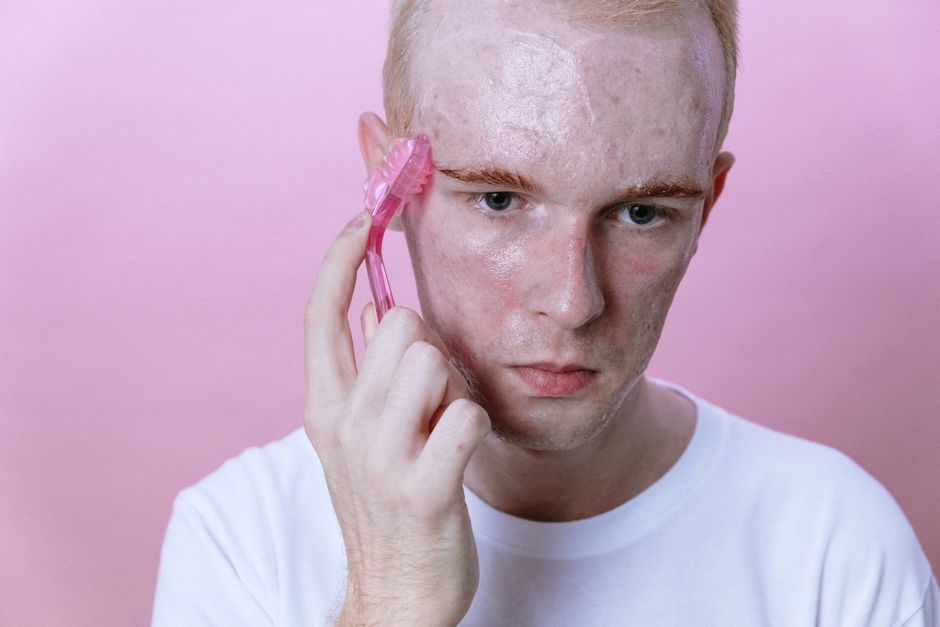
Cheek acne happens when a pore becomes blocked with dead skin cells and oil, and the bacterium Cutibacterium acnes multiplies inside it. This triggers inflammation, which shows up as a red bump, a whitehead, or a deep tender spot. Clearing it means treating the cause, not just the surface: the same daily routine that helps acne elsewhere on the face works on the cheeks, but the cheek has specific triggers worth knowing about.
What Causes Cheek Acne And How To Clear It Up?
Acne is a disorder of the pilosebaceous unit — the hair follicle and its attached oil gland. Four things happen together. Skin cells inside the pore shed faster than they can escape. Sebum (oil) production rises. Bacteria that normally live on the skin colonize the blocked pore. And the immune system responds with inflammation.
Hormones drive much of this. Androgens increase sebum production, which is why acne tends to appear and worsen around puberty, before menstruation, and during times of hormonal change. This is well established and explains why acne is not a hygiene problem.
What makes the cheeks different is contact. The cheek is the part of the face most often touched by hands, pressed against pillows, rubbed by phone screens, and covered by helmet straps or scarves. That contact does not create acne on its own, but it can worsen existing acne by adding friction, trapping moisture, and transferring oil and bacteria.
There is a persistent myth that dirty skin causes acne. It does not. Overwashing and harsh scrubbing actually make acne worse by damaging the skin barrier, which increases irritation and inflammation. If you have been scrubbing harder because the acne is on your cheeks, that is likely working against you.
Why Do I Only Get Acne On My Cheeks?
Acne that clusters on the cheeks usually points to a contact or mechanical trigger layered on top of ordinary acne biology. The most common ones are:
- Pillowcases and bedding. Your cheek rests against fabric for hours each night. Oil, sweat, and residue from hair and skin care products accumulate on the fabric.
- Phone screens. A phone held against the cheek carries oil, sweat, and bacteria, plus friction from pressure.
- Hands. Resting your chin or cheek on your hand transfers oil and dirt and adds pressure.
- Hair products. Oils, pomades, and leave-in conditioners that contact the cheek can block pores. This pattern is sometimes called pomade acne and is well documented.
- Headgear and tight straps. Helmets, chin straps, and tight scarves cause friction and trap sweat, which can worsen acne in the contact area.
- Comedogenic cosmetics. Heavy foundations and creams that are not labeled non-comedogenic can contribute to blocked pores.
If your acne is strictly confined to the cheeks and nowhere else, and it does not respond to standard acne care, it is worth considering whether something is repeatedly contacting that area. A dermatologist can help sort out whether it is acne or something that looks similar.
Is My Diet Causing Cheek Acne?
Diet plays a smaller role than most people assume, but it is not zero. The strongest evidence concerns high-glycemic-index diets — foods that spike blood sugar quickly, like white bread, sugary drinks, and refined carbohydrates. Some studies suggest that diets high in these foods are associated with more acne, though the evidence is not uniform and results vary across studies.
Dairy has also been studied. Some research suggests an association between milk intake and acne, particularly skim milk, but this is an association, not proof of cause. The effect, where it appears, tends to be modest.
What the evidence does not support is the idea that chocolate, greasy food, or a single “trigger food” causes acne in most people. No clinical evidence currently confirms that eliminating a specific food will clear acne for the general population. If you notice a consistent pattern between a food and your breakouts, that is worth discussing with a clinician, but broad elimination diets are not a first-line approach and can create nutritional gaps.
How Should I Care For Cheek Acne Day To Day?
A simple, consistent routine does more than a complicated one. The goal is to keep pores clear, reduce inflammation, and protect the skin barrier.
Cleanse gently, twice a day. Use a mild, non-abrasive cleanser and lukewarm water. Avoid scrubs with rough particles, which cause micro-tears and irritation. A soft, non-medicated cleanser is enough for most people.
Change your pillowcase regularly. Washing it every few days is a reasonable habit. If you sleep on your side or stomach, this matters more because your cheek is in direct contact for hours.
Keep your phone and hands off your face. Wipe your phone screen regularly. Try not to rest your cheek on your hand. These are small changes, but they reduce friction and oil transfer.
Choose non-comedogenic products. Look for moisturizers, sunscreens, and makeup labeled non-comedogenic. This label means the product has been formulated to be less likely to block pores.
Use sunscreen daily. Many acne treatments increase sun sensitivity, and sun exposure can worsen post-acne marks. A non-comedogenic sunscreen protects the skin without adding to the problem.
Do not pick or squeeze. Picking pushes bacteria and inflammation deeper, increases the risk of scarring, and prolongs healing. This is one of the most consistent pieces of advice in dermatology.
What Acne Treatments Actually Work?
Several over-the-counter and prescription treatments have good evidence behind them. Which one is right depends on the type of acne — blackheads and whiteheads respond to different treatments than deep, inflamed cysts.
| Treatment | Best for | What to know |
|---|---|---|
| Benzoyl peroxide | Inflammatory acne (red bumps, pustules) | Kills acne bacteria and reduces inflammation. Can bleach fabric. Start with lower concentrations to reduce irritation. |
| Salicylic acid | Blackheads and whiteheads | Helps unclog pores. Available over the counter. Can be drying. |
| Topical retinoids | Most acne types | Prescription or over-the-counter depending on the product. Help prevent new blockages. Cause initial irritation and sun sensitivity; use at night and with sunscreen. |
| Oral antibiotics | Moderate to severe inflammatory acne | Prescription only. Used short-term and often combined with a topical retinoid. Not for long-term solo use due to resistance concerns. |
| Hormonal treatments | Acne linked to hormonal patterns in women | Prescription only. Some oral contraceptives and spironolactone are used. Requires clinical assessment. |
| Isotretinoin | Severe or treatment-resistant acne | Prescription only. Highly effective but requires monitoring and strict pregnancy precautions. |
One clarification worth making: more product is not better. Benzoyl peroxide and retinoids cause irritation when overused, and irritation can look like worsening acne. Start with a low concentration, apply a thin layer, and give a treatment several weeks before judging whether it works. Skin cell turnover means real improvement often takes longer than people expect.
For anyone with deep, painful nodules or cysts on the cheeks, or acne that is leaving scars, seeing a dermatologist early is worthwhile. Scarring can be permanent, and prescription treatment can prevent it.
When Should I See A Doctor About Cheek Acne?
See a clinician if your acne is severe, painful, or leaving scars, or if it is not improving after a few months of consistent over-the-counter treatment. Acne that suddenly appears in adulthood, especially if it is accompanied by other symptoms, deserves a medical look because it can have hormonal or other causes.
Also worth a visit: acne that looks unusual. Some skin conditions mimic acne — including a rash called perioral dermatitis, which can appear around the mouth and sometimes the cheeks, and rosacea, which causes redness and bumps. These are treated differently from acne, and using acne treatments on them can make things worse. A dermatologist can tell them apart.
Frequently Asked Questions
Does dirty skin cause cheek acne?
No. Acne is driven by hormones, oil production, blocked pores, and bacteria, not by dirt. Overwashing and scrubbing can damage the skin barrier and make acne worse.
Does chocolate cause acne?
The evidence does not support chocolate as a general cause of acne. Some studies suggest high-glycemic diets and dairy may be linked to acne, but the effect is modest and not proven to be causal.
How long does it take for acne treatment to work?
Most acne treatments take several weeks to show noticeable improvement, and full results can take longer. Give a consistent routine time before switching products.
Can I pop a pimple on my cheek?
No. Picking or squeezing pushes inflammation deeper, increases scarring risk, and prolongs healing. It is one of the most consistent recommendations in dermatology.
