
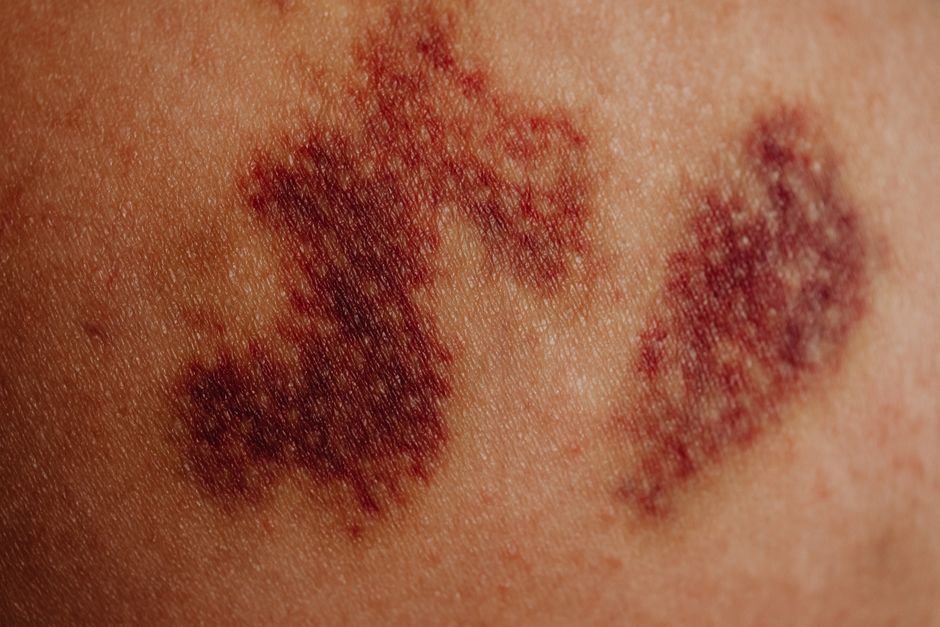
That purple or blue mark on your arm that seemed to appear from nowhere is usually not a sign that something is seriously wrong. It happens because the skin and blood vessels on the arms get thinner and weaker with age, while the tissues that normally cushion and support those vessels lose volume. A minor bump you don’t even notice can then leak a small amount of blood under the skin. This is the most common reason older adults bruise easily on their arms, and it has a name: actinic purpura, sometimes called senile purpura or solar purpura.
What Causes Bruising On Elderly Arms?
Bruising on older arms comes down to three changes that happen together as we age: thinner skin, more fragile blood vessels, and less protective cushioning under the skin.
The outermost layer of skin, the epidermis, thins over time. So does the layer of collagen and elastin underneath it that gives skin its strength and bounce. Collagen is what helps hold the walls of small blood vessels, called capillaries, in place. When that supporting structure weakens, the vessels become easier to break.
At the same time, the small blood vessels themselves grow more fragile. Their walls lose some of the elastic tissue that lets them stretch and spring back. When the arm bumps a table edge or even gets squeezed during a blood pressure check, a capillary can tear. Blood leaks into the tissue beneath the skin and shows up as a bruise.
Sun exposure plays a large role in all of this. The forearms are one of the most sun-exposed parts of the body. Years of ultraviolet light damage break down collagen and elastin in the skin, which is why actinic purpura shows up on the arms and the backs of the hands far more than on skin that stays covered.
Why Do These Bruises Look Different From Normal Bruises?
Actinic purpura bruises look distinct. They tend to be larger, flatter, and a deeper purple or dark red than the bruises younger people get. They also last longer.
A typical bruise in younger skin fades over about one to two weeks as the body breaks down and reabsorbs the leaked blood. In older skin, especially sun-damaged skin, that process is slower. The bruise can stay visible for two to three weeks or longer, and the color often shifts through dark purple, green, and yellow as the blood breaks down.
These bruises usually appear on the outer forearm and the back of the hand. They often don’t hurt. Many people can’t recall any injury at all, which is what makes them alarming. The lack of a remembered bump is normal — the impact needed to break a fragile capillary can be far too small to notice or remember.
One detail worth knowing: actinic purpura is not the same as a bruise caused by a bleeding disorder. In actinic purpura, the blood vessels are structurally fragile but the blood’s ability to clot is normal. That distinction matters when deciding whether a bruise needs medical attention.
Is It Just Aging, Or Could It Be Something Else?
Aging and sun damage explain most easy bruising on older arms. But bruising can also point to other issues, and a few patterns are worth taking seriously.
Medications are one of the most common non-aging causes. Blood thinners such as warfarin, apixaban, rivaroxaban, and clopidogrel make bruising more likely and more extensive. So can daily aspirin, some antidepressants, oral steroids, and long-term use of nonsteroidal anti-inflammatory drugs like ibuprofen and naproxen. If bruising started or worsened after a new medication, that timing is worth mentioning to a clinician.
Other factors that can contribute include:
- Low platelet counts, which can result from many conditions and some medications
- Liver disease, which affects clotting proteins the liver produces
- Vitamin C deficiency, which weakens blood vessel walls (rare in the US but possible)
- Alcohol use, which can affect platelets and liver function
- Inherited bleeding or connective tissue disorders
None of these is the likely explanation for ordinary arm bruising in an older adult. They become more relevant when bruising shows certain warning patterns, which the next section covers.





When Should You Be Concerned About a Bruise?
Most arm bruises in older adults are harmless. A few signs suggest it’s worth having a doctor take a look.
Seek medical evaluation if you notice:
- Bruises that appear without any plausible cause, repeatedly and in clusters
- Bruising on the torso, back, or face rather than just the arms and hands
- Bruises that keep growing or spreading over days
- Bruising along with bleeding gums, nosebleeds that won’t stop, or blood in urine or stool
- Bruising accompanied by fever, fatigue, or unexplained weight loss
- Bruises that are unusually painful or feel like a firm lump
Also pay attention to bruises that appear alongside new medications or after a fall. A bruise from a fall can sometimes signal a fracture, especially in the hip, wrist, or spine, and those need prompt attention.
For a single bruise with a clear cause, no medical visit is usually needed. For a pattern that doesn’t fit the usual story, a clinician can check blood counts and clotting with a simple blood test.
Can You Prevent Easy Bruising on the Arms?
You can lower the odds of bruising, though no approach eliminates it. The most effective steps address the underlying skin and vessel fragility.
Protect your arms from the sun. Since UV damage is a major driver of actinic purpura, covering the forearms with long sleeves and using sunscreen on exposed skin helps slow further collagen breakdown. This matters most before the damage accumulates, but it still helps at any age.
Keep skin moisturized. Dry, thin skin is more prone to tearing. A daily moisturizer supports the skin barrier, though it does not rebuild the deeper collagen structure.
Pad your environment. If you bump the same corners and edges around the house, soft corner guards and clearing clutter from walkways reduce the small impacts that cause bruises.
Review medications with your doctor. If you take a blood thinner or daily aspirin, never stop it on your own. Instead, ask whether the dose or the combination of medications could be adjusted. This is a conversation to have with a clinician, not a decision to make alone.
Eat a balanced diet. Adequate vitamin C and vitamin K support blood vessel and clotting health. Severe deficiency is uncommon in the US, but poor intake can matter in some older adults. No specific supplement dose is proven to prevent actinic purpura, and supplements are not a reliable fix for it.
What Actually Helps a Bruise Heal?
Time is the main treatment. The body reabsorbs the leaked blood on its own, and most bruises fade without any intervention.
Some general measures may help comfort, though evidence for speeding healing is limited:
- Cold packs wrapped in a cloth for the first day or two may reduce swelling and discomfort
- Elevating the arm can ease swelling if the bruise is significant
- Avoiding aspirin and NSAIDs is not something to do on your own if they’re prescribed — ask your doctor first
Arnica creams and similar over-the-counter bruise products are widely sold. The evidence for arnica actually speeding bruise resolution is limited and mixed. Some small studies suggest a modest effect, but results vary and the studies are not strong enough to call it proven. It is reasonable to skip these products or treat them as optional.
Do not try to drain a bruise or press hard on it. That can worsen bleeding under the skin. If a bruise becomes very swollen, hard, or painful, that’s a reason to see a clinician rather than treat it at home.
Does Easy Bruising Mean Something Serious?
For most older adults, easy arm bruising is a cosmetic and comfort issue, not a health threat. Actinic purpura itself does not shorten life or signal a hidden disease.
The concern is not the bruising — it’s what the bruising might be telling you in specific situations. Bruising that appears with bleeding elsewhere, bruising that shows up on the trunk, or bruising that follows a fall can point to something that needs attention. Those are the cases where a doctor’s visit is warranted.
It also helps to separate two things that often get confused. Easy bruising from fragile vessels is common and usually harmless. Easy bruising from a problem with platelets or clotting factors is less common and can be more serious. A blood test can tell the difference when it’s not clear from the pattern.
Frequently Asked Questions
Why do elderly people bruise so easily on their arms?
Skin thins with age, collagen that supports the blood vessels weakens, and years of sun exposure make the small vessels on the forearms more fragile. A minor bump that wouldn’t bruise younger skin can then leak blood under the skin.
Are bruises on elderly arms a sign of a serious illness?
Usually not. Actinic purpura from aging and sun damage is common and harmless, but bruising on the torso, bleeding gums, or bruising after a fall should be checked by a doctor.
Can medications cause easy bruising on the arms?
Yes. Blood thinners, daily aspirin, some antidepressants, oral steroids, and long-term NSAID use can all make bruising more likely. Never stop a prescribed medication on your own — talk to your doctor first.
How long do these bruises take to fade?
Older, sun-damaged skin reabsorbs blood more slowly, so these bruises often last two to three weeks or longer. Most fade on their own without treatment.
