
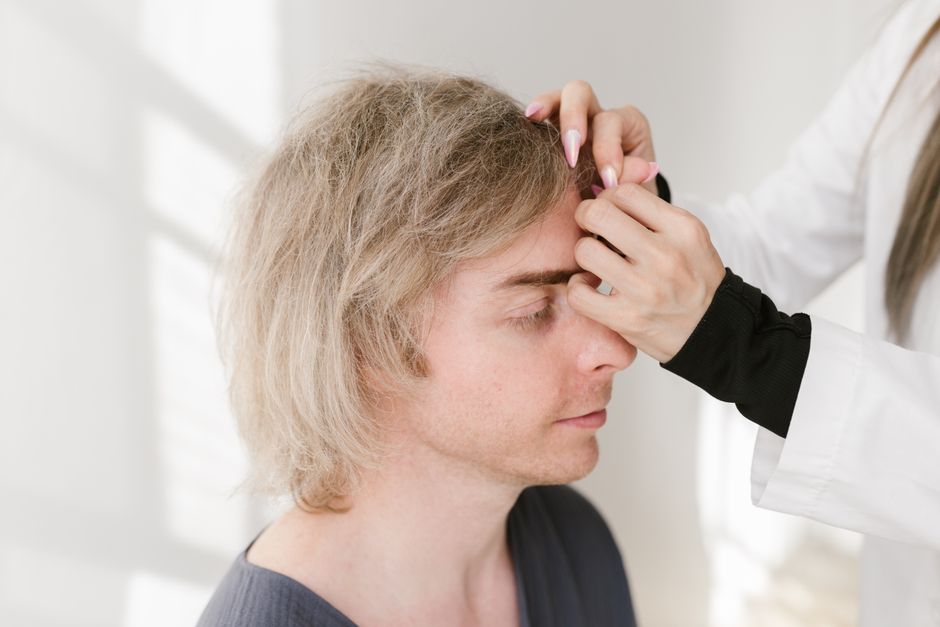
Forehead breakouts happen when hair follicles get clogged with oil, dead skin cells, and bacteria. The forehead has more oil glands than other parts of the face, making it a prime spot for acne. Unlike chin or jawline breakouts that are often linked to hormones, forehead acne usually comes from external factors like hair products, sweat, and what touches your skin throughout the day.
What Exactly Causes Breakouts On Forehead?
The main cause is the same as acne anywhere on your body. Your pores produce sebum, which is natural oil. When too much oil mixes with dead skin cells that don’t shed properly, the pore gets blocked. Bacteria called Cutibacterium acnes then multiply inside the clogged pore, causing inflammation. On the forehead, this process happens faster because the area has a high density of oil glands.
Research published in the Journal of Clinical and Aesthetic Dermatology found that the forehead and nose area, known as the T-zone, produces significantly more sebum than other parts of the face. This is normal for many people. But when something extra adds to the problem — like heavy hair products or not washing your face after sweating — the chances of a breakout go up.
Another factor is friction. Anything that rubs against your forehead repeatedly can irritate the skin and trigger breakouts. This includes hats, headbands, and even your phone if you press it against your forehead during calls. Dermatologists call this acne mechanica. It is not a different type of acne. It is acne caused by physical pressure and rubbing.
Do Hair Products Really Cause Forehead Acne?
Yes, and this is one of the most overlooked causes. Hair products that contain oils, silicones, and heavy moisturizers can drip onto your forehead throughout the day. These ingredients sit on the skin and block pores. The condition even has a name: pomade acne.
The American Academy of Dermatology notes that pomade acne typically appears as small white bumps or blackheads along the hairline and forehead. It is most common in people who use gels, waxes, pomades, or leave-in conditioners. The problem is that you might not connect the dots because you apply the product to your hair, not your face.
If you notice breakouts concentrated near your hairline, try switching to water-based hair products for a few weeks. Look for labels that say non-comedogenic, which means they are less likely to clog pores. Also, wash your face after you style your hair, not before. This removes any residue that landed on your forehead during application.
Can Sweat and Exercise Trigger Forehead Breakouts?
Sweat itself does not cause acne. Your sweat is mostly water and salt. The problem is what happens when sweat sits on your skin for too long. Sweat mixes with the oil and bacteria already on your forehead. This combination can clog pores if you do not wash it off promptly.
A study in the Journal of the European Academy of Dermatology and Venereology found that exercise increases blood flow to the skin, which can temporarily increase oil production. This is not bad for your skin overall. But it means you have more oil on the surface right after a workout. If you let that oil and sweat dry on your forehead, you increase the risk of clogged pores.
Wearing headbands or hats during exercise makes it worse. The fabric traps sweat and oil against your skin. The friction from the headband also adds mechanical irritation. The best practice is to wash your face within 30 minutes after sweating. Use a gentle cleanser, not a harsh scrub. Scrubbing irritated skin can make acne worse.





What Does Research Show About Diet and Forehead Acne?
The link between diet and acne is real but not as simple as social media makes it sound. Research shows that high glycemic index foods — things that spike your blood sugar quickly — can worsen acne. This includes white bread, sugary drinks, chips, and processed snacks. The mechanism is clear: high blood sugar triggers your body to produce more insulin and insulin-like growth factor, which signals your oil glands to produce more sebum.
A 2016 review in the Journal of the American Academy of Dermatology looked at multiple studies and concluded that there is consistent evidence that high glycemic diets are associated with acne. The evidence for dairy is weaker but still worth noting. Some studies suggest that skim milk, in particular, may be linked to acne, possibly due to hormones or bioactive molecules in the milk. Whole milk and cheese have not shown the same consistent association.
This does not mean you need to cut out all sugar or dairy. The research shows correlation, not direct cause for every person. If you have chronic forehead breakouts that do not respond to skincare changes, try reducing added sugar and high glycemic foods for three to four weeks. Keep a simple log of what you eat and how your skin looks. This gives you personal data rather than relying on general advice.
How Is Forehead Acne Different From Other Face Acne?
Forehead acne tends to be more uniform and scattered than acne on the chin or jawline. Chin and jawline breakouts are strongly linked to hormonal fluctuations, especially in adult women. Forehead breakouts are more often caused by external factors like products, sweat, and friction.
There is one exception. Some people experience acne that follows the forehead and temples in a distinct pattern called the “Christmas tree” pattern. This is more common in adult women and may have a hormonal component. Dermatologists sometimes see this in women with polycystic ovary syndrome (PCOS), though it is not a definitive sign.
The type of breakout also matters. Small whiteheads and blackheads on the forehead are usually from clogged pores and respond well to exfoliation and proper cleansing. Large, painful, red bumps on the forehead are more likely to be inflammatory acne and may need different treatment, including ingredients like benzoyl peroxide or prescription retinoids.
| Characteristic | Forehead Acne | Chin/Jawline Acne |
|---|---|---|
| Primary cause | External factors (products, sweat, friction) | Hormonal fluctuations |
| Common type | Whiteheads, blackheads | Deep, painful cysts |
| Age group | Teens and adults | More common in adult women |
| Response to skincare | Often improves with product changes and cleansing | Often needs medical treatment |
What Actually Works to Clear Forehead Breakouts?
Start with the basics before trying anything complicated. Use a gentle cleanser twice daily. Look for one that contains salicylic acid, which helps unclog pores. The American Academy of Dermatology recommends salicylic acid as a first-line treatment for non-inflammatory acne like blackheads and whiteheads.
Benzoyl peroxide is effective for inflammatory acne — the red, tender bumps. It kills the bacteria that cause inflammation. Start with a 2.5% concentration. Higher strengths are more irritating and not more effective. Apply a thin layer to your forehead after cleansing and before moisturizer.
Non-comedogenic moisturizer is not optional. Many people with acne skip moisturizer because they think it will make breakouts worse. The opposite is true. When your skin is dry, it produces more oil to compensate. A lightweight, oil-free moisturizer keeps your skin barrier healthy without clogging pores.
Exfoliation helps but do not overdo it. Physical scrubs with gritty particles can irritate skin and worsen acne. Chemical exfoliants like salicylic acid or glycolic acid are gentler and more effective. Use them two to three times per week, not every day. More exfoliation does not mean faster results.
Change your pillowcase every two to three days. Your pillowcase collects oil, dead skin, and hair product residue from your face and hair. Sleeping on the same one for a week means pressing your forehead into that buildup every night. This is a simple change that makes a real difference for many people.
Frequently Asked Questions
Frequently Asked Questions
Can stress cause forehead breakouts?
Stress increases cortisol levels, which can trigger your oil glands to produce more sebum. This does not directly cause acne but can make existing breakouts worse.
How long does it take for forehead acne to clear up?
With consistent skincare changes, most people see improvement in four to six weeks. Deeper breakouts may take up to three months to fully resolve.
Should I pop a pimple on my forehead?
No. Popping pushes bacteria deeper into the skin and increases the risk of scarring and infection. Use a spot treatment with benzoyl peroxide instead.
Is forehead acne a sign of a health problem?
Usually not. Forehead acne is most often caused by external factors. But if you have sudden, severe breakouts along with other symptoms like irregular periods or facial hair growth, see a doctor.
