
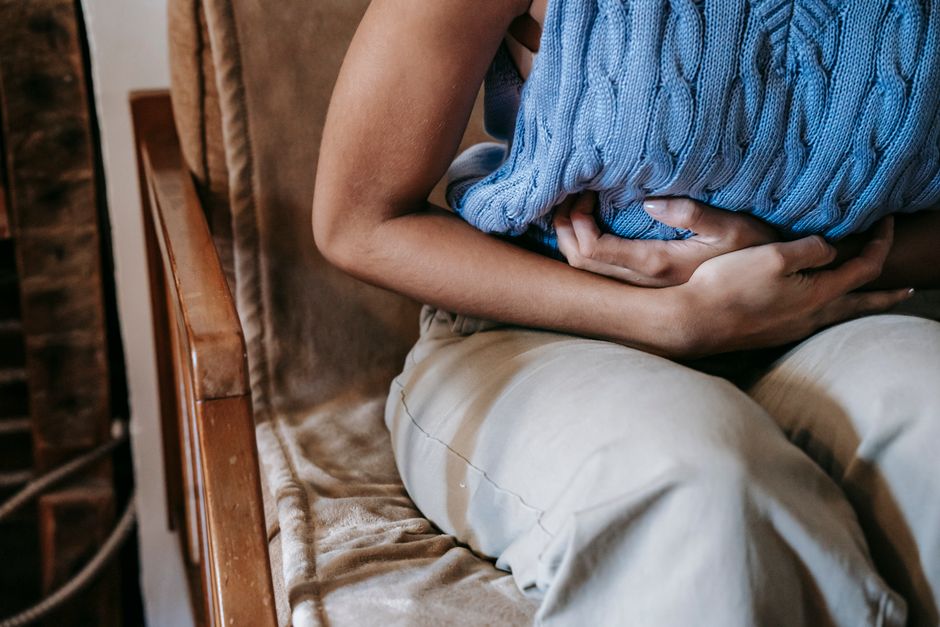
Bloating before a period is one of the most common symptoms of premenstrual syndrome, and it has a clear physiological explanation. In the second half of the menstrual cycle, rising progesterone slows digestion and shifts fluid balance, while falling progesterone before menstruation triggers water retention. Most people notice it in the days before bleeding starts, and it usually resolves within a few days after the period begins.
What makes it confusing is that “bloating” describes two different things. One is a real, measurable increase in water weight. The other is abdominal distension — a feeling of pressure and tightness that may or may not involve any actual swelling. Both are common before a period, but they have somewhat different causes, and knowing which one you are experiencing helps you understand what will and will not help.
What Causes Bloating Before Period?
Hormonal shifts are the main driver. The menstrual cycle runs on estrogen and progesterone, and both change fluid balance and gut function in predictable ways.
After ovulation, progesterone rises. Progesterone relaxes smooth muscle, including the muscle in the intestinal wall. When that muscle relaxes, the gut moves contents along more slowly. Slower transit means more time for gas to build up, and more gas means more pressure and distension. This is why constipation and bloating often travel together in the luteal phase — the roughly two-week stretch between ovulation and the start of bleeding.
Estrogen plays a role too. Estrogen influences the renin-angiotensin-aldosterone system, which regulates sodium and water balance. In some women, estrogen promotes sodium retention, and where sodium goes, water follows. This is a genuine shift in fluid balance, not a perception. It can show up as puffiness in the abdomen, hands, feet, and breasts.
Then there is the drop. Right before menstruation, progesterone falls sharply. Some researchers have proposed that the rapid withdrawal of progesterone is what sets off the cluster of symptoms we call PMS, including bloating. This is a leading explanation, but it is not fully settled — the exact mechanism of PMS is still an area of active investigation.
Is It Water Retention, Gas, or Both?
Usually both, and they feel different. Water retention is fluid. Gas is air and fermentation byproducts. They can coexist and make each other feel worse.
Water retention tends to feel diffuse — a general heaviness, tight rings, shoes that fit differently, and a sense of fullness across the whole lower abdomen. It often includes breast tenderness, which is a strong clue that fluid shifts are involved.
Gas-related bloating tends to feel sharper and more localized. It may ease after passing gas or having a bowel movement. If your symptoms track with constipation, slow transit is likely playing a bigger role than fluid. Some people notice that specific foods — beans, cruciferous vegetables, carbonated drinks, sugar alcohols — make it noticeably worse in the days before their period but not at other times. That pattern points toward the gut rather than fluid.
One clarification that gets lost in symptom lists: abdominal distension and bloating are not the same medical term. Bloating is the subjective sensation of fullness or pressure. Distension is an objective increase in abdominal girth that can be measured. People often use the words interchangeably, and many women do experience measurable distension before their period, but the two are distinct in how clinicians assess them.
Why Does Bloating Get Worse in the Days Before Your Period?
Because the hormonal changes peak and then reverse in that window. The luteal phase builds progesterone, then drops it. Estrogen has its own secondary rise and fall. The gut and kidneys respond to both.
For most women, symptoms are most noticeable in the three to seven days before bleeding begins. The timing is not random — it aligns with the steepest hormonal change. Once menstruation starts and hormone levels stabilize at a lower baseline, symptoms typically ease within a few days.
What varies enormously is intensity. Some women barely notice bloating. Others gain several pounds of water weight and find their clothes fit differently for nearly a week. Both fall within the normal range. The pattern matters more than the severity — symptoms that reliably follow the cycle are characteristic of premenstrual changes, while symptoms that occur at random times point toward something else.
What Helps With Premenstrual Bloating?
No single intervention works for everyone, and the evidence for most approaches is modest rather than dramatic. Here is what the research supports, and what it does not.
Reduce sodium. Because water retention is partly sodium-driven, cutting back on high-sodium foods in the days before your period is a reasonable step. This is based on established physiology rather than large trials specific to PMS, but the mechanism is solid and the downside is minimal.
Regular physical activity. Exercise helps move gas through the gut and supports normal fluid balance. Some studies suggest regular aerobic exercise reduces overall PMS symptom severity, though results vary. It is not a guaranteed fix for bloating specifically.
Address constipation. If slow transit is part of the picture, fiber and adequate fluid intake can help — but increase fiber gradually. A sudden jump in fiber can cause more gas before it helps.
Consider tracking. A simple symptom diary over two or three cycles can clarify whether your bloating truly follows your cycle. This matters because persistent bloating that does not follow a cyclical pattern deserves medical evaluation rather than symptom management.
What does not have strong evidence: most over-the-counter “bloat relief” supplements. Diuretics are sometimes used, but they are not a first-line approach for routine premenstrual bloating and should be discussed with a clinician rather than self-prescribed. No clinical guidelines currently recommend routine diuretic use for this purpose.
When Should You See a Doctor About Bloating?
Bloating that follows a predictable premenstrual pattern is generally not a cause for concern. Bloating that is persistent, progressive, or unrelated to your cycle is a different matter and warrants evaluation.
Seek medical advice if you notice:
- Bloating that does not ease after your period ends
- Persistent or worsening abdominal swelling over weeks or months
- Bloating accompanied by unexplained weight loss
- Changes in bowel habits that persist beyond your cycle
- Pelvic pain or pressure that is new or worsening
- Bloating severe enough to affect eating or daily activity
These signs do not mean something serious is present. They mean the symptom pattern no longer fits the typical premenstrual picture, and a clinician should assess it. Persistent bloating has many possible causes, and identifying the right one requires examination rather than assumption.
Does Birth Control Affect Premenstrual Bloating?
It can, in either direction. Hormonal contraceptives work by suppressing ovulation and flattening the natural hormone fluctuations of the cycle. For some women, that means fewer premenstrual symptoms, including bloating. For others, certain formulations — particularly those with higher estrogen doses — can themselves promote fluid retention.
The evidence is mixed and individual responses vary widely. If you suspect your contraceptive is contributing to bloating, that is a conversation to have with your clinician rather than a reason to stop or switch on your own.
Does Diet Make Premenstrual Bloating Worse?
For some people, yes — but the trigger foods differ from person to person. There is no single “PMS diet” with strong trial evidence behind it.
The most consistent dietary factors are sodium, which drives water retention, and foods that produce gas in your particular gut. Carbonated drinks add gas directly. Sugar alcohols such as sorbitol and mannitol are poorly absorbed and commonly cause gas and distension. For people who are sensitive, high-FODMAP foods can increase symptoms, though a low-FODMAP diet is a clinical tool for irritable bowel syndrome, not a general recommendation for premenstrual bloating.
Caffeine and alcohol are often listed as PMS aggravators. The evidence for both is limited and largely observational. Some women find reducing them helps; others notice no difference. Trial and error with careful tracking is more useful than following a blanket list.
Frequently Asked Questions
How early before a period does bloating start?
Most women notice it in the three to seven days before bleeding begins, though some feel it earlier in the luteal phase. The timing usually tracks with the rise and fall of progesterone.
Does period bloating mean you are pregnant?
No — premenstrual bloating happens without pregnancy and is driven by normal hormonal shifts. If your period is late and you have other symptoms, a pregnancy test is the way to know for certain.
How much water weight can you gain before a period?
It varies widely between individuals and cycles. Some women gain no measurable weight, while others retain several pounds of fluid. There is no single normal figure.
Does drinking more water reduce period bloating?
It can help indirectly by supporting regular digestion and reducing constipation, which contributes to gas and pressure. Drinking more water does not directly flush out premenstrual fluid retention.
