
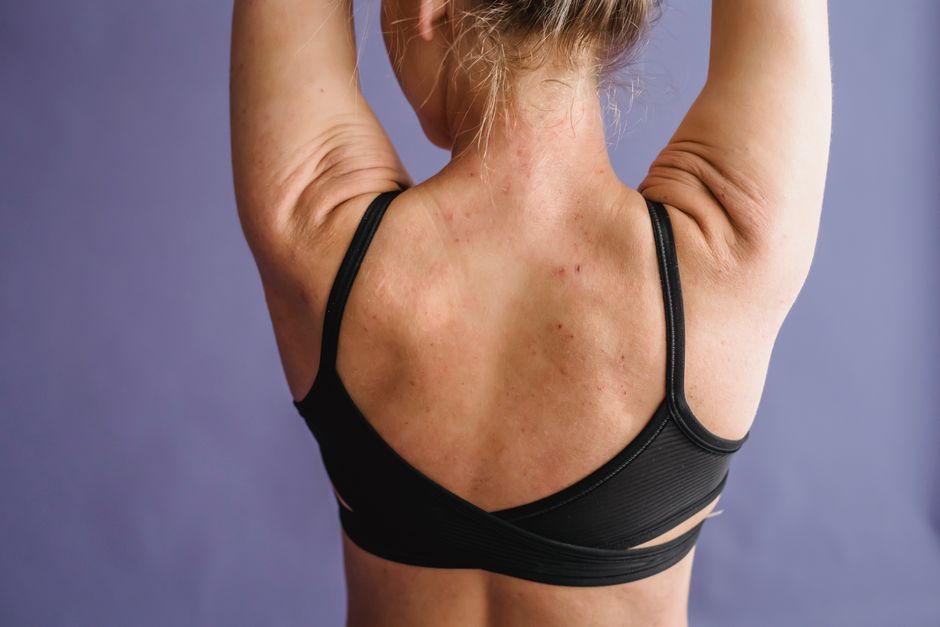
Back acne, often called “bacne,” is the same thing as facial acne — just in a different location. It happens when hair follicles on your back get clogged with oil and dead skin cells. The real question for most people is why it keeps coming back or gets worse despite their best efforts.
What Causes Bad Back Acne In The First Place?
Your back has more oil glands than most other parts of your body. These glands produce sebum, an oily substance meant to keep skin protected. When too much sebum mixes with dead skin cells, pores get blocked.
Bacteria called Cutibacterium acnes naturally live on your skin. They feed on the trapped oil and multiply inside clogged pores. Your immune system reacts by sending white blood cells to fight them. That inflammation is what turns a clogged pore into a red, painful pimple.
Hormones drive this whole process. Androgens like testosterone tell your oil glands to produce more sebum. This is why back acne often flares during teenage years and around menstrual cycles. According to the American Academy of Dermatology, hormonal fluctuations are the primary trigger for most acne, including back acne.
What Makes Back Acne Worse Without You Realizing It?
Friction and pressure are two of the most overlooked causes. When your back rubs against a backpack, a car seat, or gym equipment, it irritates the skin. This is called acne mechanica. The irritation causes inflammation that turns minor clogged pores into full breakouts.
Sweat is another hidden culprit. It does not cause acne by itself. But when sweat sits on your skin for hours after a workout, it mixes with oil and dead skin cells. A study published in the Journal of the American Academy of Dermatology found that delayed showering after exercise correlates with more back acne breakouts.
Tight clothing traps heat and moisture against your back. Synthetic fabrics like polyester do not breathe well. They create a warm, humid environment where bacteria thrive. If you wear tight workout tops or sleep in non-breathable fabrics, you may be making your back acne worse without knowing it.
What Causes Bad Back Acne And What Makes It Worse — The Role Of Diet
The link between food and acne is debated, but some evidence is solid. High glycemic foods spike your blood sugar quickly. This triggers your body to produce more insulin and insulin-like growth factor 1 (IGF-1). Higher IGF-1 levels tell your oil glands to work harder.
Research published in JAMA Dermatology found that people who consumed more dairy, especially skim milk, had higher rates of acne. The theory is that hormones naturally present in milk may stimulate oil production. The connection is not proven for everyone, but many dermatologists suggest a trial elimination if back acne is stubborn.
Chocolate has been blamed for decades. The evidence is weak at best. Some small studies suggest dark chocolate may worsen acne in susceptible people, but the effect is modest. If you eat chocolate daily and have bad back acne, cutting it for two weeks may tell you if it matters for your skin.
One thing most dermatologists agree on: there is no single “acne diet.” Individual responses vary widely. A food diary can help you spot your own triggers better than any general rule.





What Actually Works For Back Acne According To Research
Topical treatments are the first line of defense. Benzoyl peroxide kills bacteria and helps clear clogged pores. A 2.5% concentration is as effective as 10% with less irritation. It can bleach towels and clothing, so let it dry fully before putting on a shirt.
Salicylic acid works differently. It helps shed dead skin cells so pores stay open. Body washes with 2% salicylic acid are widely available. The key is leaving the wash on your back for 30-60 seconds before rinsing. Most people rinse too quickly and get little benefit.
Retinoids like adapalene (brand name Differin) are backed by strong evidence. Adapalene is now available over the counter. It normalizes how skin cells shed and reduces inflammation. It takes 8-12 weeks to see full results. Initial flaking and dryness are common but usually temporary.
| Ingredient | How It Works | Typical Results Timeline |
|---|---|---|
| Benzoyl peroxide | Kills bacteria, unclogs pores | 2-4 weeks |
| Salicylic acid | Exfoliates dead skin cells | 4-6 weeks |
| Adapalene (retinoid) | Normalizes cell turnover | 8-12 weeks |
Oral medications are reserved for moderate to severe cases. Spironolactone is commonly prescribed for women. It blocks androgen receptors on oil glands, reducing sebum production. A 2022 review in the Journal of Drugs in Dermatology confirmed it is effective and well-tolerated for hormonal back acne.
Oral antibiotics like doxycycline reduce inflammation and bacterial counts. They are effective short-term but not recommended for long use due to antibiotic resistance. Most dermatologists prescribe them for 3-4 months maximum.
Isotretinoin, formerly Accutane, is the most powerful option. It shrinks oil glands permanently. The American Academy of Dermatology reports that about 85% of patients achieve clear skin after one course. It has significant side effects including dry skin, joint pain, and elevated liver enzymes. Monthly blood monitoring is required.
What To Avoid When Treating Back Acne
Overwashing is a common mistake. Scrubbing your back aggressively with harsh soaps strips natural oils. This triggers your skin to produce even more oil to compensate. Stick to washing once or twice daily with a gentle cleanser.
Popping or picking back acne is tempting but damaging. The skin on your back is thicker than your face, but it still scars. Picking pushes bacteria deeper into the follicle, causing more inflammation and longer healing time. Scarring on the back is difficult to treat once formed.
Avoid heavy body lotions and oils on your back. Ingredients like coconut oil, shea butter, and cocoa butter are comedogenic, meaning they clog pores. If your back needs moisturizing after treatment, choose a non-comedogenic lotion labeled oil-free.
Loofahs and rough scrubbing brushes can irritate your back skin. Physical irritation triggers inflammation and can spread bacteria. Use your hands or a soft silicone scrubber instead.
Common Misconceptions About Back Acne
Many people believe back acne is caused by poor hygiene. That is rarely true. Overcleaning often makes it worse. Most people with back acne have normal hygiene habits. The issue is how their skin responds to hormones, not how often they shower.
Another myth is that tanning clears back acne. UV rays temporarily dry out pimples and darken skin, making blemishes less visible. But the effect is short-lived. Research shows UV exposure actually increases inflammation and thickens the outer skin layer, which can worsen acne over time. Tanning also raises skin cancer risk.
Some people think back acne is always a sign of a deeper health problem. In most cases it is not. It is a common skin condition driven by hormones, genetics, and local skin factors. Only if it appears suddenly and severely in adulthood with other symptoms — like weight gain or excessive hair growth — should you ask a doctor about underlying hormonal conditions.
Frequently Asked Questions
Can stress cause back acne?
Stress raises cortisol levels, which can increase oil production. The link is real but indirect — stress does not create acne on its own but can worsen existing breakouts.
How long does it take for back acne to clear?
Mild cases improve in 4-6 weeks with consistent treatment. Moderate to severe cases may take 3-6 months. Prescription medications like isotretinoin work faster but require medical supervision.
Is back acne different from fungal acne?
Yes. Fungal acne, or pityrosporum folliculitis, is caused by yeast overgrowth. It looks like small, itchy bumps that appear in clusters. Standard acne treatments do not work for it. Antifungal washes are needed instead.
Should I see a dermatologist for back acne?
If over-the-counter treatments do not improve your skin after 8-12 weeks, see a dermatologist. The same applies if you have painful cysts or notice scarring. Early treatment prevents permanent damage.
