
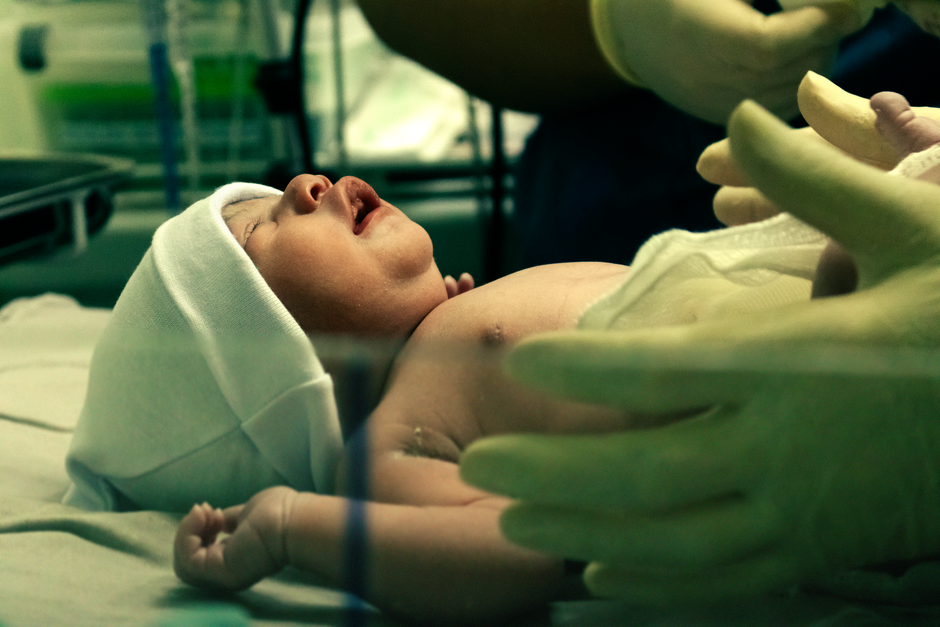
Neonatal hyperbilirubinemia is the medical term for jaundice in newborns. It happens when a baby’s blood has too much bilirubin, a yellow pigment made from the normal breakdown of red blood cells. The condition is usually harmless and goes away on its own, but in some cases high levels can be dangerous and need treatment like phototherapy or exchange transfusion.
What Actually Causes Neonatal Hyperbilirubinemia?
Newborns have a high turnover of red blood cells. Their livers are also immature and not fully efficient at processing bilirubin. This combination naturally leads to higher bilirubin levels in the first week of life. Most babies get some degree of jaundice. It is a normal part of adjusting to life outside the womb.
There are specific factors that make jaundice more likely or more severe. Premature babies have even less mature livers and are at higher risk. Breastfeeding can contribute because some breastfed babies do not feed well in the first days, leading to dehydration and slower bilirubin clearance. Blood type incompatibility between mother and baby, such as Rh or ABO incompatibility, can cause increased red blood cell breakdown. Bruising from a difficult birth can also raise bilirubin levels because the body has to clear the blood from the bruise.
Less common causes include enzyme deficiencies like G6PD deficiency, infections, and internal bleeding. These are rare but important for doctors to rule out when jaundice is severe or does not follow the typical pattern.
How Do Doctors Diagnose and Measure Jaundice?
Doctors check for jaundice by looking at the baby’s skin and the whites of the eyes. They press gently on the baby’s forehead or chest to see if the skin under the finger looks yellow. This visual check is a starting point but is not precise.
The standard way to measure bilirubin is with a blood test. A small sample from the baby’s heel is sent to the lab. This gives a direct total serum bilirubin level. Many hospitals also use a transcutaneous bilirubinometer, a handheld device that shines light through the skin. This is quick and painless but is less accurate at very high levels.
Doctors use a chart called a nomogram to decide if a baby’s bilirubin level is safe. The chart considers the baby’s age in hours, their gestational age, and risk factors. A level that is normal at 48 hours old might be dangerous at 24 hours old. This timing is critical. As of 2026, current guidelines from the American Academy of Pediatrics remain the standard for these thresholds.
What Are the Proven Treatments for Neonatal Hyperbilirubinemia?
The main treatment for significant jaundice is phototherapy. The baby is placed under a special blue light, either in a bassinet or on a light-emitting blanket. The light changes the shape of bilirubin molecules in the skin so they can be excreted without needing the liver to process them. It is simple, safe, and very effective.
For most babies, phototherapy is done in the hospital. Sometimes it can be done at home with a rented light blanket and nurse visits. Treatment lasts anywhere from one to several days, depending on how quickly bilirubin levels drop. The baby’s eyes are covered with a soft mask to protect them from the bright light.
Exchange transfusion is reserved for the most severe cases. This involves slowly removing the baby’s blood and replacing it with donor blood or plasma. It rapidly lowers bilirubin levels and prevents brain damage. It is rarely needed today because phototherapy catches most cases early. When it is needed, it is done in a neonatal intensive care unit by experienced staff.
Intravenous immunoglobulin (IVIG) is sometimes used for jaundice caused by blood type incompatibility. It reduces the breakdown of red blood cells and can lower the need for exchange transfusion. It is given as a single dose through an IV line.




What Does Research on What Causes And Treats Neonatal Hyperbilirubinemia Show?
Research on what causes and treats neonatal hyperbilirubinemia is clear and well established. The underlying physiology has been understood for decades. The main cause is the normal breakdown of fetal red blood cells combined with an immature liver. Treatment with phototherapy has been used safely since the 1950s and is supported by hundreds of studies.
What research has refined over time is the timing and thresholds for treatment. Studies have shown that using the hour-specific nomogram reduces unnecessary treatment while still catching dangerous cases. Research has also confirmed that breastfeeding jaundice is usually manageable without stopping breastfeeding. The key is making sure the baby feeds well and stays hydrated.
Current research is exploring whether probiotics or certain supplements might help reduce jaundice severity. Some small studies suggest a benefit, but the evidence is not strong enough to recommend them as standard care. The mainstay of treatment remains phototherapy and careful monitoring.
What Are the Risks of Untreated High Bilirubin?
Very high bilirubin levels can be toxic to a baby’s brain. This condition is called acute bilirubin encephalopathy. Early signs include a high-pitched cry, poor feeding, extreme sleepiness, and arching of the back. If caught and treated quickly, these symptoms are reversible.
If treatment is delayed, permanent brain damage can occur. This is called kernicterus. It causes cerebral palsy, hearing loss, vision problems, and intellectual disabilities. Kernicterus is rare in developed countries because of routine screening and prompt treatment. It is almost entirely preventable.
The risk of brain damage depends on how high the bilirubin level gets and how long it stays high. Premature babies and sick babies are more vulnerable at lower levels. This is why doctors monitor jaundice closely in the hospital and why parents are told to watch for worsening jaundice after going home.
What Can Parents Do at Home to Help?
Parents can help by making sure their baby feeds well. Frequent feeding, whether breast milk or formula, helps the baby pass stool and urine. Bilirubin is removed from the body through stool, so the more the baby poops, the faster the level drops. Eight to twelve feedings per day in the first week is a reasonable goal.
Getting indirect sunlight is a common folk remedy, but it is not recommended. Sunlight contains the right wavelength of light for breaking down bilirubin, but it also contains ultraviolet rays that can burn a baby’s delicate skin. It is impossible to control the dose of light from the sun. Phototherapy lights are designed to deliver safe, controlled light.
Parents should not stop breastfeeding because of jaundice. Breast milk jaundice is almost always mild and resolves on its own. The benefits of breastfeeding far outweigh any small increase in bilirubin levels. If a baby is jaundiced and feeding poorly, a pediatrician or lactation consultant can help with feeding technique and possibly temporary formula supplementation.
Common Misconceptions About Neonatal Jaundice
One common myth is that jaundice is always dangerous. It is not. Most jaundice is mild and resolves without treatment. The danger comes only when levels get very high. Routine screening and monitoring prevent this.
Another myth is that giving water or sugar water helps lower bilirubin. It does not. Bilirubin is removed through stool, not urine. Giving extra water can actually dilute the baby’s blood and make jaundice appear worse on tests. Breast milk or formula is the only appropriate fluid for newborns.
Some parents think that jaundice means the baby has liver disease. This is almost never the case in newborns. Physiologic jaundice is a normal part of development. Liver disease is rare and would cause other symptoms like pale stool and dark urine.
| Treatment | How It Works | When It Is Used |
|---|---|---|
| Phototherapy | Blue light changes bilirubin so it can be excreted | Moderate to high bilirubin levels |
| Exchange transfusion | Replaces baby’s blood with donor blood | Very high levels or signs of brain toxicity |
| IVIG | Reduces red blood cell breakdown | Jaundice from blood type incompatibility |
- Feed your baby every 2-3 hours to encourage stool production
- Watch for jaundice spreading to the arms and legs
- Call your doctor if your baby is very sleepy or not feeding well
- Do not use sunlight or water as home treatments
Frequently Asked Questions
Can neonatal jaundice be prevented?
Most jaundice cannot be prevented because it is a normal process. Adequate feeding and monitoring can prevent it from becoming severe.
How long does phototherapy take to work?
Bilirubin levels usually start to drop within 4 to 6 hours of starting phototherapy. Treatment continues until levels are safely low.
Is jaundice in newborns contagious?
No, jaundice is not contagious. It is caused by bilirubin buildup in the baby’s own blood, not by an infection.
Can a baby go home with jaundice?
Yes, if bilirubin levels are low and the baby is feeding well. The doctor will schedule a follow-up to recheck the level.
