
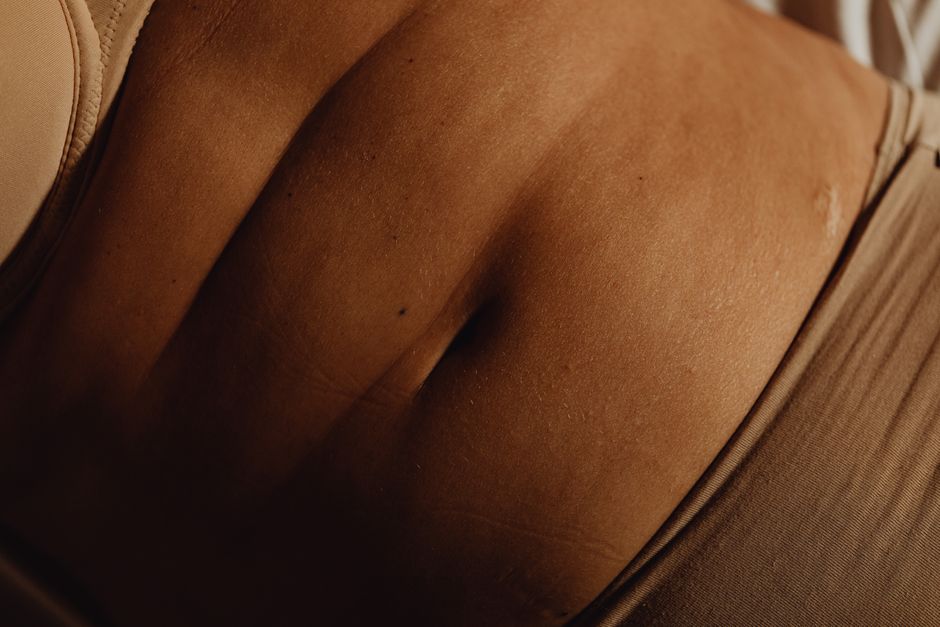
An outie belly button is almost always the result of how the umbilical cord attached and how the abdominal wall closed after birth. It is not caused by how the cord was cut, tied, or clamped, and it cannot be changed by exercise, weight loss, or anything you do to the navel itself. The one exception is a hernia or other structural problem, which a doctor can evaluate.
Most outies are permanent. A small number are hernias that may close on their own in infancy or need surgical repair. Understanding which one you or your child has is the only thing that actually matters here.
What Causes An Outie Belly Button?
The belly button is a scar. That is the simplest way to understand it. Before birth, the umbilical cord carried oxygen and nutrients from the placenta to the fetus through a small opening in the abdominal wall. After delivery, the cord is clamped and cut, the stump dries and falls off, and the opening seals shut behind it.
How that seal forms determines whether the scar sits flat, dips inward, or pushes outward. An outie happens when the tissue that fills the opening bulges slightly forward, or when there is a small amount of extra tissue left at the base of the cord. The medical term for a navel that protrudes is a protruding umbilicus or umbilical protrusion.
Two things commonly produce this:
- Extra skin or scar tissue. Some people simply form a small nub of tissue where the cord attached. This is a variation in healing, not a defect.
- A small umbilical hernia. The opening in the abdominal wall does not fully close, and a bit of fat or intestine pushes into the space under the skin. This is the cause that matters medically.
Roughly 10 percent of babies have a protruding navel, though estimates vary. Most of those are harmless hernias that close on their own during the first few years of life.
Can an Outie Belly Button Change on Its Own?
Yes, in some cases, but only in early childhood and only when the cause is a hernia.
Umbilical hernias in infants are common, especially in premature babies and in babies of African descent. The opening in the abdominal wall often narrows and closes by itself. Many close by age one. A large share of the rest close by age three or four. After that, spontaneous closure becomes much less likely.
Once a person reaches school age, an outie that has not resolved is usually permanent. The abdominal wall has finished closing, and the shape of the scar is set. It will not flatten with age.
An outie caused by extra skin or scar tissue — not a hernia — does not change on its own at any age. It is simply the shape that navel healed into.
Is an Outie Always a Hernia?
No. This is one of the most common points of confusion.
A hernia means there is an actual gap in the abdominal wall with tissue pushing through it. An outie can exist with no gap at all — just a nub of skin or a scar that healed outward.
The way to tell them apart is not by looking. It is by feel and behavior:
- A hernia often feels soft and can be pushed back in gently, especially when the person is lying down.
- A hernia may get bigger when the person cries, coughs, strains, or bears down, because pressure pushes more tissue into the opening.
- A simple outie stays the same size and shape no matter what the person is doing.
Only a doctor can confirm which one is present. An examination is usually enough. Imaging is rarely needed unless something unusual is found.



When Should an Outie Belly Button Concern You?
Most outies cause no symptoms and need no treatment. The situations that need medical attention are specific.
In infants and children, contact a doctor if:
- The navel becomes hard, swollen, or tender rather than soft.
- The baby is in pain when the area is touched.
- The protruding tissue turns red, purple, or dark.
- The baby is vomiting, has a swollen belly, or seems unwell.
Those signs can point to a strangulated hernia, where tissue gets trapped and its blood supply is cut off. This is uncommon in children but it is a medical emergency when it happens.
In adults, an umbilical hernia is more likely to cause problems than in children. Adults have a higher rate of complications because the opening does not close the way it does in infancy. Risk factors include obesity, multiple pregnancies, chronic coughing, and persistent heavy lifting — all of which raise pressure inside the abdomen. A hernia that becomes painful, tender, or suddenly firm in an adult needs prompt evaluation.
One detail worth knowing: a hernia does not get more dangerous just because it has been there a long time. The risk of strangulation is related to the size of the opening, not the age of the hernia. A small, tight opening is more likely to trap tissue than a large, loose one.
Can You Change an Outie Belly Button?
You cannot change the shape of an outie through exercise, diet, or anything you do to the navel itself. There is no muscle to train and no fat to lose that will flatten it. Abdominal exercises strengthen the muscles underneath, but they do not alter the scar tissue or close a gap in the abdominal wall.
Products marketed to “fix” an outie — belly button shapers, trainers, and similar devices — have no clinical evidence behind them. No study has confirmed they change the anatomy of the navel.
The one situation where an outie can be changed is a hernia that requires surgery. Repair closes the opening in the abdominal wall and reshapes the navel. This is done when the hernia is causing symptoms, growing, or at risk of complications — not for cosmetic reasons alone.
For adults who want to change the appearance of an outie for cosmetic reasons, a plastic surgeon can perform a procedure called umbilicoplasty. It reshapes the navel surgically. This is an elective operation with its own risks, including infection, scarring, and changes in sensation. It is not a minor decision.
Does Cutting the Cord Affect Belly Button Shape?
No. How the cord is clamped, cut, or how the stump is cared for does not determine whether a baby ends up with an innie or an outie.
This is a persistent myth, and it is worth correcting directly. The shape of the navel depends on how the abdominal wall closes and how the scar tissue forms — both of which happen inside the body, independent of what is done to the cord outside it. A study published in the journal Pediatrics examined cord clamping methods and found no relationship to navel shape.
What does affect the stump is infection risk. Keeping the stump clean and dry, and following your clinician’s guidance on care, matters for healing. It just does not change whether the navel ends up flat or protruding.
Does It Matter Whether You Have an Innie or an Outie?
For most people, no. An outie with no hernia and no symptoms is a normal variation in human anatomy. It does not affect health, digestion, or anything else.
What matters is whether there is a hernia underneath. That is the only question with medical consequences. If you are unsure, a doctor can tell you in a routine exam.
If you have an outie and it has never caused pain, swelling, or changes in size, there is nothing to treat. If it has, get it checked. That is the whole of it.
Frequently Asked Questions
Can an outie belly button become an innie?
Only in early childhood, and only if the cause is an umbilical hernia that closes on its own. Once the abdominal wall has finished closing — usually by age three or four — the shape is permanent.
Is an outie belly button a sign of a health problem?
Usually not. Most outies are a normal variation in how the navel healed, with no underlying issue. A hernia is the main exception, and a doctor can identify it with a simple exam.
Can exercise or weight loss change an outie belly button?
No. Exercise strengthens the abdominal muscles beneath the navel but does not change the scar tissue or close a gap in the abdominal wall. No clinical evidence supports exercise as a way to reshape an outie.
When should I see a doctor about my outie belly button?
See a doctor if the navel becomes hard, tender, red, or painful, or if it suddenly changes size or cannot be pushed back in. Those signs can indicate a strangulated hernia, which needs urgent care.
