
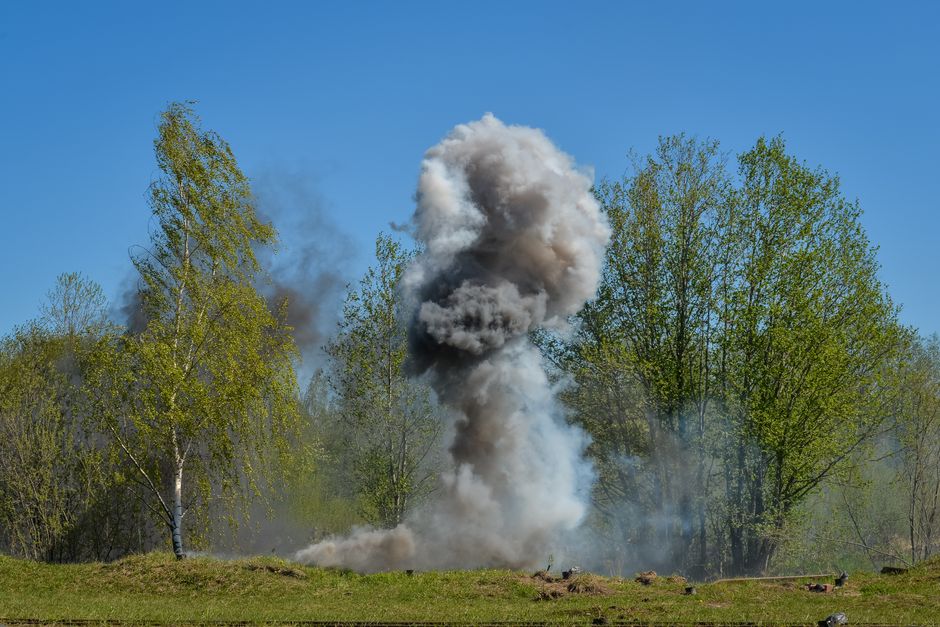
An industrial explosion happens when a fuel source, an oxidizer (usually oxygen in the air), and an ignition source come together in a confined or enclosed space. When these three elements combine in the right proportions, the rapid release of energy creates a shock wave and intense heat. In most cases, the specific trigger is a spark, a hot surface, or a chemical reaction that ignites a flammable gas, vapor, or dust cloud.
What Are the Main Types of Industrial Explosions?
Industrial explosions generally fall into two broad categories: physical and chemical. A physical explosion occurs when a vessel fails under high pressure, like a steam boiler or a compressed air tank. The energy is mechanical, not chemical. The sudden release of that pressure creates a blast wave.
Chemical explosions are more common in industrial accidents. These involve a rapid chemical reaction that produces gas and heat. The reaction can be combustion, decomposition, or polymerization. The most frequent types you hear about in the news are gas or vapor explosions, dust explosions, and runaway chemical reactions.
What Causes An Explosion In An Industrial Accident?
The most direct answer is the ignition of a flammable atmosphere. A flammable atmosphere exists when a gas, vapor, or dust is present in the air at a concentration between its lower explosive limit (LEL) and upper explosive limit (UEL). Below the LEL, there is not enough fuel to burn. Above the UEL, there is too much fuel and not enough oxygen.
When an ignition source meets that mixture, the combustion happens almost instantly. The fire triangle becomes a fire tetrahedron when you add the chemical chain reaction. In an industrial setting, common ignition sources include electrical sparks from faulty wiring, static electricity discharge, open flames from welding or cutting, and hot surfaces like motors or bearings.
Confined spaces make the event an explosion rather than a fire. In an open area, a flammable cloud might just flash and burn quickly. In a tank, pipe, building, or process vessel, the pressure builds rapidly. When the vessel or structure fails, the expanding gases create the destructive blast wave.
How Do Dust Explosions Happen?
Dust explosions are a leading cause of industrial blast accidents, especially in facilities that handle grain, wood, coal, metals, sugar, or plastics. Many people assume dust is harmless because a pile of it does not burn easily. That assumption is wrong. The danger is not the pile—it is the cloud.
When fine dust becomes suspended in the air, the surface area exposed to oxygen increases dramatically. A single particle burns on its surface. A cloud of millions of particles burns almost simultaneously. This creates a rapid pressure rise that can destroy a building.
Dust explosions often occur in two stages. A primary explosion happens in a piece of equipment like a silo, grinder, or dust collector. The blast wave from that first event shakes loose dust that has settled on beams, rafters, and machinery. That airborne dust ignites, creating a secondary explosion that is frequently far more destructive than the first.
Prevention focuses on keeping dust from becoming airborne, removing ignition sources, and using explosion venting or suppression systems. Housekeeping is not just a cleanliness issue in these facilities—it is a primary safety control.





How Do Gas and Vapor Explosions Occur?
Gas and vapor explosions happen when a leak or release creates a flammable cloud. Natural gas, propane, hydrogen, and many industrial solvents produce vapors that are heavier or lighter than air. Regardless of weight, they all spread and mix with air quickly.
These explosions are often described as vapor cloud explosions (VCEs). When a large volume of flammable vapor releases, it disperses and finds an ignition source. The time between release and ignition can be seconds or minutes. The larger the cloud, the more devastating the blast.
One distinction that matters is the difference between a deflagration and a detonation. A deflagration burns through the cloud at subsonic speed. It is destructive but survivable in some cases. A detonation is a supersonic shock wave coupled with a reaction zone. Detonations are rare in open industrial settings but can occur in long pipes, ducts, or congested process areas where the flame accelerates.
Gas detection systems, proper ventilation, and strict hot-work permits are the main defenses. If a flammable gas cannot accumulate, it cannot explode.
What Role Do Chemical Reactions Play?
Some industrial explosions do not involve external ignition at all. Runaway chemical reactions occur when a reaction generates heat faster than it can be removed. The temperature rises, which speeds up the reaction, which generates even more heat. This self-accelerating cycle can lead to a rapid decomposition or vaporization that bursts the reactor.
This is a specific hazard in the chemical and pharmaceutical industries. Reactions that are normally stable can become unstable if cooling fails, agitators stop, or wrong raw materials are added. Some chemicals are inherently unstable and can decompose violently when heated, shocked, or contaminated.
Thermal runaway is a known risk with certain polymerization reactions. The reaction is exothermic, meaning it releases heat. If the heat is not controlled, the reaction accelerates until the vessel fails. The result is not always a classic fireball. Sometimes it is a pressure burst that scatters shrapnel and releases toxic or flammable contents.
Process safety management systems are designed to identify these hazards before they become incidents. This includes understanding the chemistry of every reaction, installing emergency relief systems, and maintaining redundant cooling and control systems.
Why Do Confined Spaces Make Explosions Worse?
The physics of an explosion change dramatically in a confined space. In the open air, pressure dissipates in all directions. In a building, tank, or pipe, the pressure wave reflects off walls and structures. This reflection can amplify the pressure in certain areas, causing structural failure even at distances where an open-air blast would be survivable.
Confined spaces also prevent the flammable mixture from dispersing. A small leak in a poorly ventilated room can create a flammable atmosphere over time. Workers may not notice the danger because many flammable gases and vapors are invisible and some are odorless. This is why confined space entry procedures require atmospheric testing before and during work.
The pressure piling effect is another hazard in connected vessels or rooms. A flame front entering a narrow passage can compress the unburned gas ahead of it. This pre-compression raises the pressure and temperature of the unburned mixture, causing it to ignite more violently when the flame arrives. This can turn a low-pressure event into a high-pressure one.
What Are the Most Common Ignition Sources?
Static electricity is one of the most overlooked ignition sources. When materials move—like powders flowing through pipes, liquids pumping through hoses, or conveyor belts running—they generate static charges. If the charge accumulates on an ungrounded object, it can discharge as a spark. That spark has enough energy to ignite many flammable vapors and dusts.
Hot work is another major source. Welding, grinding, cutting, and brazing create open flames, sparks, and extreme heat. Many facilities require hot work permits because these activities are so frequently linked to ignition. The permit process ensures the area is clear of flammables and a fire watch is posted.
Electrical equipment is a third common source. Faulty wiring, damaged cables, and non-rated electrical gear can create arcs or sparks. In hazardous areas, facilities use explosion-proof or intrinsically safe electrical equipment designed to prevent ignition. Using standard equipment in a classified area is a serious violation of safety codes.
Friction from misaligned machinery, failed bearings, or jammed conveyors can generate enough heat to ignite surrounding materials. This is particularly relevant in dust-producing industries where a hot bearing can serve as the ignition source for a primary dust explosion.
How Can Industrial Explosions Be Prevented?
Prevention follows a hierarchy of controls. The most effective approach is to eliminate the hazard entirely by substituting a non-flammable material or process. When that is not possible, engineering controls reduce the risk. These include ventilation systems, gas detection alarms, explosion venting panels, and suppression systems.
Administrative controls are the next layer. These are procedures and training that reduce the chance of human error. Lockout/tagout procedures, hot work permits, and confined space entry protocols all fall into this category. Regular maintenance and housekeeping are administrative controls that directly prevent dust accumulation and equipment failures.
Personal protective equipment is the last line of defense. It does not prevent explosions, but it can reduce injury severity. Flame-resistant clothing, hard hats, and face shields protect workers during an incident. No PPE can protect against the primary blast wave of a major explosion, which is why prevention is always the priority.
One important clarification: explosion venting is not a prevention method. It is a mitigation method. Venting panels open at a set pressure to direct the blast away from personnel and structures. This reduces structural damage but does not prevent the explosion from occurring. Facilities must design these systems carefully so the vented flame and pressure do not injure people in safe areas.
Frequently Asked Questions
What is the most common cause of industrial explosions?
The most common cause is the ignition of a flammable gas, vapor, or dust cloud by a spark, flame, or hot surface. Poor ventilation and inadequate housekeeping allow these flammable atmospheres to accumulate in the first place.
Can an industrial explosion happen without fire?
Yes, physical explosions can occur from over-pressurized vessels, and some chemical reactions can burst containers without external flames. Runaway reactions and pressure vessel failures release energy mechanically, not through combustion.
How quickly does a dust explosion happen?
A dust explosion can occur in milliseconds once the dust cloud ignites. The entire event—from ignition to structural failure—often takes less than one second.
What does LEL mean in industrial safety?
LEL stands for Lower Explosive Limit, the lowest concentration of a gas or vapor in air that can ignite. Below this level, the mixture is too lean to burn.
