
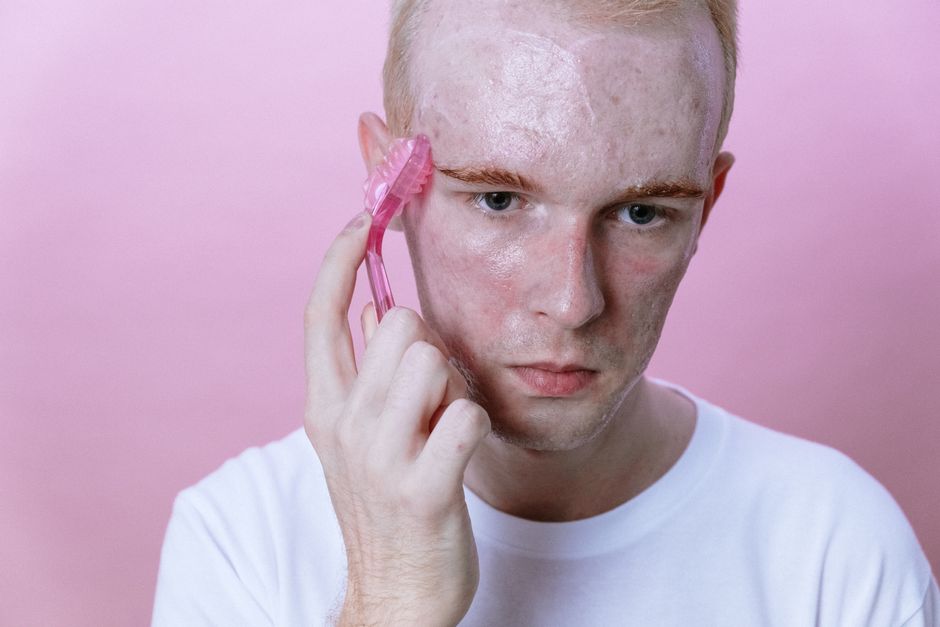
Acne is not one single thing. It is a chain of events inside the skin that starts with oil, dead skin cells, and bacteria. Hormones act as the trigger that sets the chain in motion. Diet can influence the process in some people, but it is rarely the sole cause. The real reason acne forms is a blocked pore that becomes inflamed, and hormones are the main driver behind why those pores block in the first place.
What Actually Happens Inside the Skin?
Every hair follicle on your face and body has a sebaceous gland attached to it. That gland produces sebum, which is an oily substance that keeps skin lubricated. This is normal and healthy. Problems start when the gland produces too much sebum.
Excess oil mixes with dead skin cells that shed from the lining of the pore. Instead of falling away, those cells stick together with the oil and form a plug. That plug is a comedo — the medical name for a clogged pore. When the plug stays below the surface, it is a whitehead. When it opens to the air and darkens, it is a blackhead.
Once the pore is blocked, the environment inside changes. The trapped oil becomes a food source for Cutibacterium acnes (C. acnes), a bacterium that naturally lives on everyone’s skin. C. acnes multiplies inside the blocked pore. The immune system detects the bacterial overgrowth and sends white blood cells to fight it. That immune response causes redness, swelling, pain, and pus — the visible signs of an inflamed pimple.
This process explains why acne is not a hygiene problem. Washing more aggressively does not stop the oil production or the cell shedding that starts the plug. It can actually make things worse by irritating the skin.
How Hormones Drive Acne Formation
Hormones are the primary trigger for acne, especially androgens. Androgens are male sex hormones, but both males and females produce them. The most relevant one is testosterone.
Androgens bind to receptors on the sebaceous gland. This binding signals the gland to grow larger and produce more sebum. During puberty, androgen levels rise sharply, which is why acne is so common in teenagers. But hormones do not settle down after the teenage years for everyone.
In adult women, hormone fluctuations around the menstrual cycle are a well-documented acne trigger. Estrogen and progesterone levels change across the cycle, and progesterone rises in the second half. Some research indicates that this shift increases sebum production and makes pores more likely to clog in the days before menstruation.
Conditions that affect androgen levels also affect acne. Polycystic ovary syndrome (PCOS) causes higher androgen levels in women, and acne is a common symptom of that condition. Stress is another factor. Stress raises cortisol, and cortisol can increase sebum production indirectly. This is why some people notice more breakouts during high-stress periods.
One clarification worth making: hormones do not cause acne by themselves. They create the condition — excess oil — that allows the rest of the process to happen. Someone with very oily skin but low inflammation may get blackheads but never painful cysts. Someone with a strong immune response to C. acnes may get inflamed lesions from even a mild oil increase.
Does Diet Really Cause Breakouts?
Diet is the most debated acne trigger. The evidence is not as strong as the evidence for hormones, but it is not zero either.
The clearest dietary link involves high-glycemic foods. These are foods that spike blood sugar quickly — white bread, sugary drinks, pastries, and processed snacks. When blood sugar rises fast, the body releases more insulin. Higher insulin levels can increase sebum production and promote inflammation. Several studies have found that low-glycemic diets reduce acne lesions in some people.
Dairy is the other frequently studied food. Some research suggests a link between skim milk and acne, particularly in adolescents. The mechanism is not fully understood. One theory is that milk contains hormones or growth factors that influence sebum production. Another is that milk raises insulin-like growth factor 1 (IGF-1), which can stimulate oil glands.
Here is the honest limitation: the dairy research is mostly observational. That means researchers see an association, but they cannot prove dairy causes acne. Not everyone who drinks milk gets acne, and not everyone who cuts dairy clears up. The evidence is strong enough that some dermatologists discuss dairy with patients, but it is not strong enough to tell everyone to stop drinking milk.
Chocolate gets blamed constantly. The evidence is weak. Some small studies found a link, others found none. Dark chocolate and sugar content are often confused in these studies. If chocolate triggers breakouts for you specifically, it is reasonable to avoid it. But there is no solid evidence that chocolate causes acne in the general population.
The most accurate summary: diet can influence acne in some people, but it is not the root cause for most. Hormones set the stage. Diet can make the performance better or worse for certain individuals.


Which Foods Have the Strongest Evidence?
If you want to test whether diet affects your skin, focus on the two categories with the most research behind them.
- High-glycemic foods: White bread, white rice, sugary cereals, candy, soda, and other refined carbohydrates. These cause rapid blood sugar spikes and higher insulin levels.
- Dairy products: The link is strongest for skim and low-fat milk in teenagers. Whole milk and cheese have weaker associations in the research.
There is no standard elimination diet for acne. No clinical guidelines tell patients to remove specific foods. What some dermatologists recommend is a trial period — remove one suspected food group for several weeks and track your skin. If you see no change, reintroduce it. If you see clear improvement, you may be sensitive to that food.
This approach is practical, but it is not a cure. Even people with food sensitivities usually still need standard acne treatment to control their breakouts.
What About Bacteria and Skin Care?
C. acnes is present on nearly everyone’s skin. It is not an infection you catch. It is part of the normal skin microbiome. Acne happens when trapped oil allows C. acnes to overgrow in a blocked pore.
This is why antibacterial products alone often fail to clear acne. They kill bacteria, but they do not address the blocked pore. The pore stays clogged, and even if the bacteria are reduced, the plug remains. New bacteria recolonize quickly because the environment still favors them.
Effective acne treatment usually targets multiple steps at once. Benzoyl peroxide kills bacteria and helps shed dead skin cells. Salicylic acid helps unclog pores by dissolving the glue that holds dead cells together. Retinoids — available over the counter as adapalene or by prescription — normalize the shedding process so cells do not stick together in the first place.
These treatments work because they interrupt the chain at different points. They do not change your hormone levels. That is why severe or hormonal acne often requires prescription treatments that do affect hormones, such as combined oral contraceptives or spironolactone in women.
One myth worth addressing: toothpaste is not an acne treatment. It can dry out a pimple temporarily, but it also irritates the skin and can cause chemical burns. Over-the-counter spot treatments with benzoyl peroxide or salicylic acid are safer and better studied.
When Is Acne a Medical Condition?
Occasional pimples are normal. Persistent acne that leaves scars, causes pain, or affects your emotional health is worth a medical visit.
Dermatologists grade acne by severity. Mild acne is mostly blackheads and whiteheads with occasional inflamed pimples. Moderate acne includes more inflamed lesions and some pustules. Severe acne involves nodules and cysts — deep, painful lesions that often scar.
Early treatment matters. Scarring can happen even with moderate acne, and it is harder to treat than the acne itself. If over-the-counter products have not improved your skin after several weeks of consistent use, a dermatologist can offer stronger options.
Prescription treatments include topical retinoids, oral antibiotics for short-term use, hormonal therapies for women, and isotretinoin for severe or treatment-resistant cases. Isotretinoin is highly effective but requires close medical monitoring due to side effects. These decisions should be made with a clinician, not based on internet research alone.
Frequently Asked Questions
Can hormones cause acne in adults?
Yes, hormone fluctuations can trigger acne at any age. Adult women often see breakouts before their period or during perimenopause due to shifting estrogen and progesterone levels.
Does sugar cause acne?
High-sugar foods can worsen acne in some people by raising insulin levels, which increases oil production. The effect varies widely between individuals, and sugar alone does not cause acne in everyone.
Is acne caused by dirty skin?
No, acne is not caused by poor hygiene. It starts with oil production and dead skin cells blocking pores, and washing more often does not prevent that process.
What is the fastest way to get rid of acne?
There is no instant cure, but benzoyl peroxide spot treatments can reduce inflamed pimples within a few days. Consistent use of a retinoid or salicylic acid over several weeks is more effective for long-term control.
