
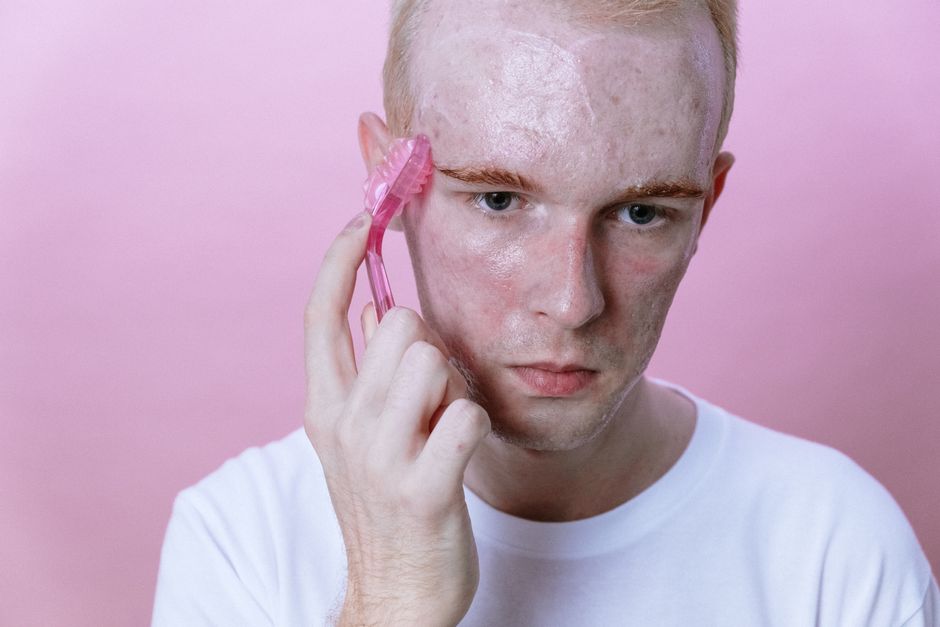
Acne on the neck is common, and it has the same root cause as acne anywhere else: a hair follicle that gets blocked by oil and dead skin cells, where the bacterium Cutibacterium acnes can then multiply and trigger inflammation. What makes the neck different is location. The skin there is thinner than on the face, it folds and rubs against collars and straps, and it sits right where sweat, hair products, and friction collect. Those factors do not create acne on their own, but they can make an existing breakout worse and slower to clear.
What Causes Acne Breakouts On Neck?
A neck pimple starts the same way a facial pimple does. Sebaceous glands inside the hair follicle produce oil. Dead skin cells shed and mix with that oil. When the follicle opening gets plugged, the contents back up. If the plug stays closed, you get a whitehead or a firm bump. If it opens to the surface, it oxidizes and turns into a blackhead.
Once a follicle is blocked, Cutibacterium acnes — a bacterium that normally lives on human skin — can overgrow inside it. The immune system responds with redness, swelling, and pus. That is the inflammatory stage, and it is what makes a pimple tender and raised.
Three things drive this process: excess oil production, irregular shedding of dead skin cells, and inflammation. Hormones influence all three. This is why acne tends to appear in the teen years, around menstrual cycles, and during pregnancy. The neck is simply another site where follicles exist — and it has some local conditions that make matters worse.
Why Does Acne Show Up on the Neck Specifically?
The neck skin is thinner and more delicate than facial skin, and it is under near-constant mechanical stress. Collars, ties, lanyards, backpack straps, helmet chin straps, and headphone bands all press and rub against it. That friction irritates follicles that are already inflamed.
Sweat is a second factor. The neck creases trap moisture, and hair that hangs down the back of the neck carries oils and styling products directly onto the skin. Pomades, gels, and conditioners can migrate downward and clog follicles along the hairline and nape.
There is a specific pattern worth knowing about. When acne is concentrated along the hairline and where hair products contact the skin, clinicians sometimes call it pomade acne. It is a form of acne mechanica — acne caused by physical factors rather than hormones alone. If your breakouts cluster at the nape or just below the jawline and you use heavy hair products, that pattern is meaningful.
Is Neck Acne Different From Face Acne?
The mechanism is identical, but the triggers skew differently. Face acne is driven more heavily by hormones and sebum. Neck acne is more often influenced by friction, sweat, and product transfer — though hormones still play a role.
One practical difference matters: neck skin scars more readily in some people. The neck is also harder to treat with strong topicals because the skin is thinner and more prone to irritation. A product that works on your forehead may sting or peel your neck.
Another difference is that neck bumps are not always acne. Folliculitis — inflammation of the hair follicle from bacteria, fungus, or irritation — can look almost identical. So can keratosis pilaris, and so can ingrown hairs after shaving. If a “pimple” on your neck never comes to a head, recurs in the same spot, or does not respond to acne treatment, that is a reason to have a clinician look at it rather than assume it is acne.





What Makes Neck Acne Worse?
Several everyday habits feed the problem.
- Friction and pressure. Tight collars, chin straps, and straps that rub can push bacteria and irritant into follicles.
- Sweat left on the skin. Showering soon after heavy sweating helps; staying in damp clothing does not.
- Hair products. Oils, pomades, and heavy conditioners that contact the neck can block follicles.
- Picking and squeezing. This pushes inflammation deeper and raises the risk of scarring and dark marks.
- Harsh scrubbing. Aggressive exfoliation damages the skin barrier and can worsen inflammation.
- Comedogenic cosmetics and sunscreens. Products labeled non-comedogenic are less likely to clog pores.
Diet is often blamed more than the evidence supports. Some research suggests that high-glycemic diets and certain dairy intake may be associated with acne in some people, but the findings are not consistent enough to call this a proven cause. It is reasonable to note the link exists in some studies; it is not reasonable to say cutting dairy will clear your neck.
How Is Neck Acne Treated?
Treatment follows the same principles as facial acne, with adjustments for thinner skin. Over-the-counter options include benzoyl peroxide, salicylic acid, and adapalene, a topical retinoid available without a prescription in the US. These work on different parts of the problem — benzoyl peroxide reduces C. acnes, salicylic acid helps unclog pores, and retinoids help normalize how skin cells shed.
Start with one product rather than several. Layering multiple actives on neck skin is a common cause of irritation, redness, and peeling. Apply a thin layer, and expect that improvement takes weeks, not days. Acne treatments generally need consistent use over a period of weeks to months before you can judge whether they are working.
If over-the-counter products have not helped after a reasonable trial, or if you have deep, painful nodules or any scarring, a clinician can assess whether prescription treatment is appropriate. Prescription options exist, but they carry their own risks and monitoring requirements, and the choice depends on your history. This is a decision to make with a clinician, not from a general article.
One note on a widely repeated claim: toothpaste, lemon juice, and baking soda are commonly suggested as home remedies for neck pimples. There is no clinical evidence supporting these, and all three can irritate or damage the skin barrier.
How Can You Reduce Neck Breakouts?
Reduce the mechanical triggers first, because they are the ones most specific to the neck.
- Shower after sweating, and change out of damp shirts.
- Choose collars and straps that do not press or rub.
- Keep hair products off the neck and hairline; wash your hair before bed if you use heavy products.
- Use non-comedogenic skincare and sunscreen.
- Clean your phone, headphones, and helmet straps regularly.
- Resist picking, which is the single biggest driver of scarring.
None of these will resolve hormonally driven acne by itself. They reduce the added friction and product load that make neck breakouts worse. If acne is moderate to severe, or leaving marks, topical prevention alone is usually not enough.
When Should You See a Doctor?
See a clinician if you have deep, painful nodules or cysts, if acne is leaving scars or dark marks, or if over-the-counter treatment has not helped after a reasonable trial. These are signs that a prescription approach may be more appropriate.
Also see a clinician if the bumps on your neck do not behave like acne — if they never come to a head, recur in one spot, itch intensely, or appear suddenly in a pattern that does not match your usual breakouts. Folliculitis, fungal infections, and other conditions can mimic acne and need different treatment. A wrong guess wastes time and can make things worse.
Frequently Asked Questions
What causes acne breakouts on the neck?
Neck acne happens when a hair follicle gets clogged with oil and dead skin cells, and the bacterium Cutibacterium acnes triggers inflammation. Friction from collars and straps, sweat, and hair products often make neck breakouts worse than facial ones.
Is neck acne a sign of anything serious?
Most neck acne is ordinary acne and is not a sign of a serious condition. However, if bumps never come to a head, recur in one spot, or do not respond to acne treatment, they may be folliculitis or another condition that needs a different approach.
How do you get rid of acne on your neck?
Over-the-counter products with benzoyl peroxide, salicylic acid, or adapalene are common first steps, used one at a time and given weeks to work. Reducing friction from collars and straps and keeping hair products off the neck also helps.
Does shaving cause neck acne?
Shaving can cause ingrown hairs and irritation that look like acne, especially with close or multi-blade razors. Shaving with the grain and using a sharp blade may reduce this, but it will not address hormonally driven acne.
