
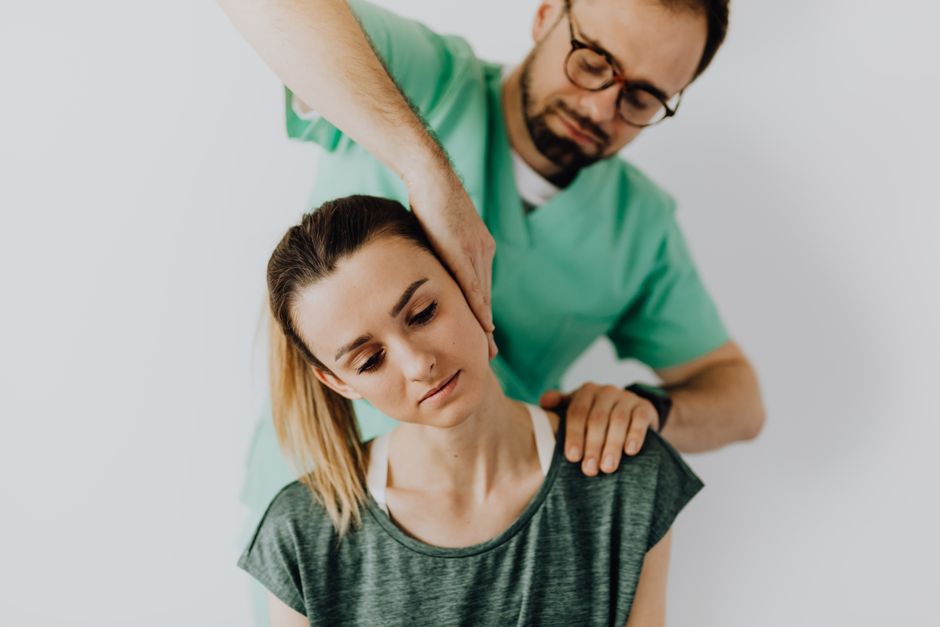
A stiff neck in an older adult is usually not a sign of something serious. The most common causes are ordinary wear and tear in the neck joints and discs, sleeping in an awkward position, and holding the head in one posture for too long. Muscle strain from these everyday triggers is the reason most people wake up unable to turn their head comfortably.
Age changes the neck. The discs between the vertebrae lose water content and height over time. The joints and ligaments stiffen. These changes are nearly universal and usually harmless. But a stiff neck in an older adult deserves a closer look because a small number of causes need medical attention quickly.
What Causes A Stiff Neck In The Elderly?
Most cases come down to the soft tissues and joints of the neck, not the spinal cord or nerves. The neck has seven vertebrae stacked on top of each other, cushioned by discs and connected by small joints called facet joints. These structures carry the full weight of the head, which for most adults is roughly 10 to 11 pounds. Decades of use leave their mark.
Cervical spondylosis is the medical term for age-related wear in the neck. It involves disc degeneration, bone spurs, and thickened ligaments. It is extremely common after age 50. Many people with these changes on an X-ray have no symptoms at all. When symptoms do appear, stiffness and reduced range of motion are among the most frequent.
Other common causes include:
- Muscle strain from sleeping awkwardly, sudden movement, or prolonged poor posture
- Osteoarthritis in the facet joints of the neck
- A pinched nerve, which usually brings pain shooting into the arm alongside the stiffness
- Whiplash or a past neck injury that left lasting tightness
- Tension and stress, which often show up as tight neck and shoulder muscles
There is a detail worth knowing here. Stiffness and pain are not the same thing. Many older adults have stiff necks with little or no pain, and that pattern points more toward joint and disc changes than toward muscle strain. Pain that travels into the arm or causes numbness suggests a nerve is involved, which is a different problem with a different evaluation.
How Is Age-Related Neck Stiffness Different From a Normal Stiff Neck?
Age changes the baseline. A 30-year-old who sleeps wrong may be sore for a day or two and then return to normal. An older adult with underlying disc and joint degeneration often has a neck that never fully loosens. The morning stiffness lasts longer. Turning the head to check a blind spot while driving gets harder. These are gradual changes, not sudden ones.
Range of motion declines with age in most people, whether or not they have pain. This is a normal part of aging, similar to how knees and hips stiffen. The key difference between ordinary age-related stiffness and something that needs attention is the pattern. Gradual stiffness that comes and goes over months is usually mechanical. Stiffness that appears suddenly, worsens steadily, or comes with other symptoms is not.
When Is a Stiff Neck a Medical Emergency?
A stiff neck combined with fever, severe headache, confusion, or sensitivity to light can be a sign of meningitis, which is a medical emergency. This is rare in older adults, but it is the reason a stiff neck is taken seriously in any age group. Meningitis is an infection of the membranes around the brain and spinal cord. It requires immediate treatment.
Call for emergency care if a stiff neck comes with any of these:
- Fever, especially with a severe headache
- Confusion, drowsiness, or trouble staying awake
- Sudden severe headache unlike any before
- Weakness, numbness, or clumsiness in the arms or legs
- Loss of bladder or bowel control
- Stiff neck after a fall or injury to the head or neck
These warning signs are not common, and most stiff necks do not involve them. But in an older adult, the threshold for getting checked should be lower, not higher. Older adults can have a blunted fever response, which means a serious infection may not produce the high temperature you would expect. A stiff neck with confusion or unusual drowsiness in an older adult warrants urgent evaluation even without a fever.





What Other Conditions Cause Neck Stiffness in Older Adults?
Beyond wear and tear, several other conditions can cause a stiff neck. Each has its own pattern.
Cervical radiculopathy happens when a nerve root in the neck is compressed, often by a bone spur or a herniated disc. It causes pain, numbness, or weakness that travels down the arm. The neck itself may also feel stiff, but the arm symptoms are the defining feature.
Cervical myelopathy is compression of the spinal cord itself. It is less common but more serious. Signs include clumsy hands, trouble buttoning a shirt, an unsteady walk, and sometimes neck stiffness. In older adults this condition is often missed early because the symptoms come on slowly and get blamed on aging. Anyone with these hand or walking changes should be evaluated.
Polymyalgia rheumatica is an inflammatory condition that causes pain and stiffness in the shoulders, hips, and neck. It occurs almost exclusively in people over 50 and is more common in women. The stiffness is typically worst in the morning and lasts longer than an hour. It often comes with fatigue and a feeling of being unwell. This condition is treatable, and it is one of the reasons persistent morning stiffness in an older adult should be discussed with a doctor.
Rheumatoid arthritis can affect the joints of the neck, particularly the joint where the skull meets the spine. This is a known concern in people with long-standing rheumatoid arthritis and requires monitoring.
Infections, tumors, and referred pain from the heart or gallbladder are rare causes. They are worth knowing about because they exist, not because they are likely.
How Is a Stiff Neck Treated in Older Adults?
For ordinary mechanical stiffness, the approach is the same as for younger adults, with a few adjustments. Staying gently active usually helps more than resting completely. Prolonged bed rest or a soft collar worn for too long can weaken the neck muscles and make stiffness worse over time.
Common approaches include:
- Gentle range-of-motion exercises to keep the neck moving
- Over-the-counter pain relievers, with a doctor’s guidance because older adults face higher risks from some of these medications
- Heat to relax tight muscles
- Physical therapy to strengthen the neck and supporting muscles
One point deserves emphasis. Nonsteroidal anti-inflammatory drugs like ibuprofen and naproxen carry higher risks of stomach bleeding and kidney problems in older adults. They are widely used and often effective, but the risk is real and rises with age. A doctor should be part of the decision, especially for anyone taking blood thinners or blood pressure medication.
For nerve or spinal cord involvement, treatment may include targeted injections, prescription medications, or in some cases surgery. These decisions depend on the specific diagnosis and are made case by case.
Can You Prevent Neck Stiffness as You Get Older?
You cannot stop the discs from aging. But you can reduce the strain on your neck, and that matters more than most people realize.
Posture is the biggest lever. Holding the head forward and down for hours, which happens with phones, tablets, and laptops, puts extra load on the neck. Raising screens to eye level and taking breaks to move the neck helps. So does a supportive pillow that keeps the neck roughly aligned with the spine during sleep.
Regular movement keeps joints from stiffening. This is true throughout the body, and the neck is no exception. Gentle daily range-of-motion exercises, done consistently, help maintain flexibility. Strength in the upper back and shoulder muscles also takes pressure off the neck.
None of this reverses arthritis or disc degeneration. The evidence that exercise prevents neck problems is modest, and much of it comes from studies in working-age adults rather than older populations. What the evidence does support is that staying active and avoiding prolonged static postures is generally better for neck comfort than being sedentary. That is a reasonable goal, not a guarantee.
Frequently Asked Questions
Is a stiff neck in the elderly usually serious?
Most of the time it is not. The common causes are age-related wear in the neck joints and discs, muscle strain, and posture, though a stiff neck with fever, confusion, or weakness needs urgent care.
What is the most common cause of a stiff neck in older adults?
Cervical spondylosis, which is age-related degeneration of the discs and joints in the neck, is the most common underlying cause. It is extremely common after age 50 and often causes stiffness with little or no pain.
When should I worry about a stiff neck?
Worry when a stiff neck comes with fever, a severe headache, confusion, sensitivity to light, or weakness and numbness in the arms or legs. Those signs point to conditions that need emergency evaluation.
Can a stiff neck be a sign of something like polymyalgia rheumatica?
It can. Polymyalgia rheumatica causes morning stiffness in the neck, shoulders, and hips that lasts longer than an hour, mostly in people over 50. It is treatable, so persistent morning stiffness should be discussed with a doctor.
