
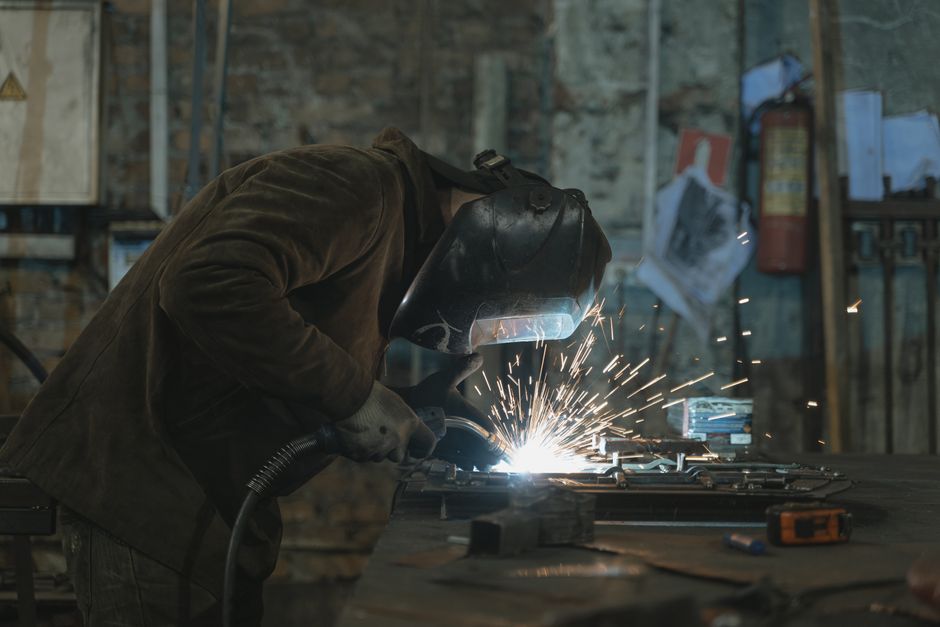
A stick welder sticks when the metal rod fuses to the workpiece instead of holding a stable arc above it. This happens because the arc goes out and the rod tip touches molten metal that then freezes around it. The three most common causes are an arc length that is too short, an amperage setting that is too low for the rod and metal, and a damp or damaged electrode.
What Causes a Stick Welder to Stick?
Sticking is an arc stability problem. Shielded metal arc welding, often called stick welding, works by maintaining a small gap between the electrode tip and the metal. That gap is the arc. The heat of the arc melts both the rod and the base metal.
If that gap closes, the arc stops. The rod tip contacts the molten weld pool. Within a second or two the pool cools and solidifies around the tip. Now the rod is welded to the part. That is a stuck rod.
Several conditions close that gap or prevent a stable arc from forming in the first place:
- Arc length too short, so the tip touches down
- Amperage set too low, so the arc cannot sustain itself
- Electrode moisture, which disrupts the flux coating
- Wrong electrode polarity for the rod type
- Dirty or rusty base metal that resists arc initiation
- An unsteady travel speed or hand movement
The important thing to understand is that sticking is usually not one problem. It is a chain. A weak arc forces the welder to push the rod closer to keep it lit. Pushing closer causes contact. Contact causes sticking. Fixing the root cause is more effective than reacting to the stuck rod.
Why Does a Short Arc Length Cause Sticking?
Arc length is the single most common reason a rod sticks. The arc needs physical space to exist. When you hold the rod too close, you squeeze that space down to nothing.
The correct arc length depends on the electrode diameter. As a general rule, arc length should be roughly equal to the diameter of the bare metal core of the rod, measured between the tip and the workpiece. Too long and the arc wanders and spatters. Too short and the rod touches down.
New welders tend to hold a short arc because it feels safer. A shorter arc looks more controlled. In practice, a short arc is where sticking happens most. The rod needs to be held just far enough away to keep the arc alive without losing contact.
There is a physical limit to how forgiving this is. As the rod melts, it gets shorter. You have to feed it down to maintain the same gap. If you do not move your hand down fast enough, the arc length grows and the arc may go out. If you move down too fast, the rod touches and sticks. Managing that balance is the core skill of stick welding.
How Does Low Amperage Make a Rod Stick?
Amperage provides the heat that keeps the arc stable. Set it too low and the arc cannot sustain itself. The molten tip cools, the arc weakens, and the rod wants to freeze to the metal.
Every electrode has a recommended amperage range. That range is printed on the electrode packaging and is set by the manufacturer for that specific rod type and diameter. A 3/32 inch rod runs cooler than a 1/8 inch rod of the same type. Using a thick rod on thin metal at low amperage is a common way to create a stuck rod.
Low amperage also makes the arc hard to start. You scratch or tap the rod to strike the arc. If the machine does not have enough current, the arc sputters and dies. Each restart attempt increases the chance of the rod touching down and fusing.
The opposite problem exists too. Too much amperage burns through thin metal and can cause undercut. But high amperage rarely causes sticking. Sticking is overwhelmingly a low-amperage and short-arc problem.





Can a Damp or Damaged Electrode Cause Sticking?
Yes. The flux coating on a stick electrode matters more than most people realize. That coating does several jobs at once. It shields the molten weld from the air, it stabilizes the arc, and it helps control how the metal freezes.
When an electrode absorbs moisture, the flux behaves differently. The arc becomes erratic. It sputters and pops instead of running smooth. An unstable arc is much harder to hold at the right distance, so sticking becomes more likely.
This is why electrode storage matters. Many rods are sensitive to humidity and should be kept dry. Some rod types, particularly low-hydrogen electrodes, are especially affected by moisture and may need to be stored in a heated rod oven to stay within specification. The exact storage and redrying requirements depend on the electrode classification, so check the manufacturer’s data for the specific rod you are using.
Physical damage matters too. A chipped or cracked flux coating exposes the bare core and disrupts arc stability. A rod with damaged flux should generally be discarded rather than used.
Does Polarity and Base Metal Condition Affect Sticking?
Polarity is the direction current flows through the electrode and the work. Most stick electrodes run on direct current electrode positive, but some run better on electrode negative, and some run on alternating current. Using the wrong polarity for a given rod can make the arc unstable and hard to control.
If your machine allows it, check the electrode’s recommended polarity before you start. A rod that runs poorly on the wrong setting may run smoothly once you switch. This is a frequent cause of stubborn sticking that has nothing to do with technique.
The condition of the metal matters as well. Rust, mill scale, paint, oil, and moisture all interfere with starting and holding an arc. The arc has to establish a clean electrical path to the base metal. Contamination breaks that path. The arc jumps, wanders, and goes out, and the rod touches down.
Cleaning the metal before welding is not optional for good results. Grinding or wire brushing the joint area removes the layer that resists the arc. On very rusty or painted metal, even good technique will struggle.
Why Do Beginners Stick Rods More Often?
Sticking is a technique problem as much as an equipment problem. Experienced welders stick rods too, but they recover faster and stick less often.
The main skill is maintaining a consistent arc length while the rod is melting and shortening. That requires steady hand control and constant small adjustments. Beginners often hold the rod too close, move too slowly, or fail to feed the rod down as it burns away.
Travel speed matters too. Moving too slowly builds up a large molten pool that the rod tip can sink into. Moving too fast can outrun the arc and cause it to break. A steady, moderate travel speed keeps the pool a manageable size.
Another factor is arc starting technique. Tapping or scratching to start the arc takes practice. A clumsy start often ends with the rod fused to the metal before the arc ever stabilizes.
None of this is about strength or talent. It is repetition. The hand learns the correct distance through practice, not through reading about it.
What Should You Do When a Rod Sticks?
Do not panic and do not force it. Forcing a stuck rod can damage the electrode holder, bend the rod, or pull the work out of position.
The standard method is to release the rod from the holder. Twist the holder to free the rod, or if the machine has one, use the electrode release. Once the rod is free from the holder, you can often wiggle the rod itself to break it loose from the metal. If it is truly fused, a slight side-to-side bend usually snaps it free at the weld.
Then diagnose before you restart. Ask which of the common causes applies:
- Was the arc too short? Hold a slightly longer arc next time.
- Was the amperage too low? Adjust within the rod’s recommended range.
- Was the rod damp or damaged? Swap in a fresh, dry electrode.
- Was the polarity wrong? Check the machine setting against the rod spec.
- Was the metal dirty? Clean the joint before continuing.
Restarting without changing anything usually produces the same result. The fix is to correct the underlying condition, then try again with a steady hand and a consistent arc length.
Can Sticking Be Prevented?
Most sticking is preventable with the right setup and habits. Get the fundamentals right before you strike an arc.
Match the rod to the job. Use an electrode diameter and type suited to the metal thickness and position. Set the amperage within the manufacturer’s recommended range for that rod. Confirm the polarity matches the electrode’s specification. Clean the base metal. Store electrodes properly so the flux stays dry and intact.
Then focus on technique. Hold a consistent arc length. Keep a steady travel speed. Feed the rod down as it burns away so the gap stays even. Practice on scrap before you weld something that matters.
Some welders find that certain machines are more forgiving than others, and inverter-based machines often hold a more stable arc than older transformer units. That can reduce sticking, but it does not replace good technique. The equipment helps. The hand does the work.
Frequently Asked Questions
Why does my stick welder keep sticking?
The most common reasons are an arc length that is too short, amperage set too low for the rod, or a damp electrode. Fixing the setup usually stops the sticking.
Does low amperage cause a stick welder to stick?
Yes. Amperage provides the heat that keeps the arc stable, so too little current makes the arc weak and the rod tip freeze to the metal. Set the amperage within the rod manufacturer’s recommended range.
What causes a welding rod to stick when starting an arc?
A clumsy arc start often lets the rod touch the metal before the arc stabilizes, which fuses the tip. Dirty base metal and the wrong polarity can also make starting harder.
How do you stop a stick welder from sticking?
Hold a consistent arc length, set the correct amperage and polarity for the rod, use dry undamaged electrodes, and clean the base metal first. Steady technique matters as much as the machine settings.
