
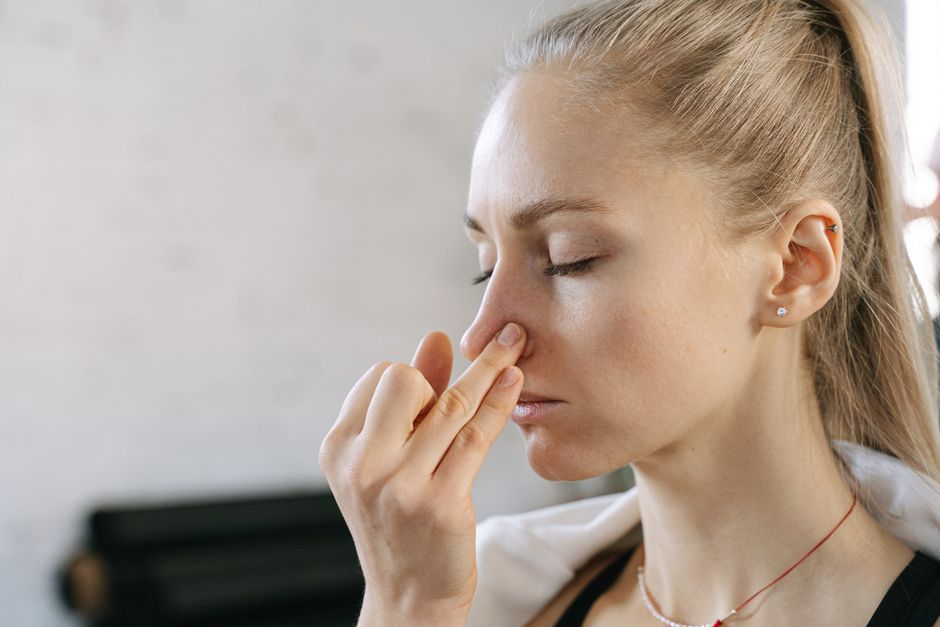
A runny nose is your body’s response to something irritating the nasal lining. Colds and allergies cause it more than anything else because both trigger the same basic reaction: inflammation and extra fluid in the nose. The difference is what starts that reaction. A cold is caused by a virus. Allergies are caused by your immune system overreacting to something harmless, like pollen or dust. That single difference explains why one clears up in about a week and the other can last for weeks or months.
What Actually Happens Inside Your Nose
Your nasal passages are lined with a layer of tissue that produces mucus all day, every day. You normally swallow most of it without noticing. Mucus is not the problem. It traps dust, pollen, and germs and keeps them from reaching your lungs.
When something irritates that lining, the tissue swells and the glands underneath it make more fluid. Blood flow to the area increases. The result is the runny, stuffy feeling you call a snotty nose.
The type of mucus can tell you something about the cause, though not perfectly.
- Clear and watery: common with allergies and the early stage of a cold
- Thick and white: often a cold that is settling in
- Yellow or green: usually means immune cells are active in the area, which happens with many infections and is not proof of a bacterial infection on its own
That last point matters. Many people assume green mucus means they need an antibiotic. Color alone does not tell you that. Viral colds routinely produce discolored mucus.
What Causes a Snotty Nose: Colds, Allergies, and More
The short answer is that a virus or an allergen sets off the same swelling and fluid production in your nose. How each one does it is different.
Colds
More than 200 viruses can cause the common cold. Rhinoviruses are the most common group. When one of these viruses gets into your nasal lining, your immune system sends cells to fight it. That fight causes the swelling and mucus.
Cold symptoms usually build over two to three days and improve within about a week to ten days. Some coughs linger longer. Mucus that turns thick and discolored partway through a cold is common and does not by itself mean things have gotten worse.
Allergies
With allergies, your immune system mistakes a harmless substance for a threat. It releases histamine and other chemicals. Histamine is what makes your nose run, your eyes water, and your sneezes fire off in a burst.
Allergy symptoms tend to start fast after exposure and last as long as you are around the trigger. They do not cause fever. They often come with itchy eyes and sneezing, which colds usually do not.
Other causes worth knowing
Not every snotty nose is a cold or an allergy. Other causes include:
- Cold air or dry indoor air, which can irritate the nasal lining
- Strong smells, smoke, or pollution
- Certain medications, including some blood pressure drugs and decongestant nasal sprays used too long
- Hormonal changes, including pregnancy
- Non-allergic rhinitis, a condition where the nose reacts to triggers without an allergic immune response
- Sinus infections, which often follow a cold that does not improve
One thing worth clearing up: a runny nose from cold air or spicy food is not the same as a cold. It is a nerve reflex, not an infection. You are not contagious, and it will stop when the trigger stops.
How Can You Tell Colds and Allergies Apart?
You can usually separate the two by looking at timing, pattern, and the small symptoms around the edges. Here is a side-by-side comparison.
| Feature | Cold | Allergy |
|---|---|---|
| Cause | Virus | Immune reaction to a trigger |
| Onset | Gradual over 2-3 days | Fast, often minutes after exposure |
| Duration | About 7-10 days | As long as exposure lasts |
| Fever | Possible, more common in children | Not caused by allergies |
| Itchy eyes | Rare | Common |
| Sneezing | Sometimes | Often, in bursts |
| Pattern | Any time of year | Often seasonal or tied to a place |
| Contagious | Yes | No |
If your nose runs every spring or every time you visit a house with a cat, that points to allergies. If it started two days ago and your throat was scratchy first, that points to a cold.
Some people have both at once. Allergies can make the nasal lining more sensitive, and that can make a cold feel worse. This is common and does not mean either condition is more serious than usual.





Why Do Some People Get Snotty Noses More Often?
Some people really do get more runny noses than others, and there are real reasons for it.
Allergies run in families. If one parent has allergies, a child is more likely to develop them. The same is true for asthma and eczema, which often travel together with allergic rhinitis.
Children get colds more often than adults because they have not yet built up immunity to the many cold viruses. Adults typically get two to three colds a year. Young children can get more.
Your environment matters too. Smoke, pollution, and dry indoor air can all make the nasal lining more reactive. People who work around dust or chemicals often notice more nasal symptoms.
Age plays a role. Some older adults notice their nose runs more easily, sometimes with no clear trigger. This is called gustatory rhinitis when it happens with eating, and it is generally harmless.
What Helps a Snotty Nose Feel Better?
Most colds and allergy flares get better on their own. The goal of treatment is comfort, not curing the underlying cause.
For colds, the evidence supports rest, fluids, and time. Over-the-counter cold medicines can ease symptoms but do not shorten a cold. Decongestant nasal sprays should not be used for more than a few days in a row, because longer use can cause rebound congestion that is worse than the original problem.
For allergies, avoiding the trigger helps most when you can identify it. Antihistamines and nasal steroid sprays are commonly used. Nasal steroid sprays are generally considered the most effective single treatment for allergic rhinitis, though they take several days to reach full effect. Some clinicians also recommend saline rinses, which can flush irritants out of the nose and are generally low risk when done with properly prepared water.
A word of caution on saline rinses: never use tap water straight from the faucet. Use distilled, sterile, or properly boiled and cooled water. Tap water can contain organisms that are safe to drink but not safe to put in the nose.
If symptoms last more than about ten days without improving, keep getting worse, or come with facial pain or fever, it is worth checking with a clinician. That pattern can suggest a sinus infection or another issue that needs a closer look.
When Should You See a Doctor?
Most runny noses do not need medical care. Some situations do.
- Symptoms that last more than ten days without getting better
- High fever, especially with facial pain or swelling
- Symptoms that keep getting worse instead of improving
- One-sided nasal blockage or bloody discharge that does not clear
- Shortness of breath or wheezing
- Nasal symptoms that clearly interfere with sleep or daily life for weeks
These signs do not automatically mean something serious. They mean a clinician should take a look, because the cause may not be a simple cold or allergy.
Frequently Asked Questions
What causes a snotty nose more, colds or allergies?
Both are common, but allergies tend to cause ongoing or recurring runny noses while colds cause short episodes. Which one affects you more depends on your exposure and whether you have allergies.
Does green mucus mean I have an infection?
No, green or yellow mucus is common with ordinary viral colds and does not prove a bacterial infection. Color alone is not a reliable sign of what is causing your symptoms.
How long does a snotty nose from a cold usually last?
Most cold-related runny noses improve within about seven to ten days. A lingering cough can last a bit longer even after the nose clears up.
Can allergies cause a fever?
No, allergies do not cause fever. If you have a fever along with a runny nose, a cold or another infection is more likely the cause.
