
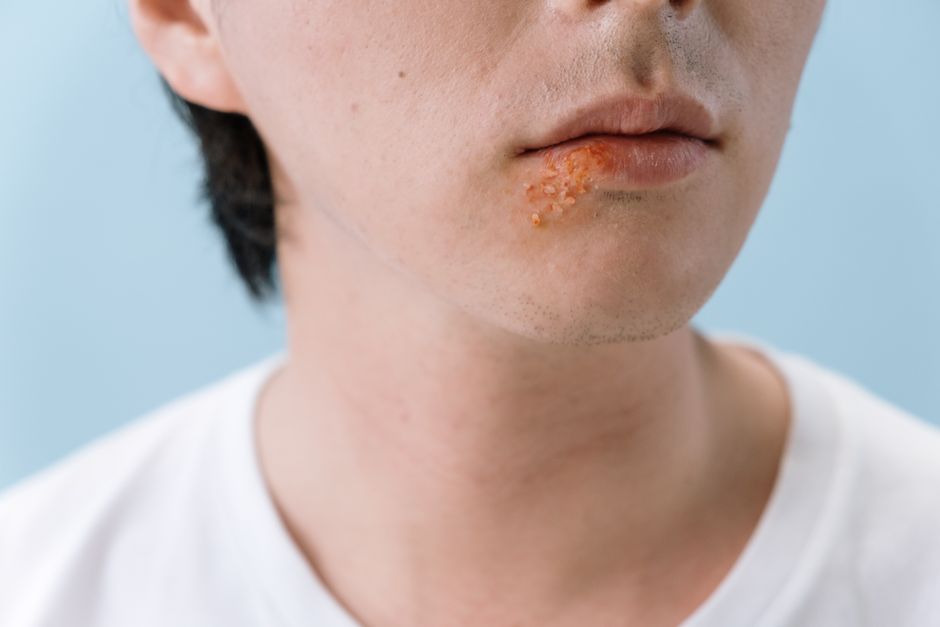
A cold sore shows up when the herpes simplex virus type 1 (HSV-1) that has been living quietly in your nerve cells wakes up and travels back to the skin. That reactivation is usually set off by a physical or emotional stressor — sun exposure, illness, fatigue, hormonal shifts, or injury to the lips. The virus never leaves the body, so outbreaks can recur, but they are triggered events, not random ones.
Roughly half of adults in the United States carry HSV-1, according to the CDC, though most never know it because the virus often stays silent. For people who do get outbreaks, understanding what flips the virus from dormant to active is the most useful thing they can learn. It does not cure anything, but it explains the pattern.
What Is a Cold Sore and What Causes It?
A cold sore is a small, fluid-filled blister or cluster of blisters that forms on or around the lips, usually at the border where the lip meets the skin. It is caused by HSV-1 in the large majority of cases, though HSV-2 — the virus more commonly linked to genital herpes — can also cause oral sores through oral contact.
HSV-1 spreads through direct skin-to-skin contact. Kissing, sharing utensils, or touching an active sore can pass it along. The virus enters through small breaks in the skin or the moist lining of the mouth, then travels up a sensory nerve to a cluster of nerve cells called a ganglion, where it settles in for life.
This is the part many people misunderstand: the virus does not get cleared. The immune system pushes it into a quiet state called latency, but it stays parked in the nerve tissue. A cold sore is not a new infection. It is the same original infection reactivating.
What Causes a Cold Sore Outbreak Triggers Explained
Reactivation happens when something weakens the immune system’s grip on the virus or irritates the nerve where it lives. The specific triggers vary from person to person, and some people identify a clear pattern while others never do. The most commonly reported triggers include:
- Ultraviolet light from sun or tanning beds, which is one of the best-documented triggers
- Fever and illness, especially colds and flu — this is why they are sometimes called fever blisters
- Physical or emotional stress
- Fatigue and poor sleep
- Hormonal changes, including menstruation
- Trauma to the lips or face, from dental work, surgery, or injury
- Weakened immune function from illness or certain medications
Sun exposure has the strongest research backing. Studies have found that ultraviolet light can directly reactivate HSV-1 in the skin and nerve tissue, which is why many people notice sores after a beach vacation or a day of skiing. This is also the reasoning behind using lip balm with sun protection for people who get frequent sun-triggered outbreaks.
For other triggers, the evidence is more about patient reports and clinical observation than controlled trials. Stress and fatigue are widely reported by people who get outbreaks, but it is difficult to design a study that isolates stress as a single cause. That does not make them unreal — it means the science is harder to pin down.
Why Does the Virus Stay in Your Body?
After the first infection, HSV-1 hides inside nerve cells where the immune system has limited access. There it stops actively replicating and goes dormant. This is called latency, and it is the reason cold sores keep coming back for some people and never appear for others.
When a trigger disrupts that balance, the virus reactivates. It travels back down the nerve to the skin, multiplies, and produces the tingling, itching, or burning that usually comes before a visible blister. That early warning is called a prodrome, and it typically lasts from a few hours to about a day before the sore appears.
Not everyone who carries HSV-1 gets recurring sores. Some people’s immune systems keep the virus suppressed indefinitely. Others get outbreaks a few times a year. The reasons for this difference are not fully understood, but immune function, genetics, and the specific strain of virus all likely play a role.
What Are the Signs an Outbreak Is Starting?
Most people feel something before they see anything. The classic early signs are tingling, itching, burning, or a slight numbness around the lips. This stage is the best window to act, because antiviral treatment works best when started early.
Within a day or so, a small cluster of blisters appears. They fill with fluid, then break open and form a crust. The sore is usually most contagious from the moment the blisters appear until they have fully scabbed over and healed. Complete healing typically takes one to two weeks for a first outbreak and often shorter for recurrences.
First-ever outbreaks tend to be worse. They can come with fever, swollen lymph nodes, and multiple sores inside and around the mouth. Recurring outbreaks are usually milder and stay in roughly the same spot each time, because the virus reactivates from the same nerve branch.
What Makes Some People Get More Outbreaks?
Frequency varies widely. Some people get one or two outbreaks a year. Others go years without one. A few get them monthly. The pattern tends to reflect how well the immune system keeps the virus in check.
Conditions or medications that suppress the immune system are associated with more frequent and sometimes more severe outbreaks. This includes certain cancer treatments, organ transplant medications, and advanced HIV. People in these groups should talk with a clinician about their risk, because cold sores can become more serious when immune defenses are low.
For most healthy adults, outbreaks tend to become less frequent over time. The immune system builds a stronger response to the virus with each reactivation, so many people notice fewer sores as they get older. This is a general trend, not a guarantee, and some people continue to get them regularly.
Can You Prevent Cold Sore Outbreaks?
You cannot remove the virus, but you can reduce how often it reactivates. The most reliable step for people with sun-triggered outbreaks is protecting the lips from ultraviolet light with a lip balm that contains sunscreen. This is a reasonable, low-risk measure even though large trials specifically testing it are limited.
Managing stress, getting enough sleep, and staying generally healthy may help, though the evidence linking these directly to fewer outbreaks is not strong. Some clinicians recommend starting antiviral medication at the first sign of tingling, and for people with frequent outbreaks, daily suppressive antiviral therapy is a common approach. Whether that is appropriate depends on how often you get outbreaks and your overall health, so it is a decision to make with a clinician rather than on your own.
It is worth being clear about what does not work. There is no evidence that any supplement, diet change, or home remedy removes the virus or reliably prevents outbreaks. Products marketed for cold sores that claim to “stop” outbreaks have not been shown to do so in controlled trials. The honest position is that antiviral medication and sun protection have the best support, and everything else is either unproven or a minor add-on.
When Should You See a Doctor?
Most cold sores do not need medical care. They heal on their own. But some situations warrant a visit.
See a clinician if you have a weakened immune system, if the sores are widespread or severe, if they spread to the eyes, or if a sore lasts longer than two weeks without healing. Sores near the eye are a particular concern because HSV can infect the eye and, in rare cases, cause serious damage if untreated.
For people who get frequent or painful outbreaks, prescription antiviral medication can shorten outbreaks and reduce how often they happen. A clinician can also confirm whether what you are experiencing is actually a cold sore, since other conditions can cause similar sores on the lips.
Frequently Asked Questions
What triggers a cold sore outbreak most often?
Sun exposure and ultraviolet light are among the best-documented triggers, along with fever, illness, and physical or emotional stress. Many people notice a personal pattern, while others cannot identify a clear cause.
Can stress alone cause a cold sore?
Stress is commonly reported as a trigger, but controlled studies isolating stress as a single cause are limited. It likely contributes alongside other factors like fatigue and immune changes rather than acting alone.
Are cold sores contagious before the blister appears?
The virus can spread before a blister is visible, during the tingling stage, and remains contagious until the sore has fully healed. Avoiding close contact during an outbreak reduces the chance of passing it on.
How long does a cold sore usually last?
A recurring cold sore typically heals in about one to two weeks, while a first-ever outbreak can last longer and be more severe. Antiviral treatment started early may shorten the duration.
