
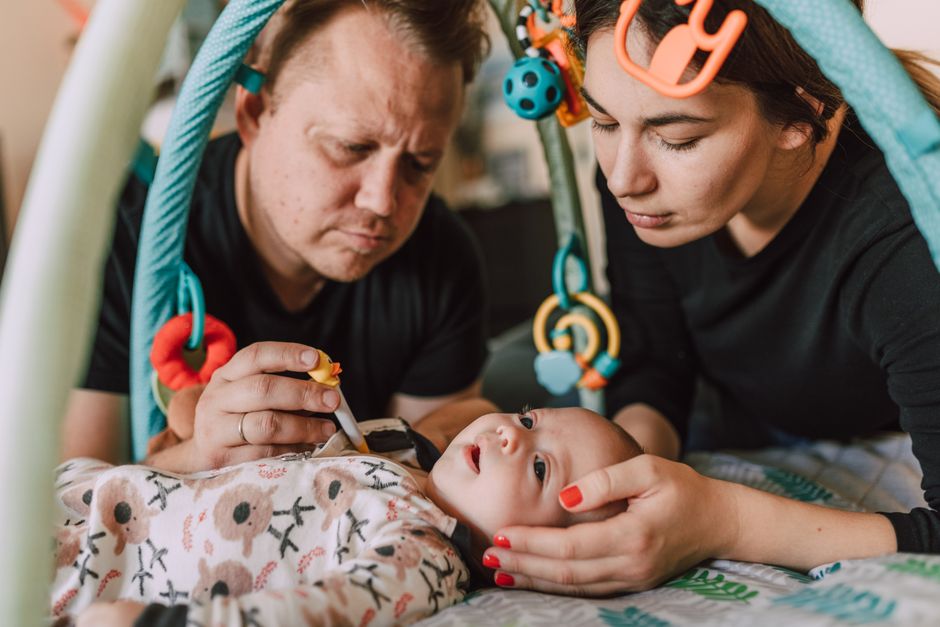
Jaundice in infants happens when a baby has too much bilirubin in the blood. Bilirubin is a yellow substance the body makes when it breaks down old red blood cells. In newborns the liver is not fully mature and cannot process bilirubin quickly enough. This causes the skin and the whites of the eyes to turn yellow. Most cases are normal and harmless but some require medical attention.
What Is Bilirubin and Why Does It Build Up in Newborns?
Bilirubin is a natural byproduct of red blood cell breakdown. Adults have mature livers that filter bilirubin out of the blood and send it to the intestines for removal. Newborns have a different situation. They are born with more red blood cells than they need and those cells break down quickly after birth.
A newborn’s liver is still developing. The enzyme that helps process bilirubin called UDP-glucuronosyltransferase does not work at full speed for the first few days of life. This creates a backlog. Bilirubin builds up in the blood faster than the liver can clear it. The result is the yellow tint you see on the skin.
The timing of this buildup is predictable. Most newborns show some yellowing around day two or three of life. This is called physiologic jaundice. It peaks around day three to five and then fades as the liver matures. The American Academy of Pediatrics notes that about 60 percent of full-term newborns develop visible jaundice.
What Cause Jaundice In Infants Beyond Normal Newborn Processes?
Physiologic jaundice is the most common cause but it is not the only one. Several other conditions can cause bilirubin to rise to concerning levels. Understanding these causes helps parents and doctors know when jaundice needs treatment.
Breastfeeding jaundice happens when a baby does not get enough milk in the first few days. Low intake means fewer bowel movements. Bilirubin leaves the body through stool so fewer bowel movements mean more bilirubin stays in the blood. This is not a problem with breast milk itself. It is a problem with feeding volume. The CDC advises that frequent feeding eight to twelve times per day helps prevent this.
Breast milk jaundice is different. It appears later usually after day seven of life. Some substances in breast milk can slow down how the liver processes bilirubin. This is not harmful in most cases and resolves on its own. But it can last for several weeks. The condition is well-documented in pediatric research and is considered a normal variation.
Blood type incompatibility is another cause. When a mother has type O blood and the baby has type A or B the mother’s immune system can produce antibodies that attack the baby’s red blood cells. The same thing can happen with Rh factor incompatibility. This causes more red blood cells to break down faster than normal. The result is a rapid rise in bilirubin that often needs treatment. The National Institutes of Health reports that ABO incompatibility affects about 15 to 20 percent of pregnancies though not all cases cause significant jaundice.
Prematurity is a major risk factor. Babies born before 37 weeks have even less mature livers. They also have fewer bowel movements in the first days. Premature infants are more likely to develop jaundice and need treatment than full-term babies. The American Academy of Pediatrics has specific treatment guidelines for premature infants that differ from full-term infants.
How High Is Too High for Bilirubin Levels?
Not all jaundice is dangerous. The key question is how high the bilirubin level gets and how fast it rises. Doctors use a chart called a nomogram to determine risk. This chart plots the baby’s age in hours against the bilirubin level. It shows three risk zones: low, medium, and high.
For a full-term healthy newborn bilirubin levels below 12 milligrams per deciliter are usually safe. Levels between 12 and 15 mg/dL need monitoring. Levels above 15 mg/dL often require treatment. These numbers are different for premature babies and for babies with risk factors like blood type incompatibility.
The danger of very high bilirubin is a rare condition called kernicterus. This happens when bilirubin crosses into the brain and causes damage. Kernicterus is extremely rare in developed countries because doctors screen for jaundice and treat it early. The CDC estimates that kernicterus occurs in about 1 in 100,000 births. It is almost always preventable with proper monitoring and treatment.
| Bilirubin Level (mg/dL) | Typical Action |
|---|---|
| Below 12 | Monitor. Usually no treatment needed. |
| 12 to 15 | Close monitoring. Consider phototherapy based on age and risk. |
| 15 to 20 | Phototherapy is typically started. |
| Above 20 | Intensive phototherapy or exchange transfusion may be needed. |
These numbers apply to full-term infants without risk factors. A baby with hemolytic disease or prematurity may need treatment at lower levels. Always follow your pediatrician’s guidance based on your baby’s specific situation.



What Does Research on Jaundice Treatments Show?
The main treatment for jaundice is phototherapy. This is not a new or experimental treatment. It has been used safely for decades. Phototherapy works by exposing the baby’s skin to a specific wavelength of blue light. This light changes the shape of bilirubin molecules so the body can excrete them without the liver processing them first.
Research published in the journal Pediatrics has shown that phototherapy reduces the need for exchange transfusions by about 80 percent. Exchange transfusion is an older treatment where some of the baby’s blood is replaced with donor blood. It is rarely needed now because phototherapy works so well.
Phototherapy can be done with a blanket-type device called a bili blanket or with overhead lights in the hospital. The baby wears only a diaper and eye protection. The treatment is stopped once bilirubin levels drop to a safe range. Side effects are minimal. Some babies have loose stools or a temporary rash. These resolve when treatment ends.
Some people claim that sunlight can treat jaundice. This is true in theory but dangerous in practice. Sunlight contains the right wavelengths but you cannot control the dose. Babies can get sunburned or overheated very quickly. The American Academy of Pediatrics strongly advises against using sunlight as treatment. Phototherapy machines deliver a controlled dose of light with no UV radiation. Sunlight is not a safe substitute.
Another common claim is that giving sugar water helps lower bilirubin. There is no evidence for this. Some studies suggest that sugar water may increase the risk of bilirubin levels staying high because it reduces the baby’s appetite for milk. Frequent feeding with breast milk or formula is the only dietary approach that has evidence behind it.
Can Jaundice Be Prevented?
You cannot prevent physiologic jaundice entirely. It is a normal part of newborn development for many babies. But you can reduce the risk of it becoming severe. The most effective prevention strategy is feeding frequently.
Bilirubin leaves the body through stool. The more a baby eats the more they poop. The more they poop the more bilirubin leaves the body. The CDC recommends feeding newborns at least eight times per day in the first week. For breastfed babies this means nursing on demand. For formula-fed babies this means offering a bottle every two to three hours.
Hospital screening is another important prevention tool. Many hospitals now check bilirubin levels before discharge. This is called universal screening. Research shows that universal screening reduces the rates of severe jaundice and hospital readmission. If your hospital does not offer this you can ask for it.
Delayed cord clamping may also help. A 2017 study in JAMA Pediatrics found that delayed cord clamping reduced the risk of jaundice needing phototherapy. The reason may be that more blood from the placenta gives the baby better blood volume and circulation which helps the liver function. This is not a guarantee but it is a simple intervention with other benefits as well.
What Are the Signs That Jaundice Is Getting Worse?
Mild jaundice looks like a faint yellow glow on the face and chest. As bilirubin levels rise the yellow color spreads down the body. It can reach the belly arms and legs. In severe cases the palms of the hands and soles of the feet turn yellow. This is a sign that levels may be high enough to need treatment.
Other warning signs include:
- The baby is very sleepy and hard to wake for feedings
- The baby is not feeding well or seems weak when sucking
- The baby has a high-pitched cry
- The baby arches their back or seems stiff
- The baby has fewer wet diapers than normal
These signs can indicate that bilirubin has reached a level where it might affect the brain. This is an emergency. If you see any of these signs call your pediatrician immediately or go to the emergency room. Most cases of jaundice never reach this point but knowing the signs gives you confidence to act if needed.
Pediatricians recommend that all newborns be checked for jaundice within 48 hours of leaving the hospital. This is especially important for babies who go home before 72 hours of age. The peak bilirubin level often happens after hospital discharge. A follow-up appointment catches this at the right time.
Common Misconceptions About Infant Jaundice
One widespread myth is that jaundice means the baby has liver disease. This is almost never the case in newborns. True liver disease in infants is extremely rare and causes other symptoms like dark urine and pale stool. Newborn jaundice is almost always about immature liver function not liver damage.
Another myth is that putting the baby near a window will help. Indirect sunlight through a window does not contain enough of the right wavelengths to break down bilirubin. Direct sunlight is dangerous. Neither approach is recommended. Phototherapy is the only proven light-based treatment.
Some parents worry that jaundice will cause permanent brain damage if not treated immediately. This fear comes from misunderstanding the timeline. Mild to moderate jaundice is not an emergency. It takes several days of very high bilirubin levels to cause kernicterus. Your pediatrician has time to monitor and treat. Panic is not helpful. Vigilance is.
There is also a belief that giving water or glucose water helps flush out bilirubin. This is false. Bilirubin is not excreted through urine. It is excreted through stool. Water does not increase stool output. It can actually dilute the baby’s blood sodium levels which is dangerous. Breast milk or formula is the only appropriate fluid for newborns.
Frequently Asked Questions
How long does infant jaundice usually last?
Physiologic jaundice typically peaks around day three to five and resolves within one to two weeks. Breast milk jaundice can last three to twelve weeks but is not harmful.
Can jaundice in newborns be treated at home?
Mild jaundice usually resolves with frequent feeding alone. Moderate jaundice requires phototherapy which must be done under medical supervision either in the hospital or with a home phototherapy device prescribed by a doctor.
Is jaundice more common in breastfed or formula-fed babies?
Breastfed babies have a slightly higher risk of jaundice due to lower feeding volumes in the first days and substances in breast milk that slow bilirubin processing. This is not a reason to avoid breastfeeding.
When should I call the doctor about jaundice?
Call the doctor if jaundice appears in the first 24 hours of life spreads to the arms or legs or is accompanied by poor feeding sleepiness or fewer than four wet diapers per day.
