
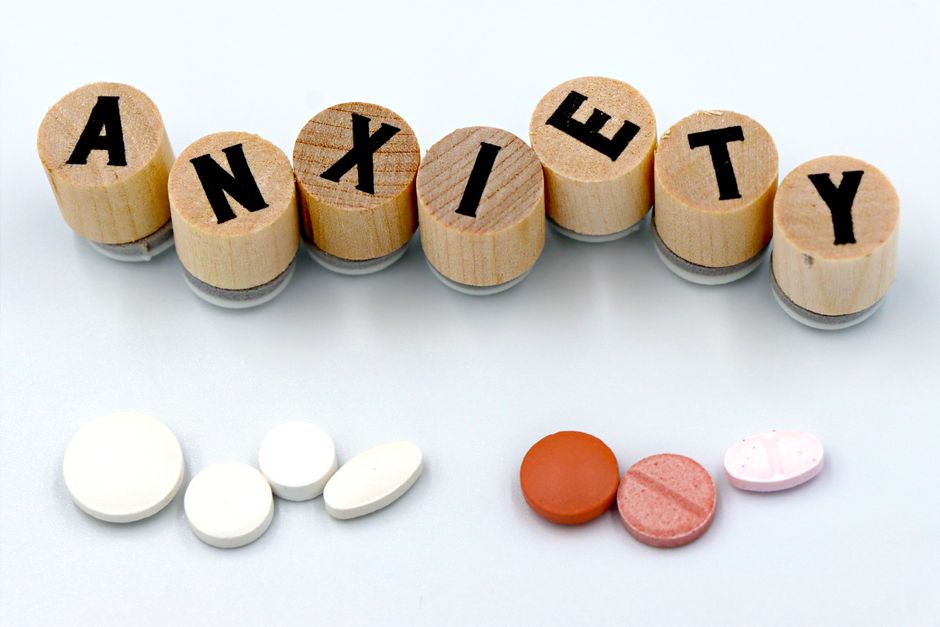
You can buy several over-the-counter products that people use for anxiety, but none of them is an approved anxiety treatment. That distinction matters. The FDA has not approved any nonprescription medication for anxiety disorders. What you can buy are products marketed for stress, sleep, or calming — some with modest supporting evidence, many with almost none. The most honest answer to what you can buy over the counter for anxiety is this: you can buy symptom relief and calming support, but not a proven treatment for an anxiety disorder.
What Can You Buy Over The Counter For Anxiety?
Walk into any pharmacy and you will find shelves of products labeled for stress relief, calm, or sleep. They fall into a few categories: herbal supplements, vitamins and minerals, amino acids, and antihistamines used for occasional sleep. Only the last group is a regulated drug with a clear mechanism. The rest are dietary supplements, which the FDA regulates differently from medications.
That regulatory gap is the single most important fact here. A supplement does not need to prove it works before it is sold. It does not need FDA approval for effectiveness. The company is responsible for safety and for accurate labeling, but nobody has confirmed the product treats anxiety before it reaches the shelf.
So the practical answer is that you can buy calming products, but “over the counter” does not mean “proven for anxiety.” Here is what is actually available:
- Herbal supplements such as lavender oil capsules, chamomile, passionflower, lemon balm, and ashwagandha
- Minerals and vitamins such as magnesium and B vitamins
- Amino acids such as L-theanine and GABA
- Antihistamines such as diphenhydramine, used for occasional sleeplessness rather than anxiety itself
None of these carries an FDA-approved indication for anxiety. Some have small studies behind them. Others have almost nothing.
Which Over-The-Counter Products Have Real Evidence?
Evidence strength varies enormously across this category, and it is worth separating the few products with meaningful research from the many with almost none.
Lavender oil has the most unusual status. A standardized oral lavender oil preparation is approved as a medicine in Germany for anxiety, which is not the same as FDA approval in the United States. Some clinical trials have found it helpful for anxiety symptoms, though the research base is modest and the products sold in US stores are not standardized the same way as the approved German preparation. That difference matters — a capsule from a supplement aisle is not the same product that was studied.
Chamomile has some small trials suggesting a calming effect, often described as mild. The studies are generally short and involve small numbers of people. Chamomile tea is widely used and generally regarded as low risk for most adults.
L-theanine, an amino acid found in tea, has been studied for relaxation and stress. Results are mixed, and many studies are small. It appears to be well tolerated in the amounts studied.
Ashwagandha has gained enormous popularity, and some trials suggest it may reduce perceived stress. The evidence is not strong enough to call it an established anxiety treatment. It also carries real cautions — more on that below.
Magnesium is often marketed for anxiety and sleep. People with low magnesium can experience symptoms that include nervousness, but there is no solid evidence that magnesium supplements reduce anxiety in people whose magnesium levels are normal. The marketing has run well ahead of the research here.
GABA supplements are sold for calm, but the evidence that oral GABA meaningfully affects anxiety is weak. There is also a basic pharmacology question about how much orally taken GABA reaches the brain, and that question is not settled.
If you want a single takeaway: the evidence across this whole category is modest at best, and inconsistent. No over-the-counter product has been shown to treat an anxiety disorder the way established treatments do.
Are These Products Safe?
Supplements are not automatically safe because they are sold without a prescription. Several of these products carry genuine cautions.
Ashwagandha has been linked in case reports to liver injury, and regulators in some countries have issued warnings. It is not appropriate for people with liver disease, and anyone taking it who develops symptoms such as fatigue, dark urine, or yellowing of the skin should stop and seek medical care. It is also generally not recommended during pregnancy.
Herbal products can interact with medications. This is not a minor point. St. John’s wort, sometimes used for low mood, is a well-documented example — it affects how the body processes many drugs, including some antidepressants and birth control pills, and can reduce their effectiveness. If you take any prescription medication, check with a pharmacist before adding an herbal supplement.
Diphenhydramine, the antihistamine in many sleep aids, causes drowsiness and can impair alertness the next morning. It is not a treatment for anxiety, and regular use for sleep is generally discouraged. It can also interact with alcohol and other sedating drugs.
One clarification worth knowing: “natural” and “safe” are not the same word. Plants contain active chemicals. Those chemicals can help, do nothing, or cause harm, and the dose in a bottle is not always what the label says.
Why Isn’t There A Proven Over-The-Counter Anxiety Treatment?
Anxiety disorders are treated with prescription medications and psychotherapy because those are the approaches that have been tested and shown to work. Bringing a new drug to market for anxiety requires large trials demonstrating effectiveness and safety. That is an expensive process, and no company has completed it for a nonprescription anxiety product in the US.
The result is a gap. People want something they can pick up without a prescription, and the market fills that gap with supplements that face a much lower bar. The absence of an approved product is not proof that nothing over the counter helps. It is proof that nothing over the counter has been held to the standard of an approved treatment.
There is also a practical reason anxiety is hard to treat with a simple pill. Anxiety involves the brain’s threat-detection system — the amygdala and related circuits — along with stress hormones and learned patterns of thinking and avoidance. A single ingredient rarely addresses all of that. This is part of why established treatments combine approaches.
What Actually Works For Anxiety?
The treatments with the strongest evidence are not on a pharmacy shelf. They are psychotherapy, particularly cognitive behavioral therapy, and prescription medication. Both have been studied extensively.
Cognitive behavioral therapy focuses on the thoughts and behaviors that feed anxiety. It teaches people to notice anxious thinking, test it against reality, and gradually face situations they have been avoiding. Research consistently supports it as an effective treatment for anxiety disorders, and it is often considered a first-line option.
Several classes of prescription medication are used, including certain antidepressants and, for some situations, medications taken as needed. These require a clinician’s evaluation because they carry side effects and need monitoring. They are not something to self-select.
Lifestyle factors matter too, though they are supportive rather than curative. Regular physical activity, consistent sleep, limiting caffeine and alcohol, and learning relaxation or breathing skills can reduce the intensity of anxiety symptoms. These are reasonable to pursue alongside, not instead of, professional care.
If anxiety is interfering with work, relationships, sleep, or daily life, that is the signal to talk to a doctor or mental health professional. Effective treatment exists. The over-the-counter aisle is not where the strongest options live.
When Should You See A Doctor Instead?
Self-treating with supplements is reasonable to discuss with a clinician, but some situations call for professional help rather than a pharmacy purchase.
Seek care if anxiety is persistent, if it interferes with daily functioning, if it comes with panic attacks, or if it is accompanied by physical symptoms you cannot explain. A doctor can rule out medical causes — thyroid problems, for example, can produce anxiety-like symptoms — and point you toward evidence-based treatment.
Get help promptly if you have thoughts of harming yourself. In the US you can call or text 988 to reach the Suicide and Crisis Lifeline. This is a resource, not a substitute for care, and reaching out is the right move.
It is also worth telling your doctor about any supplement you take. Many people do not, and that leaves a gap in your care. Your clinician needs the full picture to keep you safe.
Frequently Asked Questions
Is there any FDA-approved over-the-counter anxiety medication?
No. The FDA has not approved any nonprescription medication for treating anxiety disorders. Products sold for stress or calm are dietary supplements, which are not held to the same effectiveness standard.
Does magnesium help with anxiety?
There is no solid evidence that magnesium supplements reduce anxiety in people with normal magnesium levels. Low magnesium can cause nervousness, but the marketing for anxiety has run ahead of the research.
Is ashwagandha safe to take for anxiety?
Ashwagandha has been linked in case reports to liver injury, and regulators in some countries have issued warnings. Talk to a doctor before using it, especially if you have liver problems or take other medications.
Can herbal supplements interact with my medications?
Yes. Herbal products can change how the body processes prescription drugs and reduce their effectiveness. Check with a pharmacist before combining them with any medication.
