
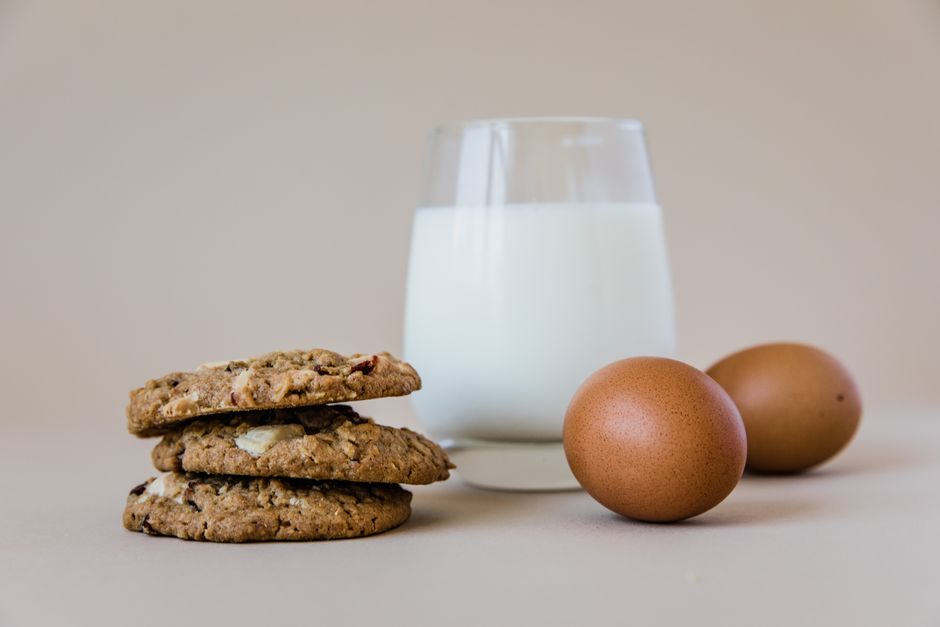
Eggs do three jobs in baking: they bind ingredients together, add moisture, and help batters and doughs set as they heat. You can replace them in most recipes with ingredients you likely already have — mashed banana, applesauce, yogurt, flaxseed mixed with water, or commercial egg replacers. The right swap depends on what the egg is doing in that specific recipe. A binding job in cookies calls for a different replacement than a leavening job in a cake.
There is no single universal substitute. Each replacement brings its own flavor, texture, and moisture profile. Some work beautifully in muffins and quick breads. Others fall apart in custards, meringues, or anything where eggs are the star. Knowing why eggs matter in baking tells you which swap to reach for.
What Do Eggs Actually Do In Baking?
Eggs perform several distinct functions at once, and that is why replacing them is more complicated than it looks. The yolk contains fat and emulsifiers, mainly lecithin, which help water and fat stay mixed. The white is mostly water and protein, and those proteins coagulate — they set into a solid structure — when heated.
That coagulation is what turns liquid batter into a sliceable cake. It also traps air when egg whites are whipped, which is why meringues and angel food cakes depend on eggs entirely. In cookies, eggs add moisture and help the dough hold together. In custards and quiches, they are the structure itself.
Most egg replacers mimic only part of this. A flax egg can bind, but it will not whip into foam. Applesauce adds moisture, but it will not help a batter set the way egg protein does. This is why the same substitute can work perfectly in one recipe and fail in another.
What Can Replace Eggs In Baking? The Main Substitutes
These are the replacements with the most reliable track record in home baking. Each has a best-use case and clear limits.
Mashed banana works well in muffins, pancakes, and quick breads. Use about a quarter cup of well-mashed ripe banana per egg. It adds sweetness and a distinct banana flavor, so it suits banana bread and chocolate recipes better than delicate vanilla cakes.
Unsweetened applesauce is one of the most neutral options. Use about a quarter cup per egg. It adds moisture and slight sweetness without much flavor. It works in cakes, muffins, and brownies, though it can make baked goods denser and a little gummy if used in large amounts.
Plain yogurt or buttermilk adds moisture and a little tang. Use about a quarter cup per egg. These work well in cakes and muffins. Dairy-based swaps are not suitable for anyone avoiding dairy.
Ground flaxseed mixed with water — often called a flax egg — is a strong binder. Mix one tablespoon of ground flaxseed with three tablespoons of water and let it sit for a few minutes until it thickens. It works well in cookies, pancakes, and dense baked goods. It will not help anything rise, and it adds a slightly nutty flavor.
Chia seeds work the same way as flax: one tablespoon of ground chia with three tablespoons of water per egg. The gel binds well. Chia can leave small flecks visible in light-colored baked goods.
Commercial egg replacers, usually starch- or protein-based powders, are designed to mimic egg function. They tend to work best in recipes where eggs are a supporting ingredient, not the main event. Results vary by brand.
Silken tofu can be blended smooth and used in dense cakes and brownies, roughly a quarter cup per egg. It adds moisture and protein but can make baked goods heavier.
Which Substitute Works Best For Each Type Of Recipe?
Matching the substitute to the recipe matters more than any single “best” option. Here is how the common swaps line up.
- Cookies and bars: Flax eggs and chia eggs bind well. Applesauce adds moisture. Banana works but adds flavor.
- Muffins and quick breads: Mashed banana, applesauce, and yogurt all work well. These recipes are forgiving.
- Cakes: Applesauce and yogurt are the most neutral. Flax works in denser cakes. Very light sponge cakes are harder to replace.
- Pancakes and waffles: Banana, applesauce, and flax eggs all perform well.
- Brownies: Silken tofu, applesauce, and flax eggs work. Texture will be fudgier than egg-based versions.
- Custards, quiches, meringues, and soufflés: These depend on egg structure and generally cannot be reliably replaced. No standard substitute reproduces whipped egg white foam.
The general rule: the more a recipe depends on eggs for structure — especially whipped whites — the harder it is to replace them. The more eggs act as a supporting ingredient, the easier the swap.
How Do You Swap Eggs Without Ruining The Texture?
Texture is where most egg substitutions succeed or fail. Eggs contribute moisture, fat, and structure, and a replacement that supplies one may not supply the others.
If a recipe calls for three or more eggs, replacing all of them at once often changes the result significantly. Replacing one or two is usually safer. In some recipes, combining substitutes helps — a little applesauce for moisture plus a flax egg for binding can cover more of what the egg was doing.
Baking time and temperature may need small adjustments. Egg substitutes can make batters wetter or denser, so watch for doneness rather than relying strictly on the recipe’s stated time. A toothpick inserted into the center should come out clean or with a few moist crumbs.
One less obvious point: eggs also contribute fat, and many substitutes do not. In recipes where richness matters, a substitute that adds some fat — yogurt, tofu, or a small amount of oil alongside the swap — can help the texture stay closer to the original.
Are Egg Substitutes Healthier Than Eggs?
Not automatically. Eggs are a nutrient-dense food, providing high-quality protein and several vitamins and minerals. A mashed banana or applesauce swap changes the nutrition profile — sometimes adding fiber and sometimes adding sugar — but it does not make a baked good inherently healthier. A muffin is still a muffin.
For people avoiding eggs due to allergy, the substitutes above are the practical route, but anyone with a diagnosed egg allergy should read labels carefully. Some commercial egg replacers and baked goods are processed in facilities that also handle eggs. Cross-contact is a real concern for people with serious allergies.
For people avoiding eggs for dietary or ethical reasons, the substitutes are a reasonable fit in most everyday baking. The evidence on health outcomes from swapping eggs for fruit purées or seed gels is limited — these are culinary choices more than nutritional strategies.
What About Egg Substitutes That Do Not Work?
Some swaps circulate widely online but perform poorly in real baking. A few tablespoons of water alone will not bind a recipe. Neither will a spoon of oil. These add moisture or fat but supply no structure, so baked goods tend to crumble.
Vinegar and baking soda combinations are sometimes suggested as egg replacements. They can add lift in some recipes, but they do not replicate what egg protein does. Results are inconsistent and depend heavily on the rest of the recipe.
Meringues, macarons, angel food cake, and custards are the clearest cases where no standard substitute works. These recipes rely on egg proteins to trap air or set a liquid into a solid. If you see a recipe claiming a reliable egg-free version of these, treat it with caution — the results are usually quite different from the original.
Frequently Asked Questions
What is the best egg substitute for cakes?
Unsweetened applesauce or plain yogurt are the most neutral choices for cakes, using about a quarter cup per egg. Both add moisture without overpowering flavor. Very light sponge cakes are harder to replace reliably.
Can I use flaxseed instead of eggs in cookies?
Yes, a flax egg made from one tablespoon of ground flaxseed and three tablespoons of water binds cookies well. It adds a slight nutty flavor and will not help the cookies rise, so it suits recipes that do not depend on eggs for lift.
How much mashed banana replaces one egg?
Use about a quarter cup of well-mashed ripe banana per egg. It works best in muffins, pancakes, and quick breads, and it adds sweetness and banana flavor.
Can you replace eggs in meringues or custards?
No standard substitute reliably replaces eggs in meringues, custards, quiches, or soufflés. These recipes depend on egg proteins to trap air or set a liquid into a solid, and no common swap reproduces that.
